Standing on the Sitecore Main Stage: Why Sharing the General Assembly Story Matters More Than Ever

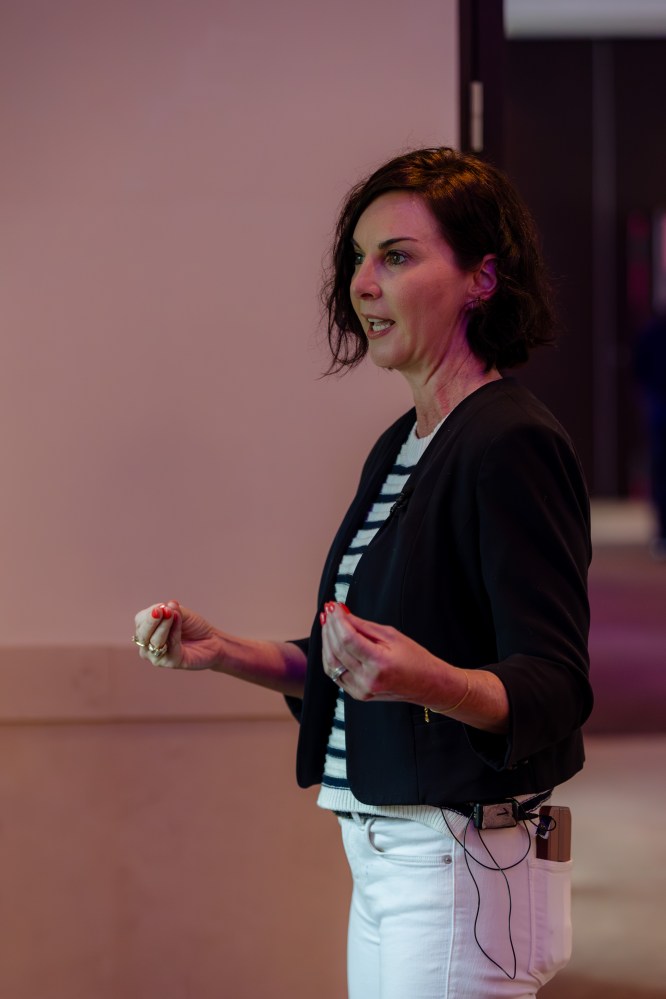
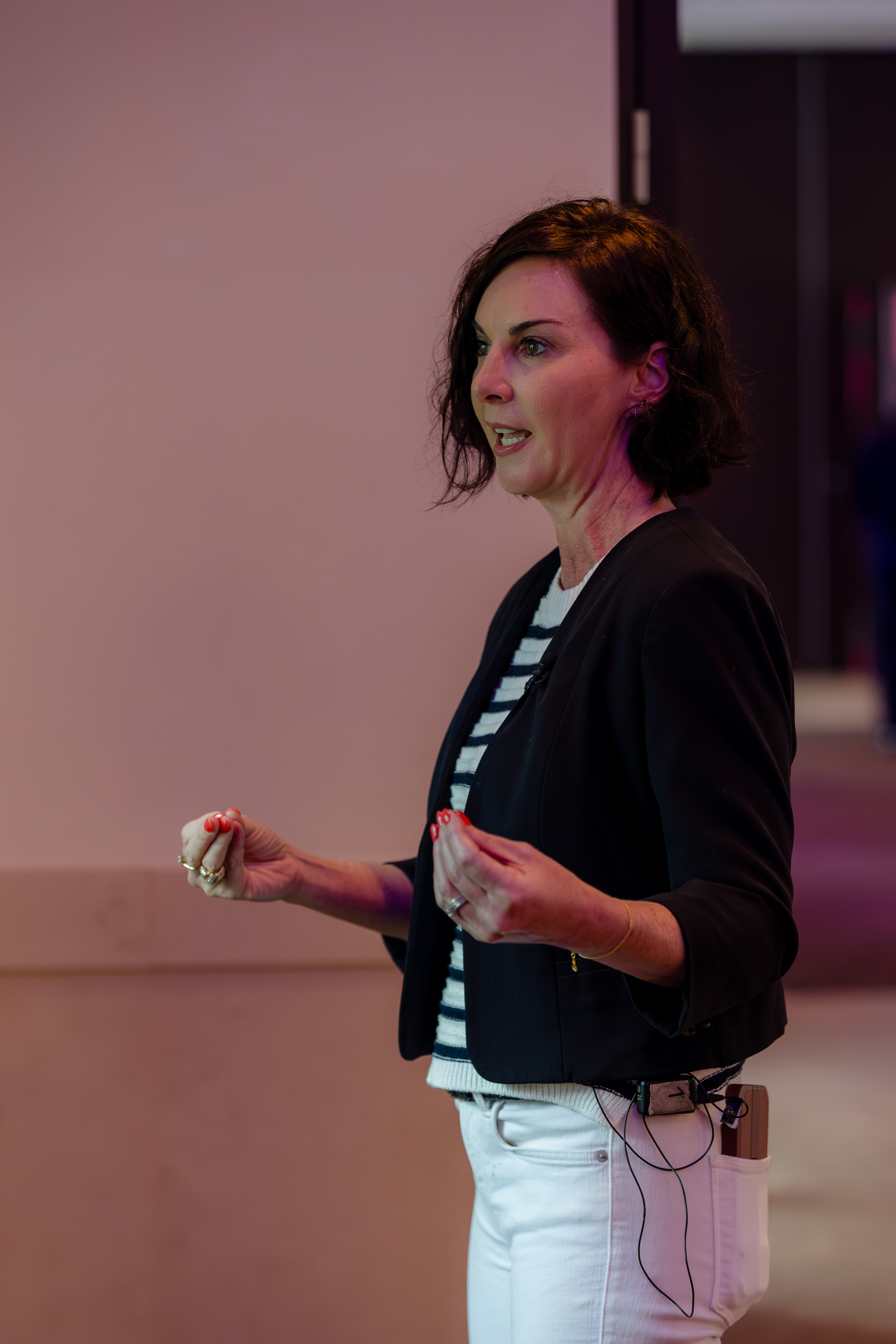
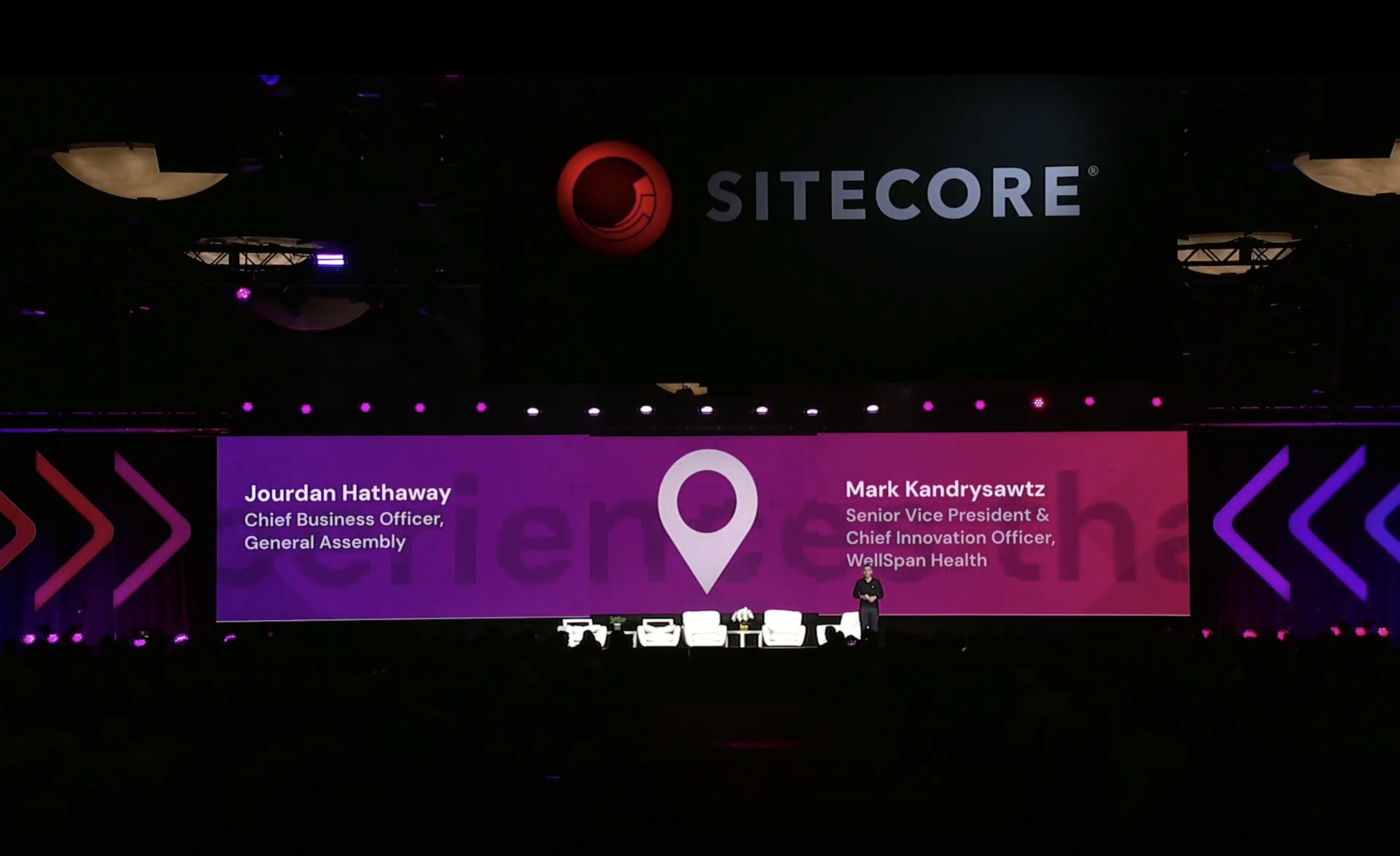
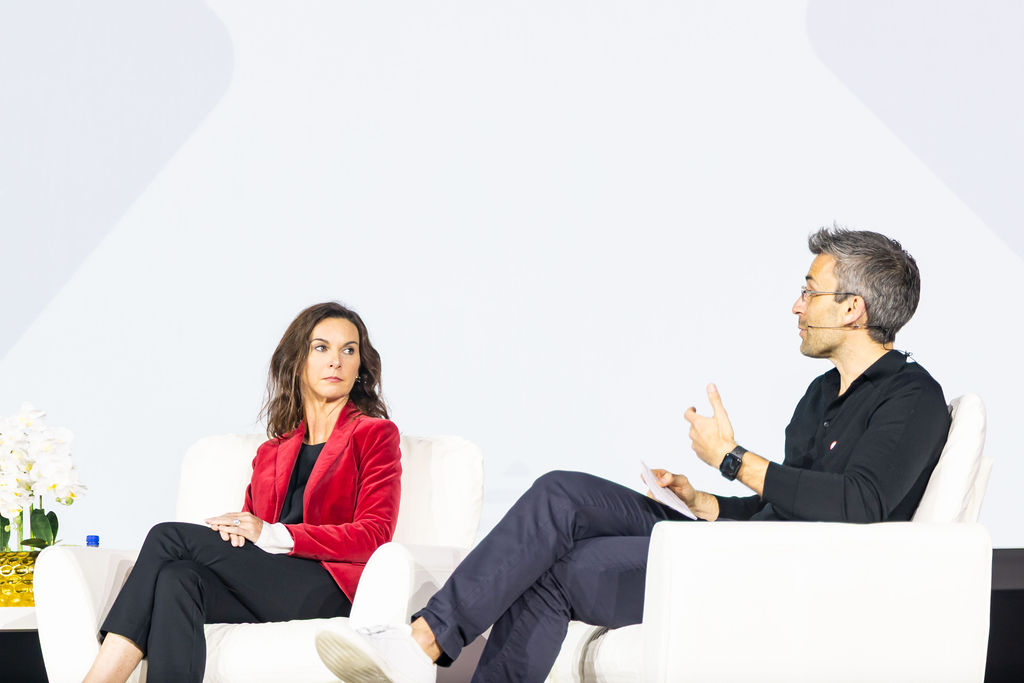
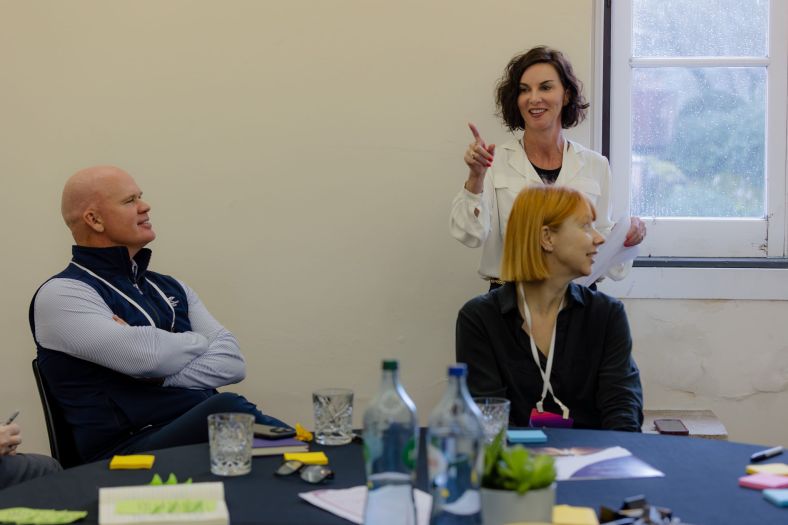
This week, I stepped onto the main stage at Sitecore Symposium—alongside leaders reshaping experiences in healthcare, nonprofit, and digital marketing—to tell a story I never get tired of sharing: how General Assembly changes lives.

For anyone who knows me, you know I don’t use that phrase lightly. “Changing lives” isn’t marketing copy at GA—it’s measurable, visible, deeply human reality. Being invited into a conversation about how technology, when done right, integrates with the human experience and changes lives—felt like the perfect moment to show the world what that looks like inside an AI-era training company.

Starting With the Heart of GA: Our Learners

When Dave Tillbury introduced the panel, he talked about how technology enables us to reach more people, more personally. I couldn’t have scripted a better setup. Because that’s exactly what we do at GA.

When Dave asked me to share an example of one of the thousands of lives we touch every year, I thought immediately of Anthony.

On an ordinary Tuesday at 10:08am, we saw a lead come through:
Google Paid Search → “How to become a coder.”

Behind that data point was a man who was sleeping on the floor of his mother’s assisted living facility. A custodian. A dead-end job. A life that felt like it was narrowing instead of expanding.

He woke up one morning and said, “I need something more.”
And he found GA.

Today he is a backend engineer at Shutterstock—and he mentors others making the same journey. From janitor to engineer. From stuck to soaring.

That’s why we show up.
That’s why this work matters.
That’s why the world needs more equitable pathways into the jobs of the future.

And this is only one story out of tens of thousands.

The Technology Beneath the Transformation

On stage, Dave shifted the conversation toward the intersection of marketing, AI, and experience design—specifically, how Sitecore helps us connect people like Anthony to the training that will change their trajectories.

Here’s what I shared:

AI-readiness is an employability issue, a business issue, and a humanity issue.

Organizations can’t thrive in the age of AI if their people don’t know how to use it—and our job at GA is to train the world’s workforce to do exactly that.

Sitecore plays a quiet but crucial role in that mission. Every time a manager, leader, or executive lands on our site, searching for AI training options for their teams, they’re looking at an urgent skills gap. They’re looking at the future of their workforce.

And every click, every personalized experience, every journey they take helps us reach them in a way that is faster, more relevant, and more human.

Meet GAbby: Our Hybrid Workforce in Action

The audience leaned in when the conversation turned to AI agents.

We’re not just teaching AI—we’re living the transformation ourselves.

In our Admissions organization today, we have a hybrid workforce: humans and agentic AI working side by side.

When a lead comes in through Sitecore?
GAbby, our digital agent, is the first to call.

She contacts thousands of prospective learners (at scale) helping them navigate options, answer questions, and ultimately decide on the pathway that will help them close their skills gap.

The Hardest (and Most Hopeful) Part of Leadership Right Now

Someone asked me on stage whether our team saw AI agents as a threat.

I answered honestly:
Leading through this transformation has been one of the hardest chapters of my leadership journey.

Technical change is one thing.
Cultural change?
That’s the real mountain.

But this is also where I get emotional: because I’m so proud of my team.

One day, an Admissions Coordinator came to me and said:

“Hey Jourdan, I noticed when a lead looks like X with condition Y… the team just knows to do these four things.”

She had the curiosity and accountability to bring forward a pattern the systems weren’t catching—and in that moment, she became the spark for something entirely new.

Today, we have a brand-new role at GA: Digital Agent Compliance Manager.

That’s the truth about AI transformation:
New workflows → New skills → New jobs.

The future doesn’t happen to us.
We build it.

Why This Moment on Stage Mattered

Yes, being on that panel was about spotlighting GA.
Yes, it was about showcasing technology.

It was also about reminding the industry that AI isn’t just a technical revolution; it’s a human one.

We have workforces across every sector that are scared, curious, confused, excited, overwhelmed, and hopeful—often all at once. They need direction. They need skills. And they need leaders who are brave enough to say:

We are stepping into the future together.

General Assembly is proud to be one of those leaders.

And Personally?

It felt good to be on stage with other change makers and innovators. It felt good to represent GA.

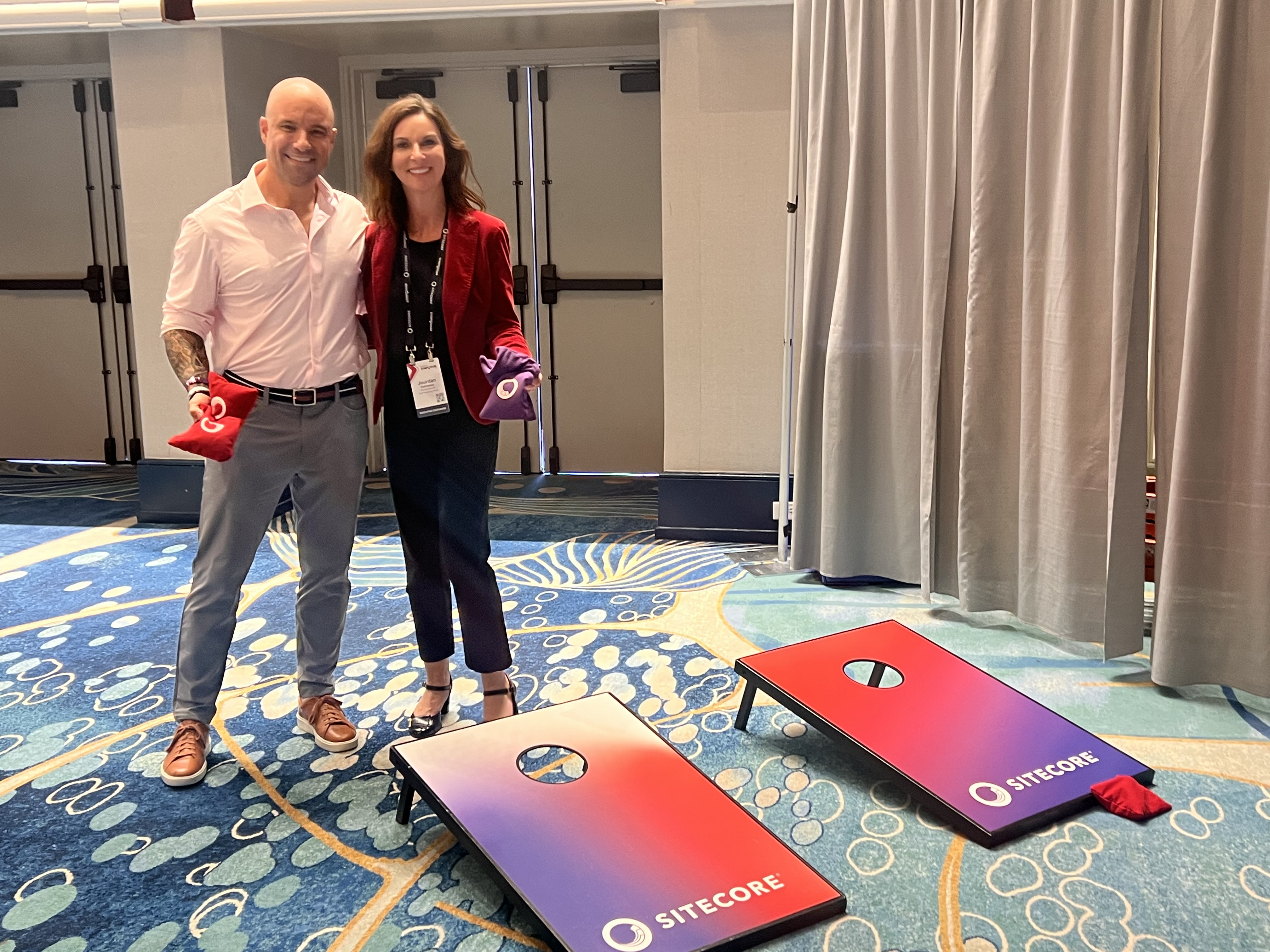
And it felt especially good to meet a few GA grads in the audience, people whose lives and businesses have been reshaped by the work we do.

The future of work belongs to the courageous—and we’re helping build it, one learner, one team, and one AI-powered experience at a time.

Our Open Adoption Story: Fifteen Years in the Making

A Story of Love, Connection, and the Family We Built Together

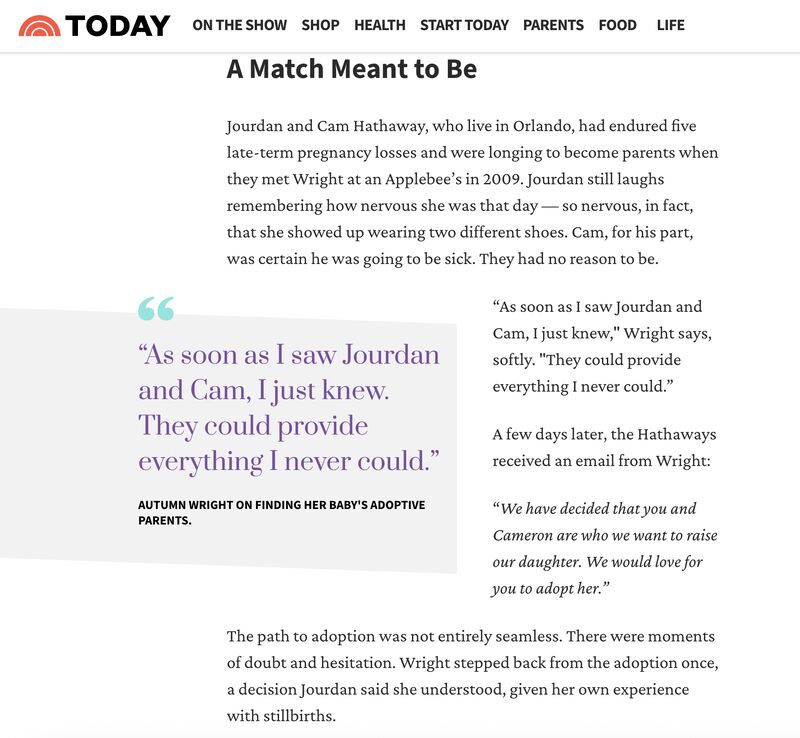
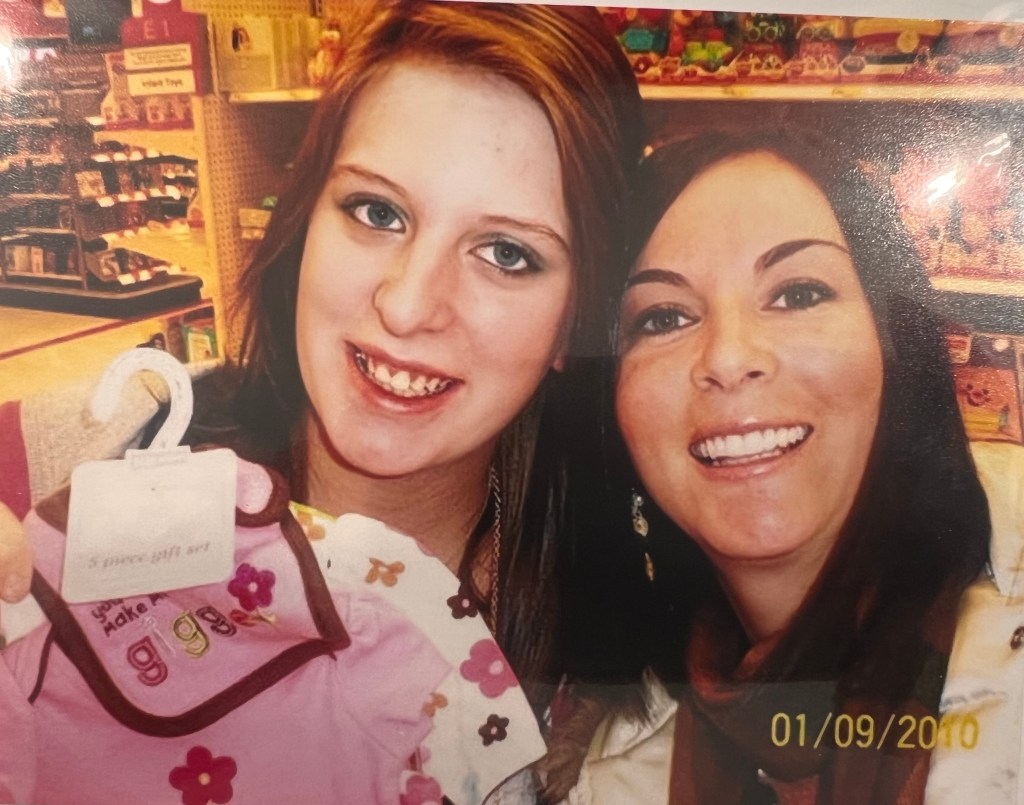
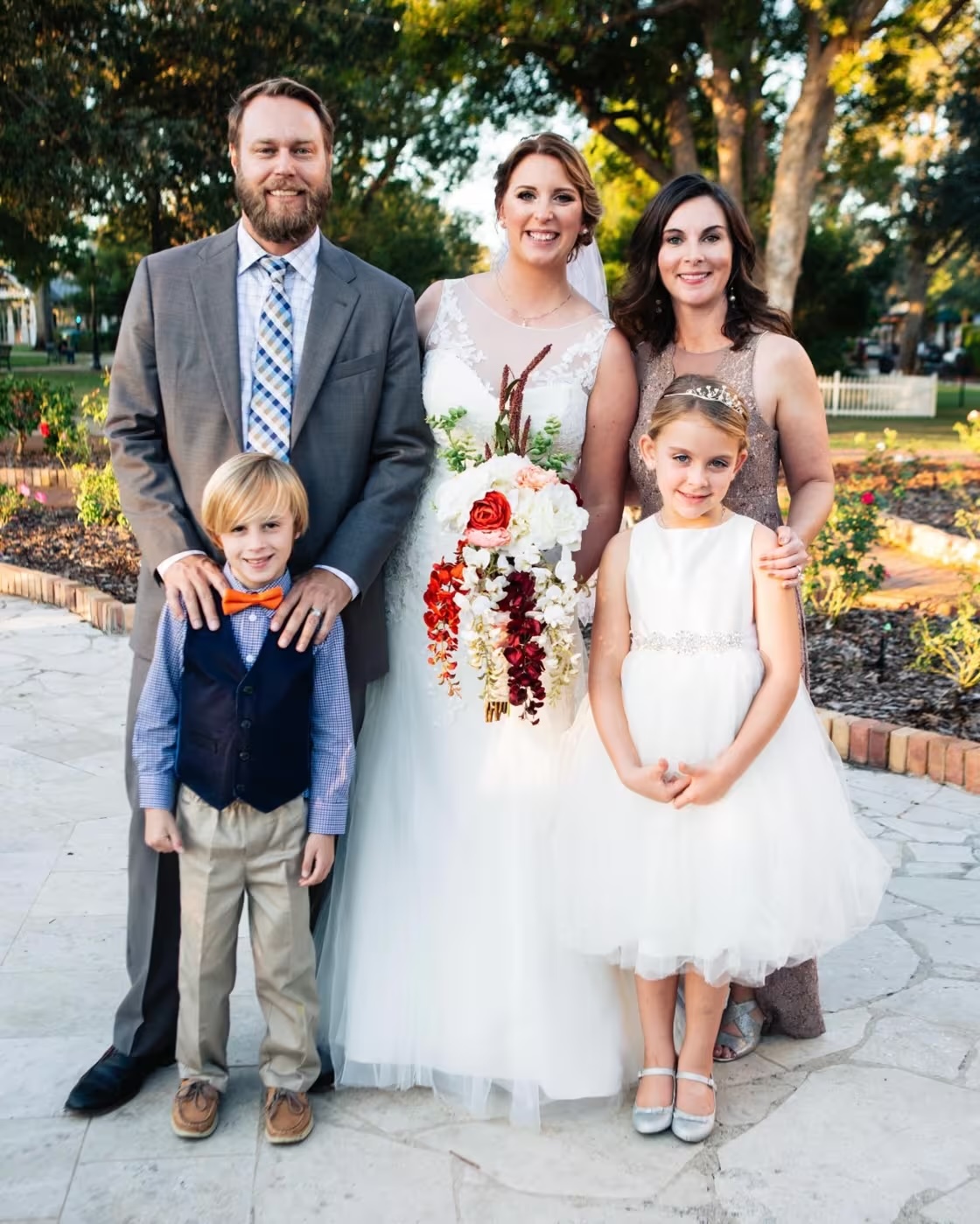
I’m Jourdan Hathaway, and for fifteen years I have borne witness to a story with my husband Cam that began with a single promise. A promise to a young woman, Autumn Wright, who entrusted us with her daughter—and her one important request: to stay connected. This week, the NBC TODAY Show shared our open adoption journey with the world. It’s a story fifteen years in the making—one of courage, vulnerability, and the extraordinary power of love that transcends biology.

Read our open adoption story on NBC TODAY!

Two Babies, Five Months Apart

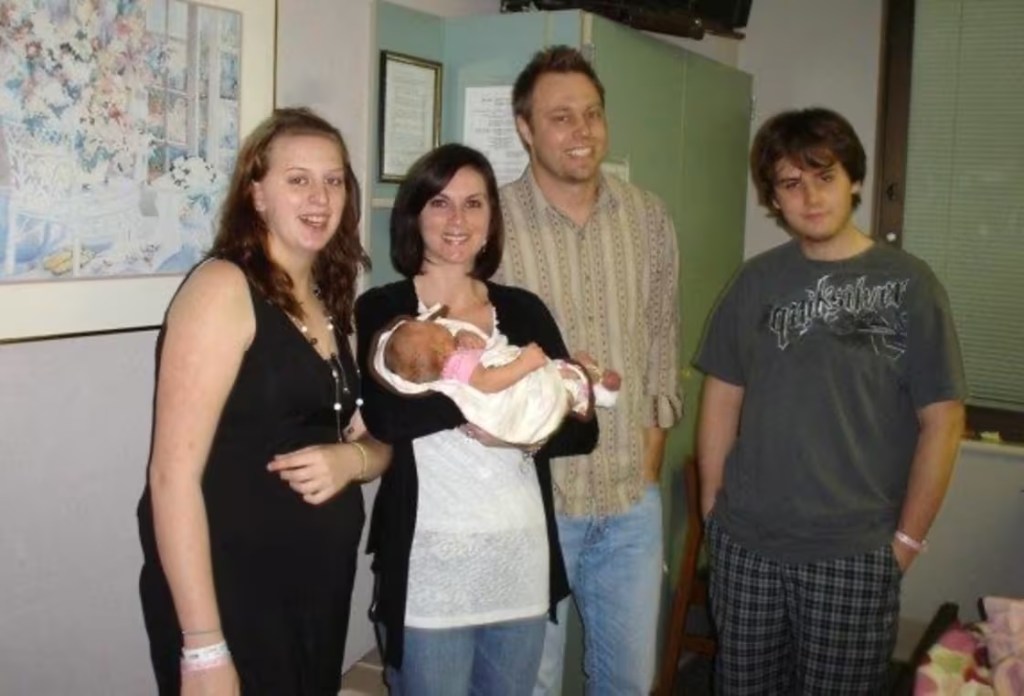
In 2010, our lives changed forever. Within five months, I became the mother of two beautiful children—one through adoption, one through birth. Madeline and Keller are just five months apart, bonded by laughter, sibling rivalry, the same milestones—and a deep connection that only love, not circumstance, can create. From the beginning our family defied convention. Not because we set out knowing what to expect with open adoption—but because our path was simply what felt right each step of the way. Our story has never been about how our children entered our lives, but how love wove us together into something bigger than we could have imagined (and not just for the children, but for everyone involved).

A Documentary of the Heart

Just two years into Madeline’s life, we felt compelled to tell our story publicly. We produced a short documentary—“Our Open Adoption Documentary” (see the full archive here) —because we wanted to show that open adoption can be built on trust, empathy, and shared humanity. I journaled every step of the way—every email, every phone call, every surge of hope, every moment of uncertainty—because I wanted Maddie, Keller, and the birth family to one day to read through the archives and understand not only the decisions that brought them into this world, but the love that carried them through it. That journaling, those first-emails and every communication exchange from the beginning, became a treasure throve when we revisited them for the NBC TODAY article as we got to relive our beginnings.

Life Imitating Art

I’ll never forget our very first meeting with Autumn and Jay. In that first hug and hello, Autumn handed us a DVD—a lifetime movie, 16 and Pregnant. She wanted us to watch it, to see her story reflected in someone else’s, to understand her desire to stay in Madeline’s life. This small gesture was profoundly human—it was her way of saying, “See me. See what this feels like.” We watched it. We saw her. And we made a promise that day, in the quiet of our hearts and the steady clasp of our hands: we would live this differently. We would stay connected. We would build a family bigger than biology alone.

Fifteen years later, that promise has become our shared legacy. The TODAY feature shows our story on national stage—a story of art imitating life, and life coming full circle to inspire art again. What began as an act of trust has blossomed into something far greater: a beautiful, blended family created through love. It has always been our dream to inspire others by living as an example of what’s possible when we lead with compassion and openness.

A Blended Family, Beautifully So

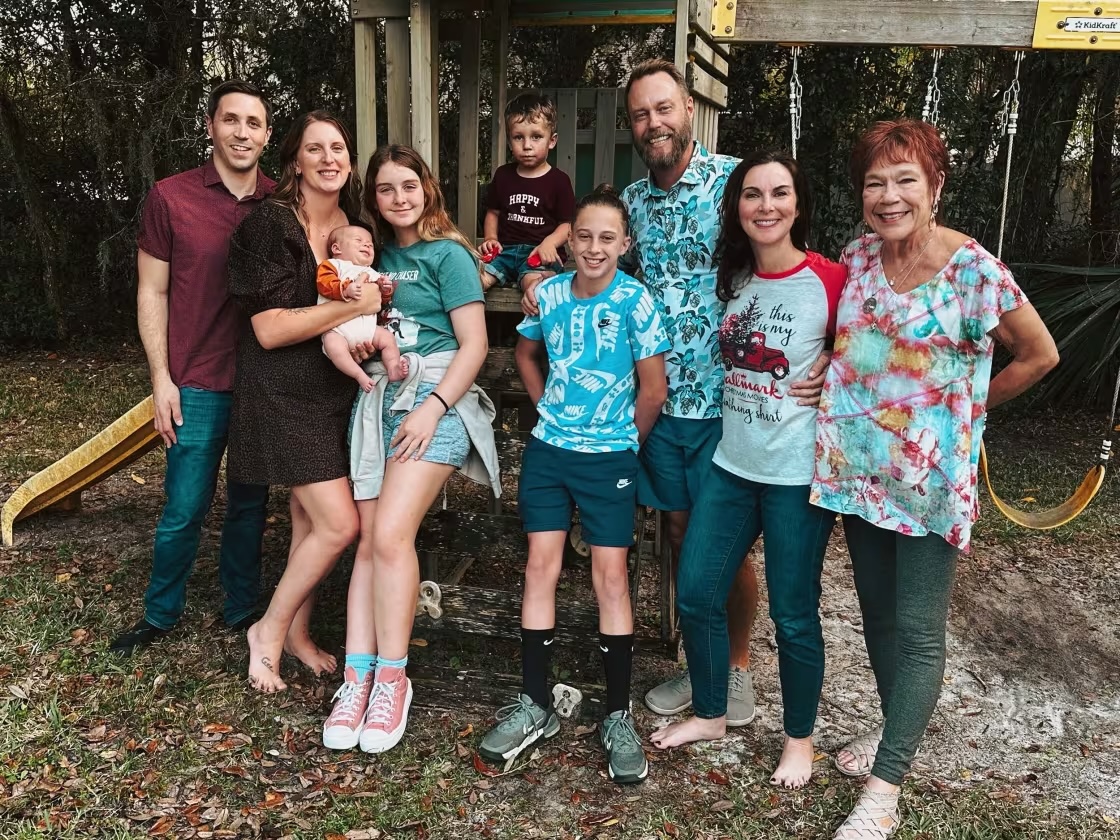
Our family spans many branches: Madeline’s brother Keller here with us; from Autumn’s side two brothers—Logan and Hudson—who adore her; from her birth father’s side another brother named Grayson. At the end of the day, we’re just a blended family—imperfect, resilient, bound by something deeper than DNA. We laugh together, argue over who gets the last cookie, celebrate milestones together—and we do it all knowing our “how” is not traditional, but it is intentional.

Inspiring What’s Possible

We share our story not because we’ve arrived. We share it because we’re still on the journey—and we believe in the power of our story to light the way for others. Through open adoption, through biological parenting, through blended families—we hope to show what’s possible when you lead with trust. When you document the journey. When you honour both grief and gratitude. When you say yes to a story that asks more of you than you thought you had to give.

I’ve often reflected in my journals, in scenes of tension and triumph alike, that story matters. The arts matter. Storytelling matters. Because for Autumn, that DVD she handed us—16 and Pregnant—was a threshold into being seen. And for us, sharing everything from that first email to this TODAY feature is our way of lighting a torch for others to contemplate.

Full Circle

Our journey reminds me that sometimes art imitates life. But the truest art (the kind that changes people) comes from real life unfolding in all its messy, magnificent beauty. Maybe someday someone will make a movie about us. But honestly, the best part of our story is the one we’re still writing: every laugh in the carpool, every sibling scuffle, every holiday we celebrate, every moment of connection we choose instead of defaulting to distance.

And if you’re reading this, if you’re considering adoption, open adoption, step-family, blended family, let our story be one of possibility. That in love’s economy, there is no scarcity. That in openness, there is freedom. And that in being seen, truly seen, there is the power to heal and to build.

Read our open adoption story on NBC TODAY!

AI Training Fatigue Is Real—Here’s How I Broke Through It.

As a kid, I loved show and tell.
As a professional, I’ve come to love show and demonstrate.

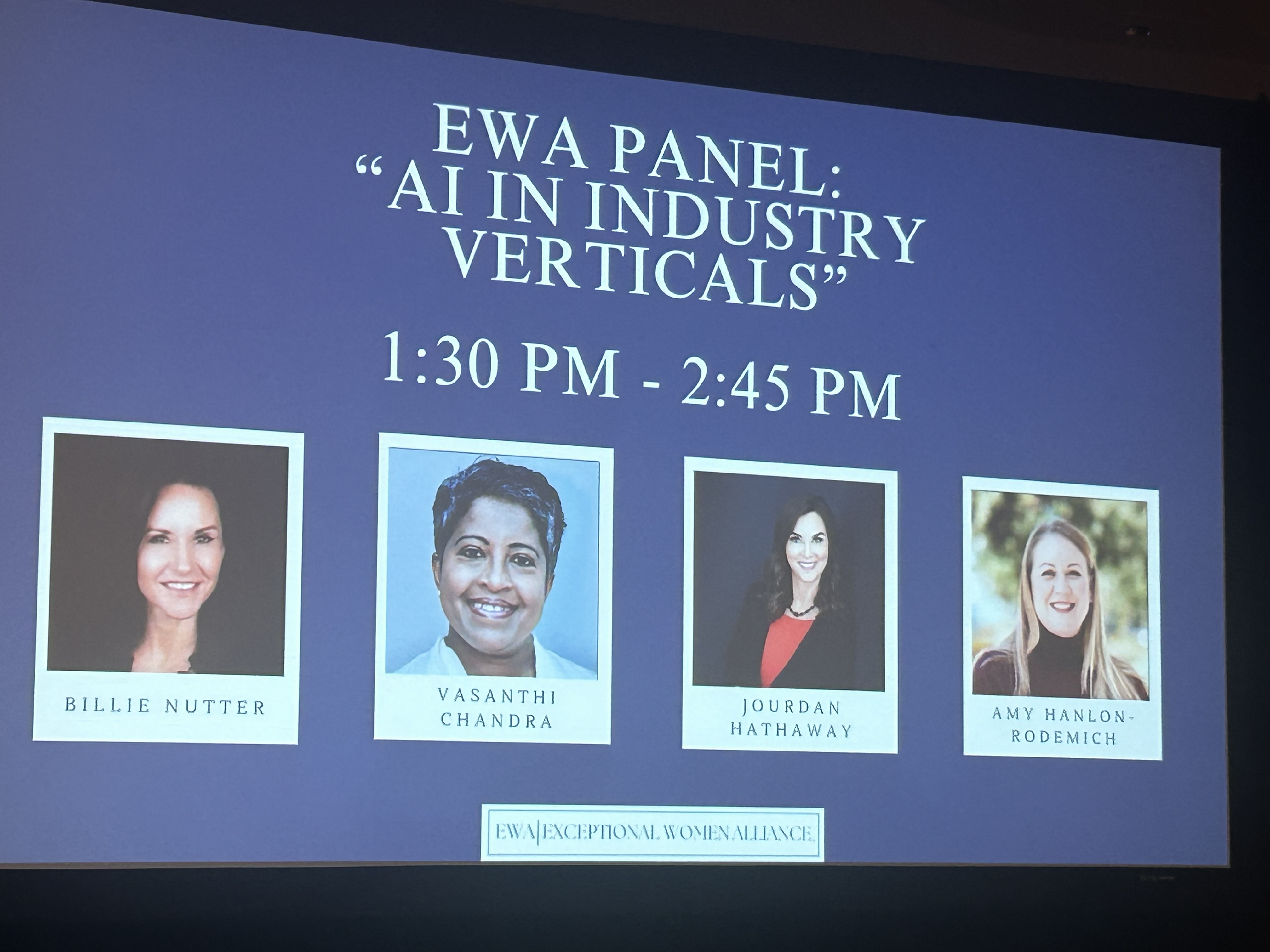
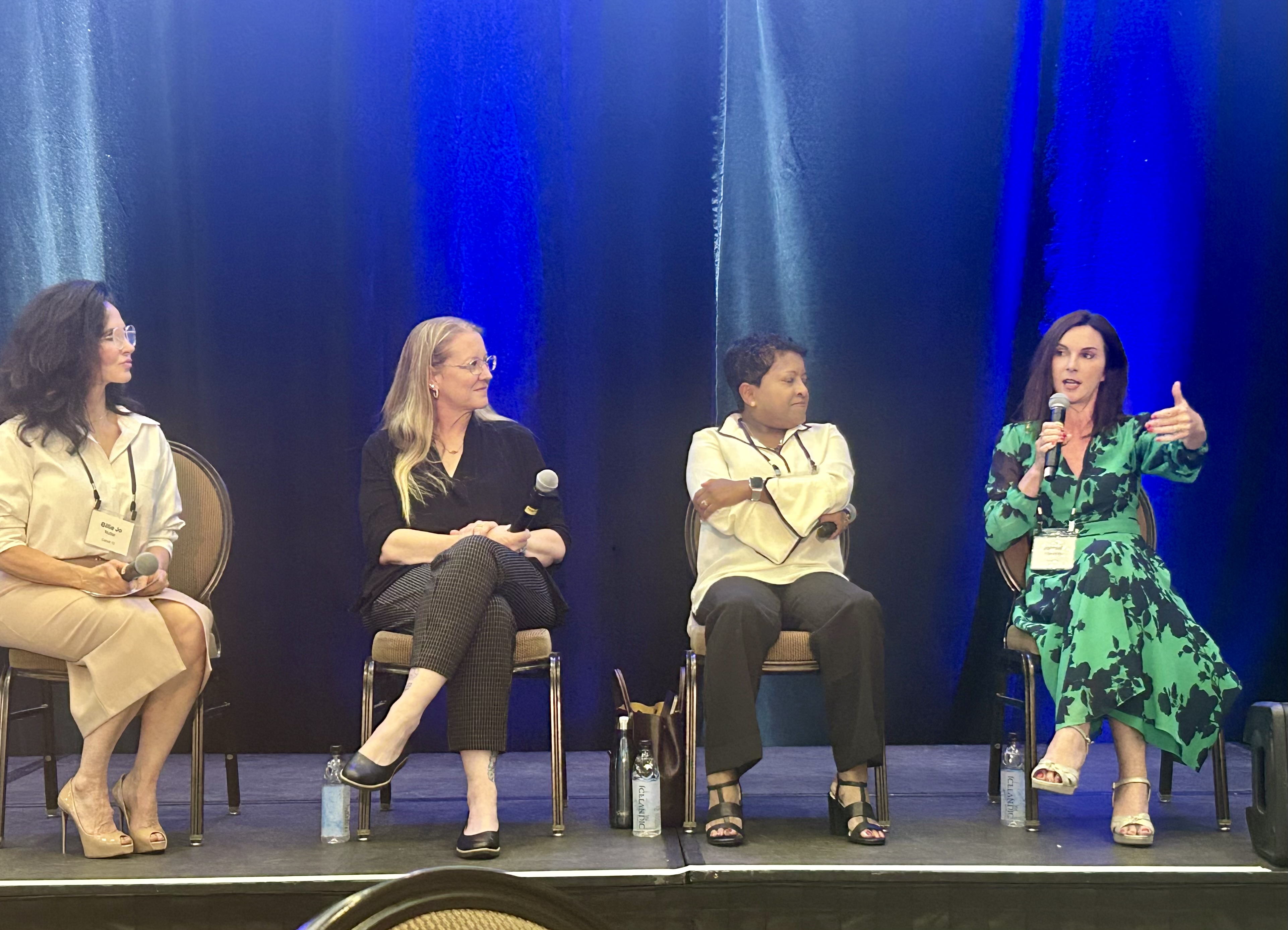
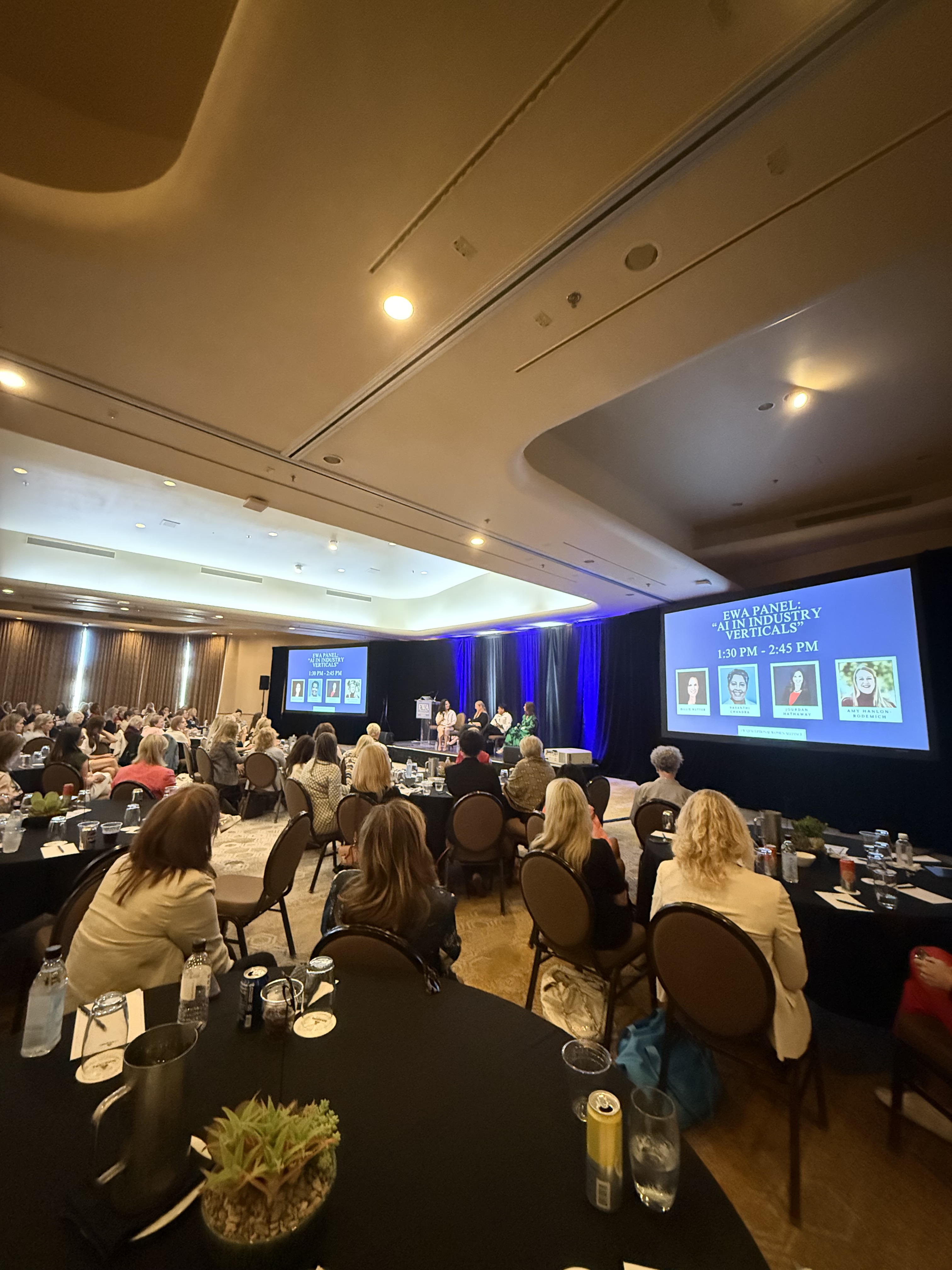
That mindset guided me recently when I spoke on a panel alongside some truly knowledgeable AI experts across industries—Amy “Amy H-R” Hanlon-Rodemich, Billie Jo Nutter, and Vasanthi Chandrasekaram. The audience? A powerhouse mix of industry-diverse scientists, Fortune 500 execs, government leaders, founders, and entrepreneurs – from both inside and outside of tech. People with no shortage of ideas and information hitting them daily.

So how do you make a topic like AI skilling resonate with an audience like that—without drowning them in jargon or fatigue? You demonstrate!

Making AI Skilling Memorable

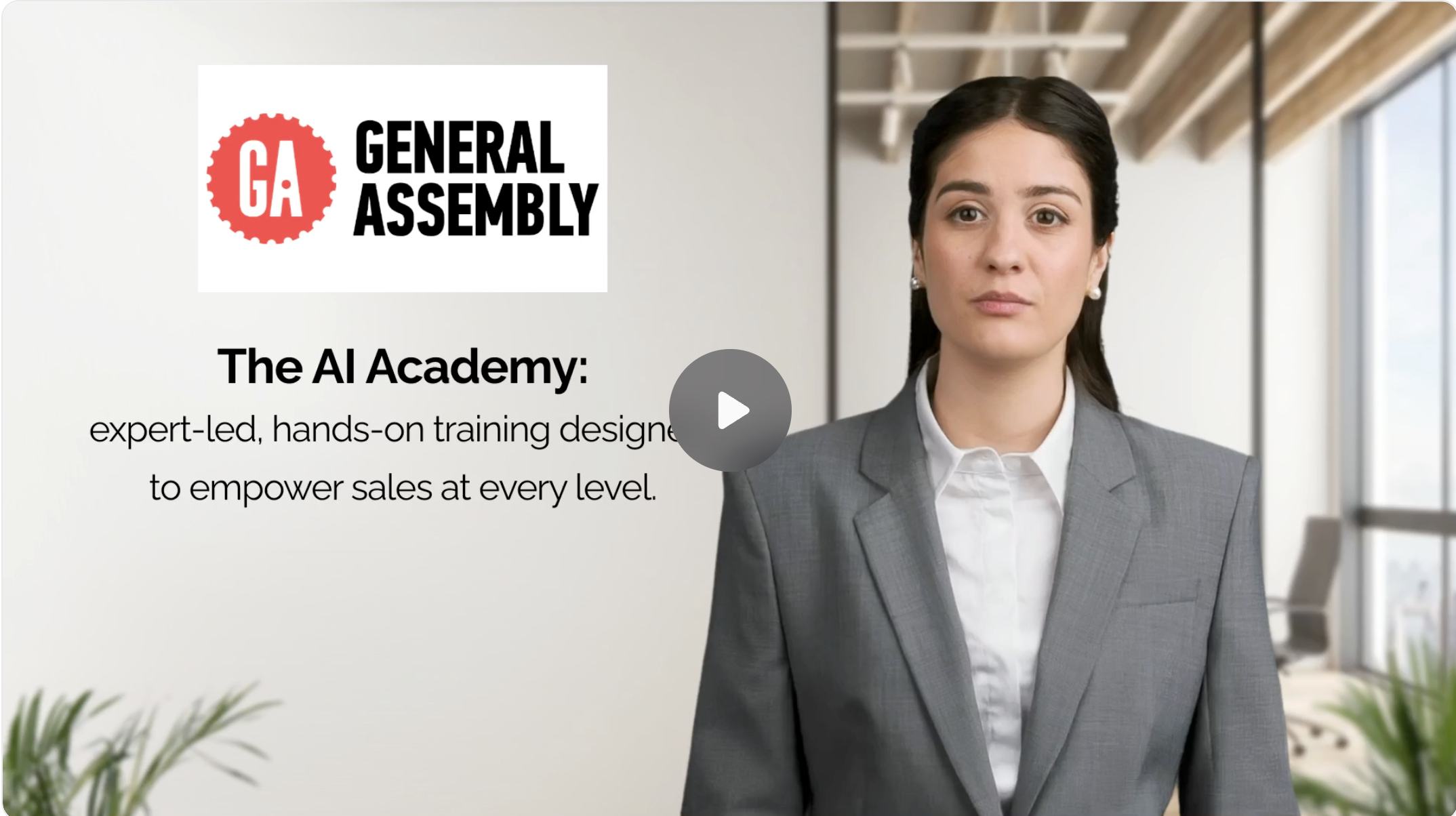
I used Synthesia (I have zero affiliation) to bring an AI avatar I named Cynthia to life. She opened our panel, welcoming the audience, asking questions, sharing trivia, even cracking jokes. Think awards-show host meets moderator. It wasn’t about showing off the tech, it was about creating a memorable, relatable experience that made AI’s potential click.

And this is the bigger point: AI skilling doesn’t mean you throw out what you already know; it’s about extending those skills with new tools.

  • A marketer who scripts, storyboards, and designs can now spin up multilingual videos at scale.
  • A trainer who builds slide decks can create dynamic interactive learning modules.
  • A product manager who builds demos can deliver personalized walkthroughs across time zones.
  • Heck, a Chief Marketing Officer / Chief Business Officer can skill herself and build an interactive AI video for a speaking engagement.

Business Benefits for Adding AI Generated Videos in your Toolbox

  • Innovation: Enables you to experiment with novel storytelling with dynamic avatars and immersive experience (I had way more fun than building a powerpoint BTW)
  • Scalability: Training, demos, and communications can help teams with lean resources scale.
  • Speed: Content production timelines shrink from months/weeks to days/hours.
  • Consistency: Messaging stays accurate and on-brand every time.
  • Accessibility: Multi-language dubbing enables localization.
  • Engagement: Interactive avatars connect in ways static PDFs and presentations can’t.
  • Efficiency: Lower production costs for lean teams and lean budgets.

While AI generated video platforms are powerful for scale, speed, and accessibility, there are many cases where traditional video production remains the right choice.

High-stakes moments often demand the creativity, nuance, and emotional resonance that comes from working with skilled directors, producers, and film crews. AI-generated video is a fantastic tool in the professional’s toolbox, but it doesn’t replace the craft of full-scale production when the stakes call for it. It’s not about either/or, it’s about knowing when speed and scale matter most, and when human-driven storytelling makes the biggest impact.

For me, it’s another tool in the growing toolbox of an AI-enabled professional. The real power lies in knowing when to apply the right tool to amplify skills you already have.

Key Takeaways

  • Show, don’t just tell: Demonstrations make AI practical, not abstract.
  • AI skilling builds on strengths: storytelling, design, and communication translate into powerful new applications.
  • Tools like Synthesia expand the professional toolbox: enabling speed, scale, and reach.
  • Business benefits are tangible: efficiency, engagement, accessibility, and cost savings.

Smack in the Middle of the AI Skilling Revolution at General Assembly

I also come at this from a unique vantage point. At General Assembly, I’m fortunate to be right in the epicenter of AI workforce skilling—where training, experimentation, and innovation are what we do every day. We’re tool agnostic, but we have the benefit of being exposed to (and testing) many of the innovations emerging in the market. That perspective helps me see both the promise and the limitations of AI tools and why the broader conversation about AI skilling matters so much.

Want to learn more? Empower your teams with in-demand AI skills through hands-on, customizable training, designed to unlock the full potential of AI across your entire organization. From leader to individual contributor, we have you covered.

Beyond the Résumé Glow: What Exceptional Women Teach Each Other

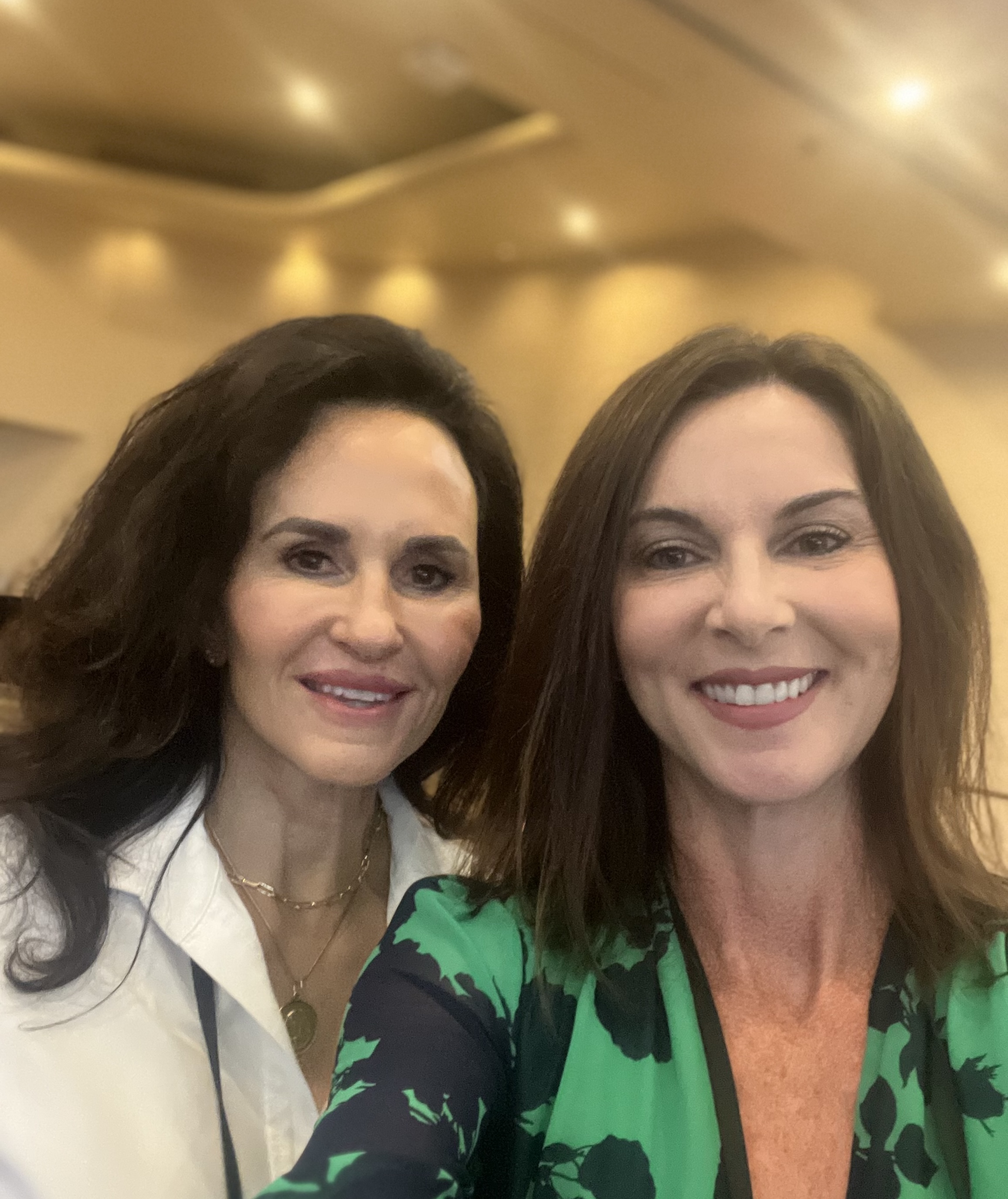
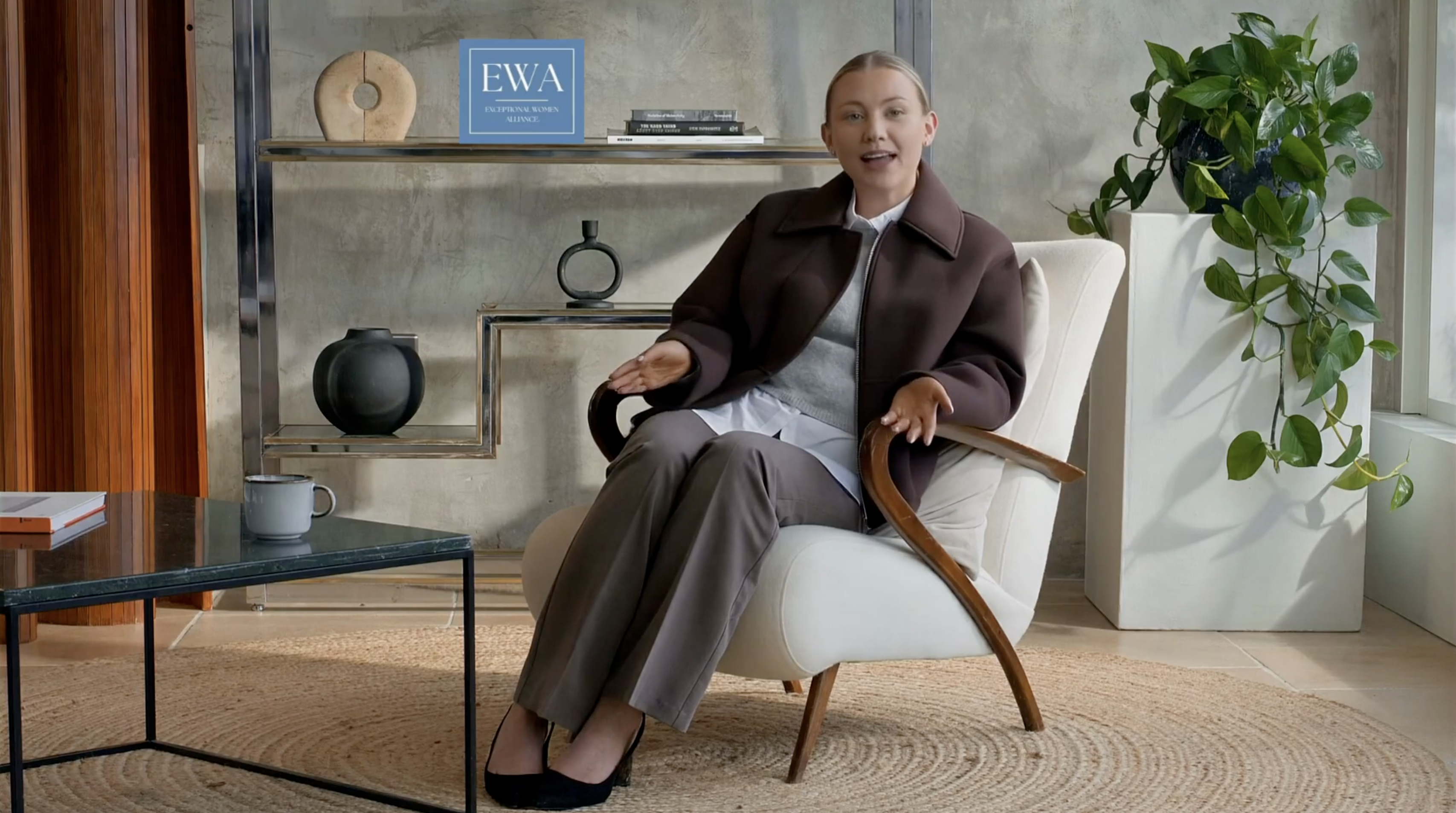
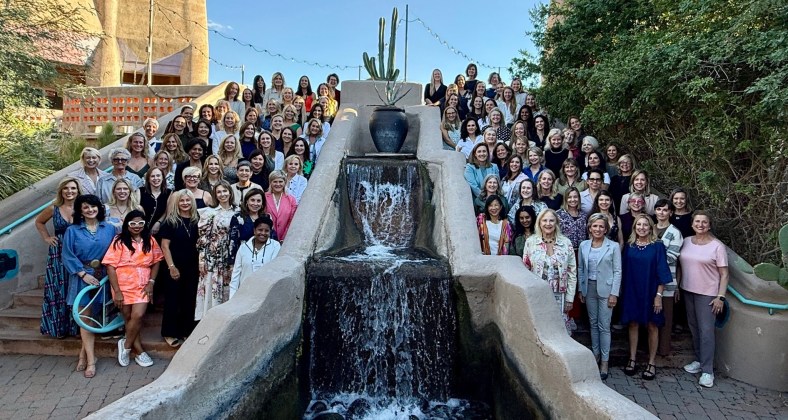
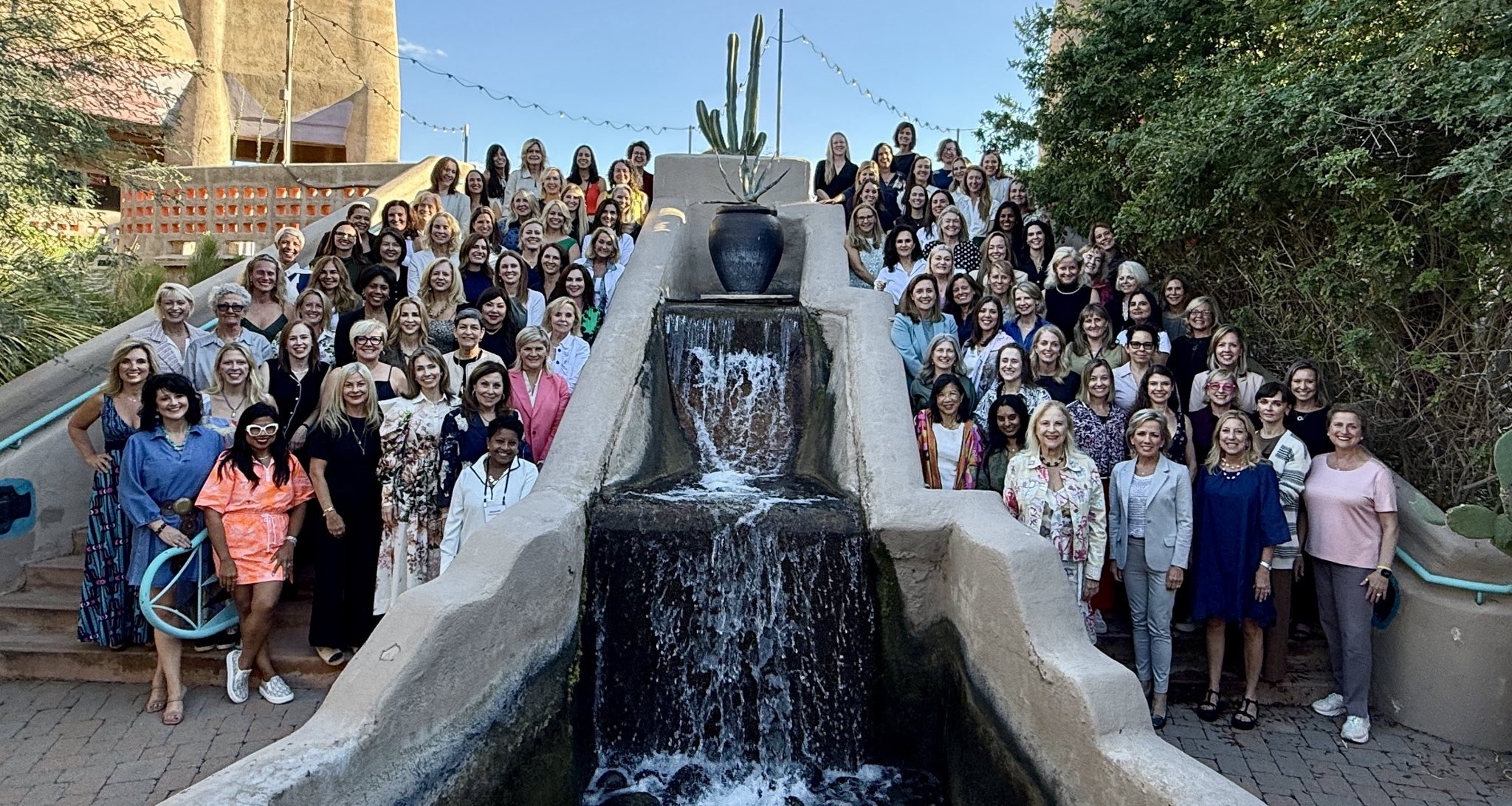
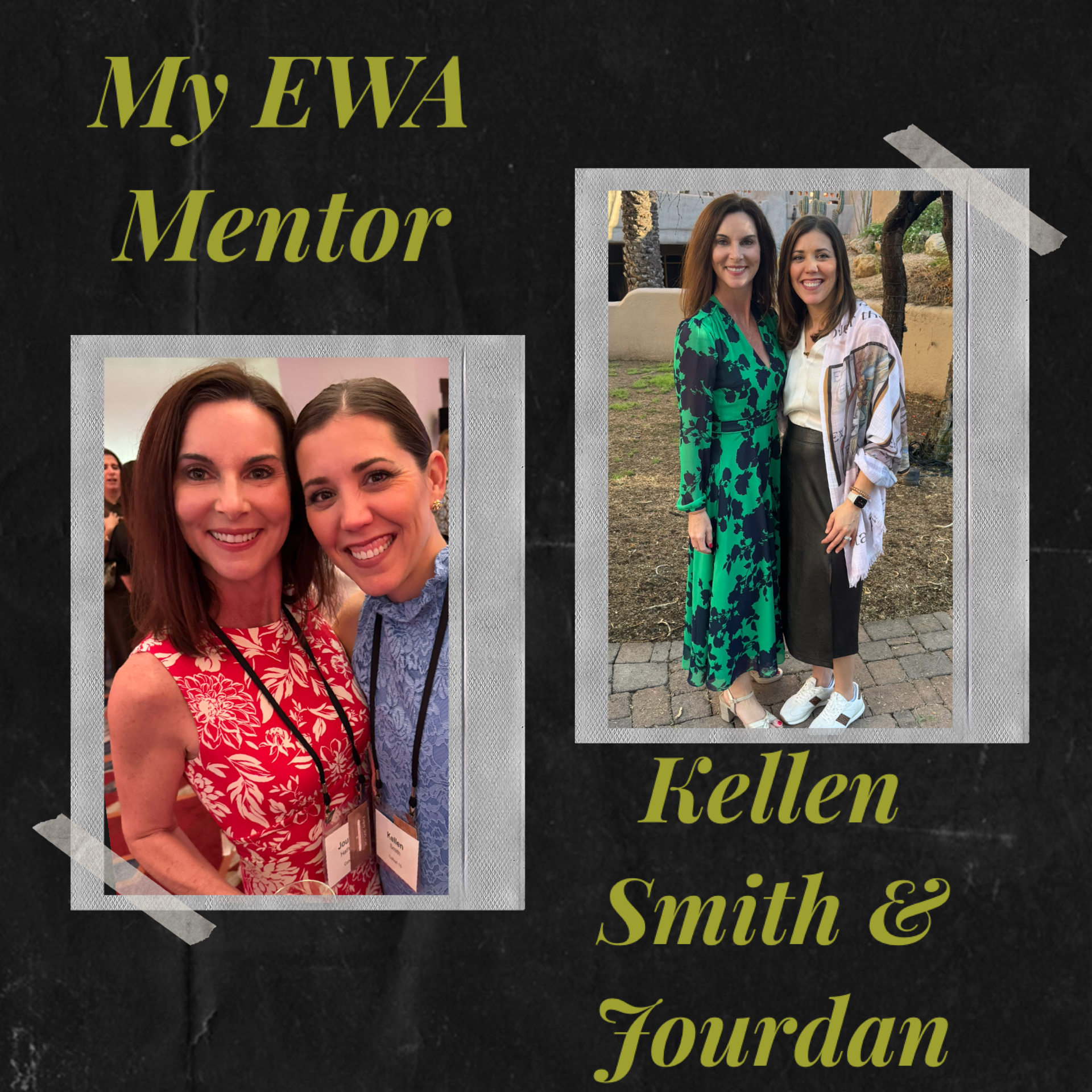
This past weekend I found myself in a room where the word “accomplished” felt like a pedestrian phrase. The Exceptional Women Alliance isn’t your average gathering. Picture this: one moment I’m deep in conversation with a fellow EdTech exec, the next I’m swapping stories with an astronaut. (Yes—an actual astronaut. You know when you talk about a moon shot? That’s not figurative for her where space really is her workplace environment.)

Inventors, scientists, Fortune 100 execs, government leaders, entrepreneurs bending reality into new businesses – everywhere you turned, another powerhouse. It’s enough to make your imposter syndrome sit up straight and take notes.

But here’s the thing: you eventually realize success doesn’t come easy for anyone, no matter how dazzling the résumé. Every woman there had a story of struggle, mentors who carried them through, and a moment when giving up looked a little too tempting. That’s what makes the conversations rich. That’s what makes the sisterhood real.

Because at a certain point, paying it back (through mentoring, championing, opening doors) stops being a “nice to do.” It becomes the joy. The privilege. The only way forward.

So yes, the weekend was inspiring. But not just in the glossy “wow that was cool” kind of way. More in the “this is what it looks like to drive impact, build legacies, and raise each other up while doing it” kind of way.

Implementing a digital worker isn’t just a tech deployment, it’s a people, process, and product orchestration.

We are implementing a digital worker in our contact center named GAbby (yes, clever).

Implementing a digital worker isn’t just a tech deployment, it’s a people, process, and product orchestration. I’m going to build out loud here and share real life reflections from our current implementation (given that General Assembly trains on AI, it only makes sense that we too have it embedded in our own workflows.)

When we implemented “GAbby,” our AI digital worker in our Admissions Contact Center, the pilot was laser-focused on measurable outcomes: throughput, transfer rates, incremental enrollments, and cost savings. We didn’t treat it as a tech experiment—we treated it as a business experiment.

At the surface, implementing an AI-powered agent like GAbby might seem straightforward: feed it some data, map out a call script, and launch. But the reality is far more nuanced. This initiative highlighted several truths about successful digital worker implementation:

1️⃣ Training is as much about guardrails as it is about knowledge.
It’s not enough to train the digital worker on what to say. You must also rigorously define what not to say. GAbby’s early responses hallucinated offerings (like free project management courses) simply because adjacent words appeared together in queries. When AI can access broad public data, constraining its knowledge base to reliable, vetted sources is critical for brand trust and compliance.

2️⃣ Words matter more than ever.
Changing “SMS” to “text message” seems trivial, but this small fix made the agent feel more relatable. The language used by AI must reflect your customer’s voice, not robotic syntax. The user experience is judged on tone as much as accuracy.

3️⃣ Cross-functional collaboration is non-negotiable.
This wasn’t just a “tech project.” Ops leaders framed user scenarios. UX experts evaluated conversation flow. Engineers handled system constraints and testing. Vendors (thx OutRival) contributed platform and expertise. Success only came when these perspectives aligned, especially around what “done” truly looked like.

4️⃣ Personalization requires planning.
Personalizing conversations based on previous interactions or user data makes agents feel smarter, but only if the underlying CRM hooks, lead mapping, and data flows are in place. GAbby’s ability to personalize is promising, but it must be stress-tested across real-world variations and we know iteration is coming.

5️⃣ Launching isn’t the end, it’s the beginning.
Everyone involved treated this launch not as a final product but as a live experiment. There was an openness to iterate based on real interactions. That mindset (launch, listen, learn, and improve) is essential to evolving a digital worker from functional to exceptional.

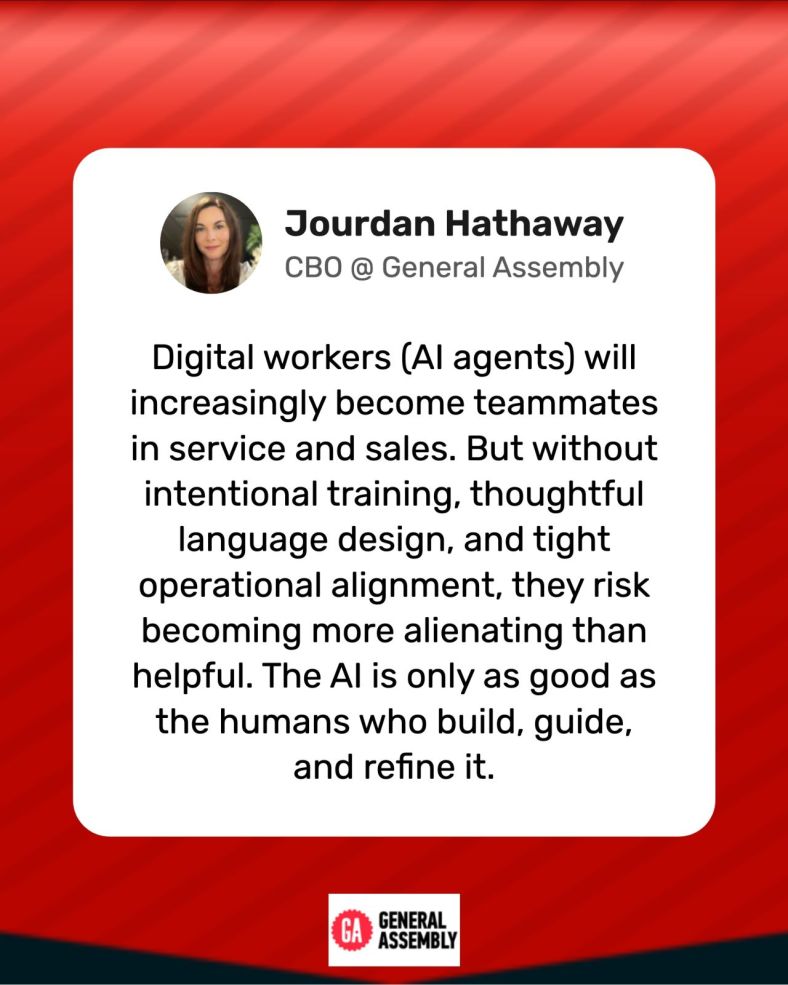
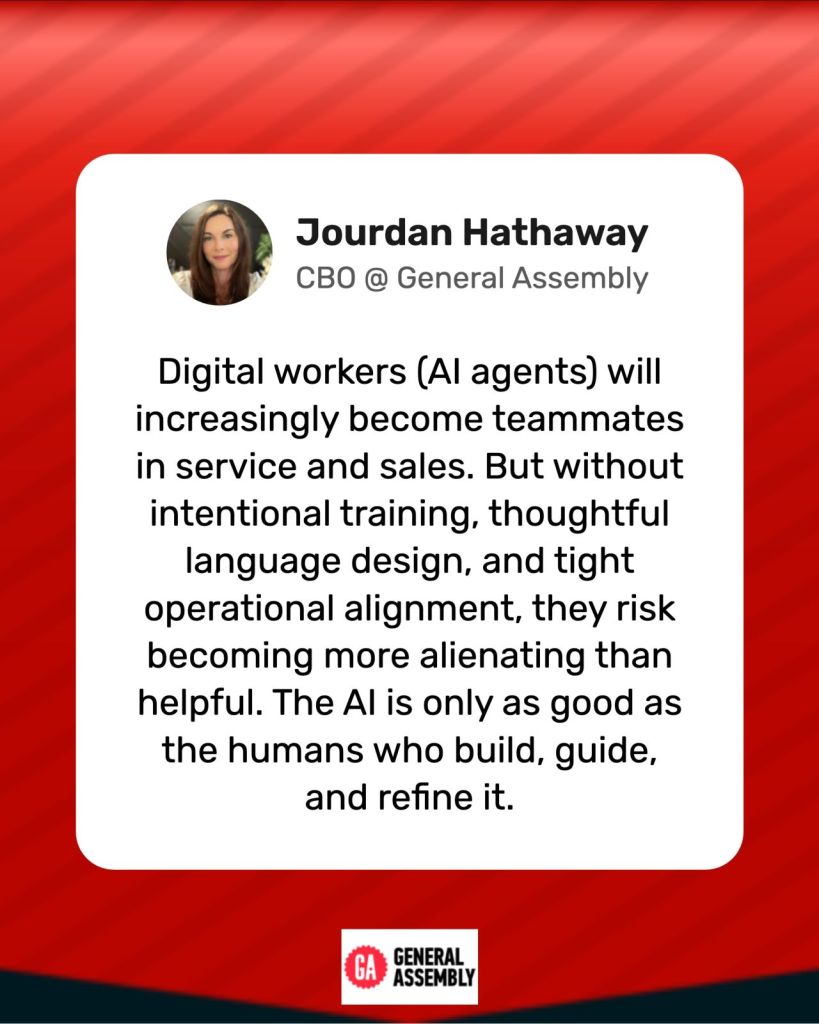
Digital workers (like GAbby) will increasingly become teammates in service and sales. But without intentional training, thoughtful language design, and tight operational alignment, they risk becoming more alienating than helpful. As this project showed, the AI is only as good as the humans who build, guide, and refine it.

From Skills to Sculpture: How Adobe Connects Creators Across Generations

Every day, I get to witness the impact of Adobe empowering the next generation of creators and marketers through General Assembly‘s partnership on the Creative Skills Academy and our apprenticeship program. But this past week, my family experienced Adobe’s influence in a completely different way: through the Adobe Creative Residency Programme at the Victoria & Albert Museum (V&A).

“Mom, it’s really awesome this exhibit lets you fidget and wear headphones”

“Mom, isn’t it interesting that Luca {Bosani’s} art in the year 2024 explores when a shoe becomes a sculpture and we also saw that small, tall, fancy shoe {huapandi} from the 1800s {a Chinese shoe that was also on display as a sculpture in another part of the V&A}. It’s weird, it’s like every generation and every country has a unique way of experiencing similar things.”

Let me back into both of these quotes.

They came from my 15 year old daughter. My family just got back from a weeklong dream vacation in London and we went to the V&A while there. We knew to go, and to visit the Adobe Creative in Residence programme, because I met the partnership team at Adobe MAX last year.

It was incredible. We got to see the Design and Disability showcase the contributions of Disabled, Deaf, and neurodivergent people. We also explored the works from the 2024 residents Luca Bosani, Jacqui Ramrayka and Rachel Sale and that’s where she made the shoe comment.
In one gallery was a ceramic shoe from 1800s Asia; in another, a modern work by 2024 Adobe Creative Resident Luca Bosani, a London-based multimedia artist exploring the question, “When does a shoe become a sculpture?” Centuries and cultures apart, yet united by a shared instinct to communicate through creativity.

Across time, media, and experience.

Whether in classrooms, museums or at work,  it’s interesting to see how Adobe and GA are helping people express, connect, and imagine across time, media, and experience.

Prompt Skilling Progression and Proficiency

For a business term, I’ll call this something like “prompt skilling progression and proficiency,” but here’s what employee upskilling with AI actually looks like in real life. I’ve seen this play out across teams and orgs of all sizes.

Download PDF of 10-Step Prompt Skilling Progression

Phase 1: Skeptical Curiosity
Fine, I’ll use AI and see what it’s all about. I don’t trust it though.

Phase 2: The First Prompt
Employee opens the AI chat tool of the moment (ideally one with a compliant enterprise account, but this post isn’t about that) and enters something basic like: “Write an email to X person about Y topic.” Wow, cool. That was helpful.

Phase 3: Writing Assistant Era
Employee starts asking the tool for more writing help: “Write an article about X topic.” “Create a blog post about Y.” Dang, that’s awesome.

Phase 4: The Experiment Zone
Now comes the flurry of both serious and fun prompts.
Serious: “Write a memo to leadership about these findings,” with a copy-paste avalanche of fragmented info that turns into a polished output the employee is thrilled to have expedited.
Fun: “Write a funny five-year anniversary note for my colleague Brenda. She’s in Dallas, works in media, loves orchids.” The AI nails it. The employee tweaks it slightly and posts it to Slack or Teams.

Phase 5: Strategic Prompting
The prompts evolve: business plans, project plans, go-to-market strategies, summaries, sales talking points, market scans.
Employee discovers they can upload files, images, and documents. (Hopefully on the enterprise version. Big plug for that.)

This post is about what I see with prompt upskilling, but just to say it: Using public AI tools can pose serious risks if you’re entering sensitive or confidential information. These platforms may store prompts or responses, potentially exposing proprietary data or personal details. That’s why secure, enterprise grade AI tools are essential: they offer data encryption, access controls, and usage governance to ensure your information stays protected.

Phase 6: Prompt Perspective Shift
Then it clicks: you’ve only been prompting “as yourself.” You start giving clearer instructions about what you want back, in what format, and using which inputs.
You learn to prompt as an industry expert outside your role. You ask for sources. You ask for thinking. The AI delivers.
Phase 7: Structured Prompting
Time for a major prompt evolution:
Employee learns to prompt using taxonomies that include role, request, goal, instructions, considerations, tone, style, and output format.
Example: “Act as a strategic marketing advisor with expertise in quarterly planning, audience analysis, and content campaigns across multiple channels.”

Phase 8: Prompt Hoarding
The prompt library begins. Word docs and spreadsheets start piling up. LinkedIn saves stack up. All of it might be useful one day.

Phase 9: Prompt Overload
Weeks pass. Employee is drowning in saved prompt docs across cloud folders and shared drives. Can’t find that one prompt from last week.
Still tries to send them along to help a prompt newbie.

Phase 10: Prompt Infrastructure Seekers
Employee starts hunting for tools that offer a searchable, categorized prompt database to make this curated chaos usable again.
Because the productivity gain of great prompting is now being slowed down… by all the prompts.

Oh, the irony.

A Symphony of Memory: Ludovico Einaudi and The Summer Portraits Tour

I have lived. I have loved.
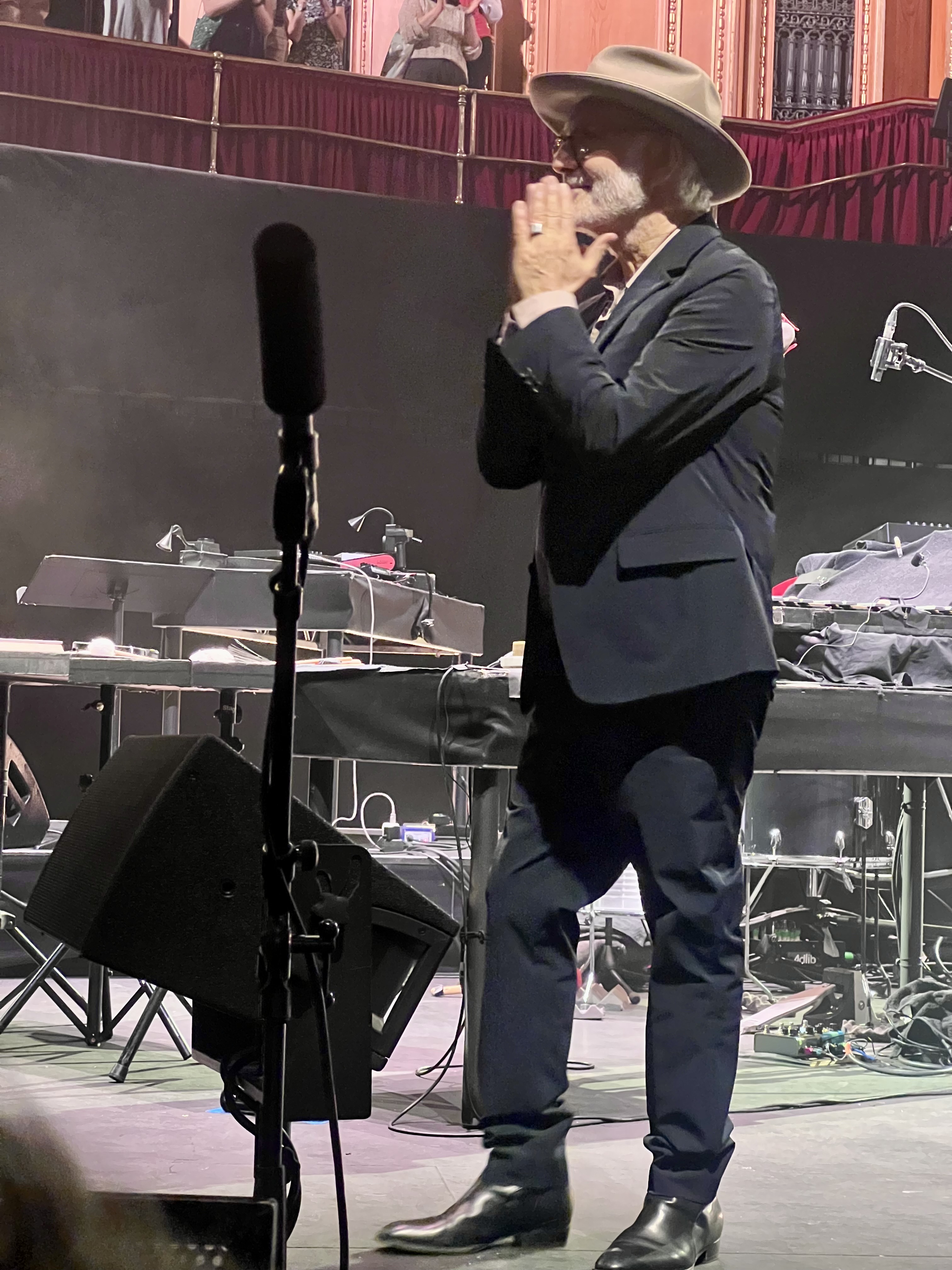
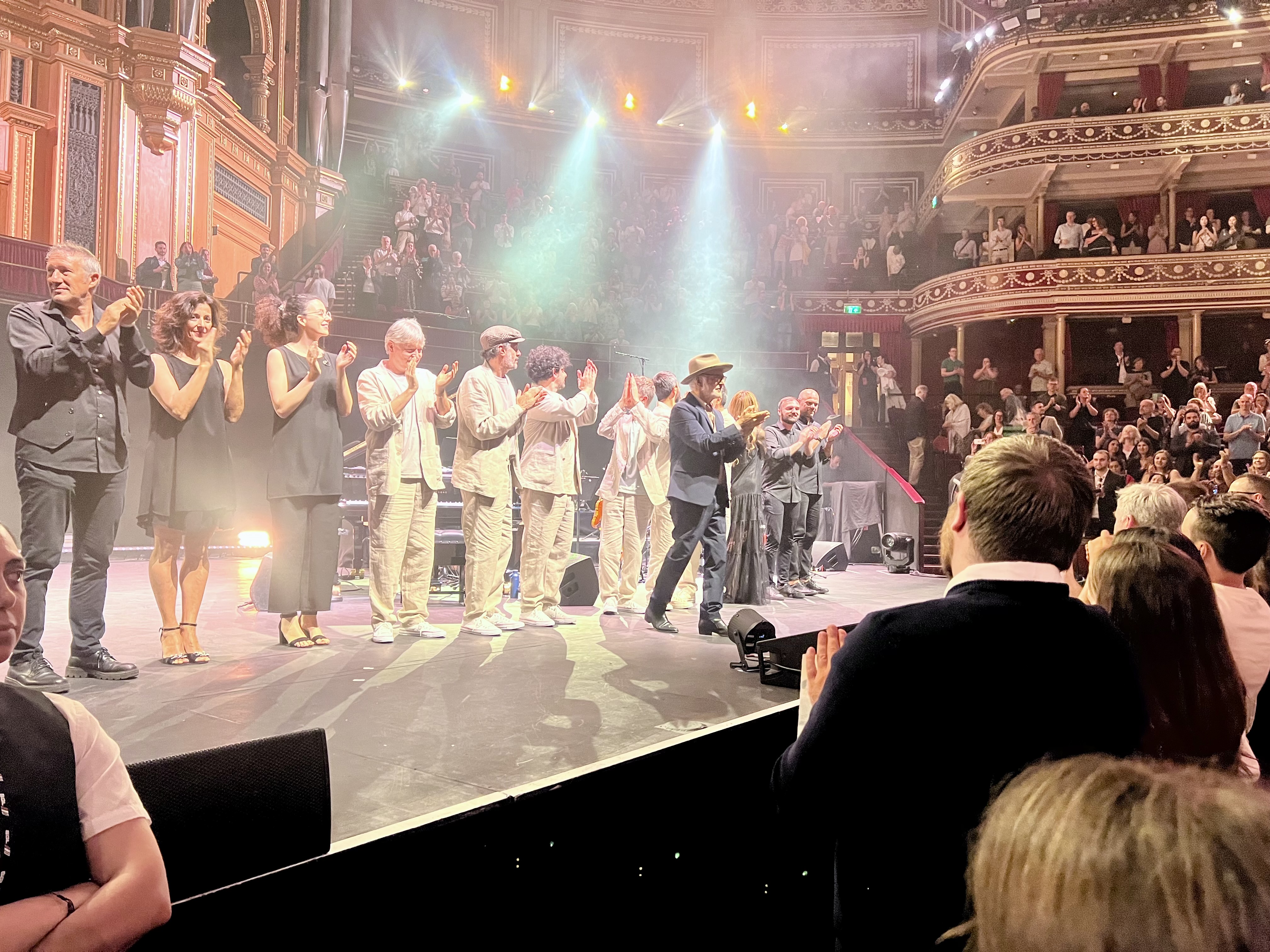
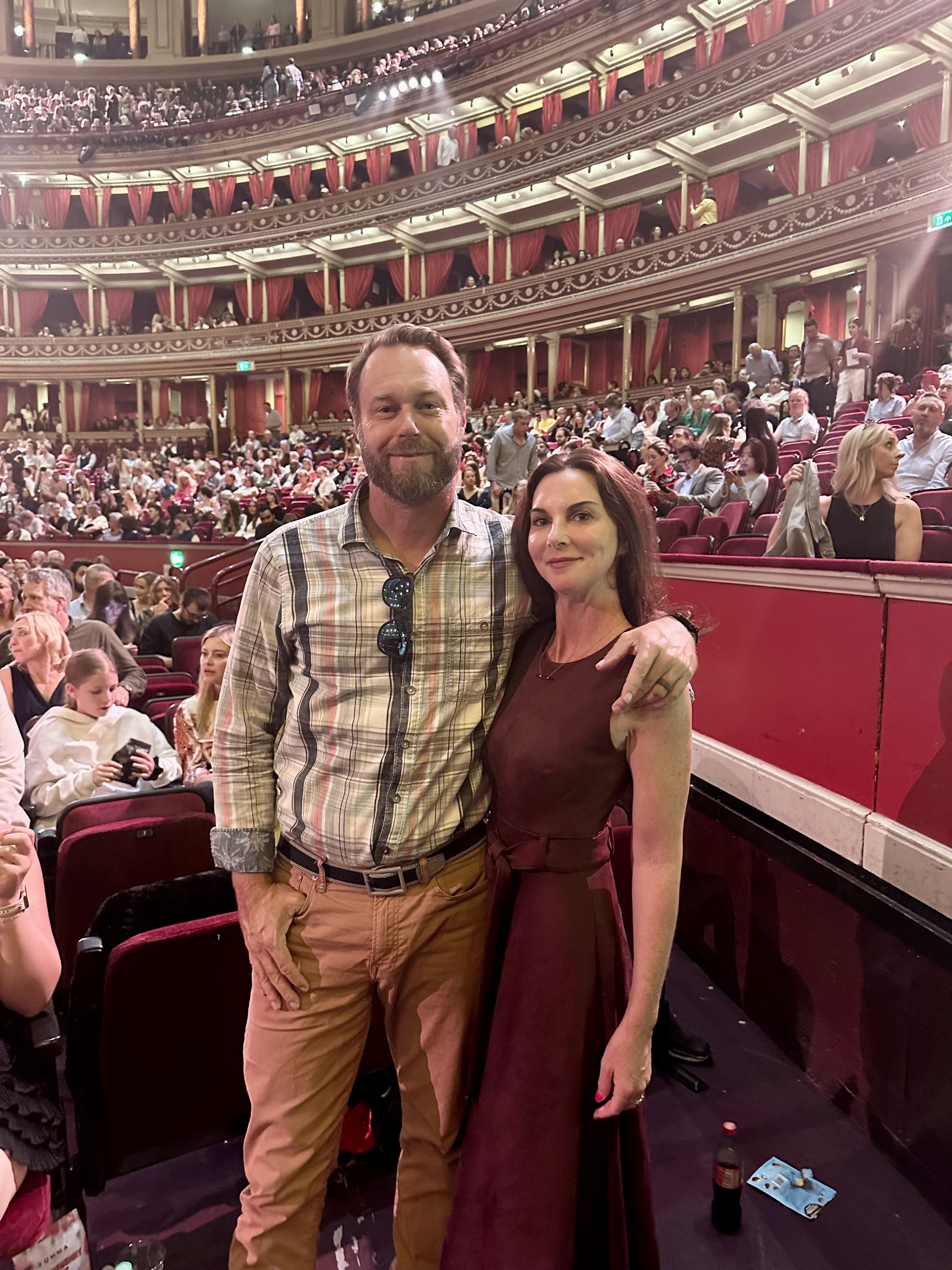
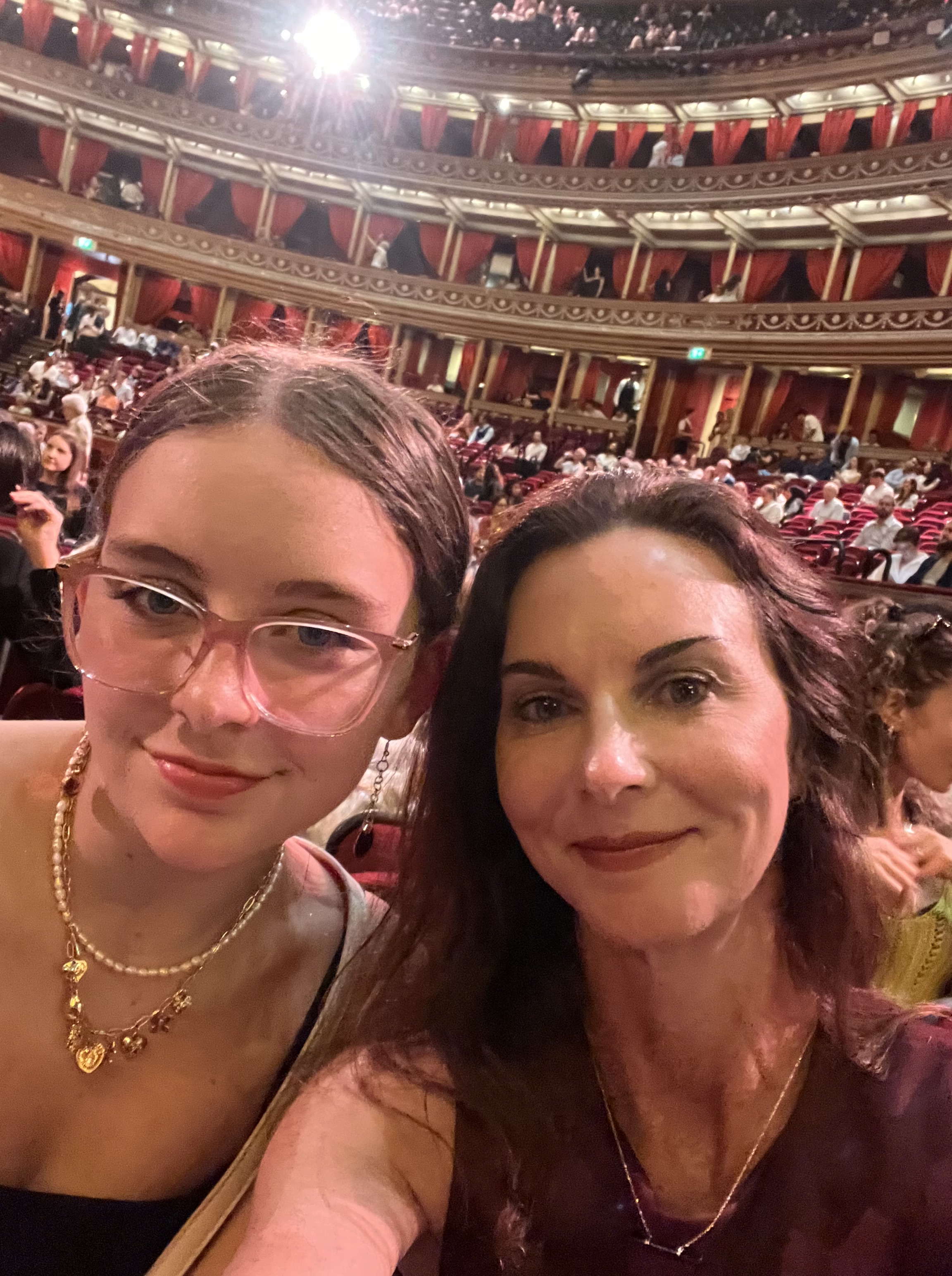
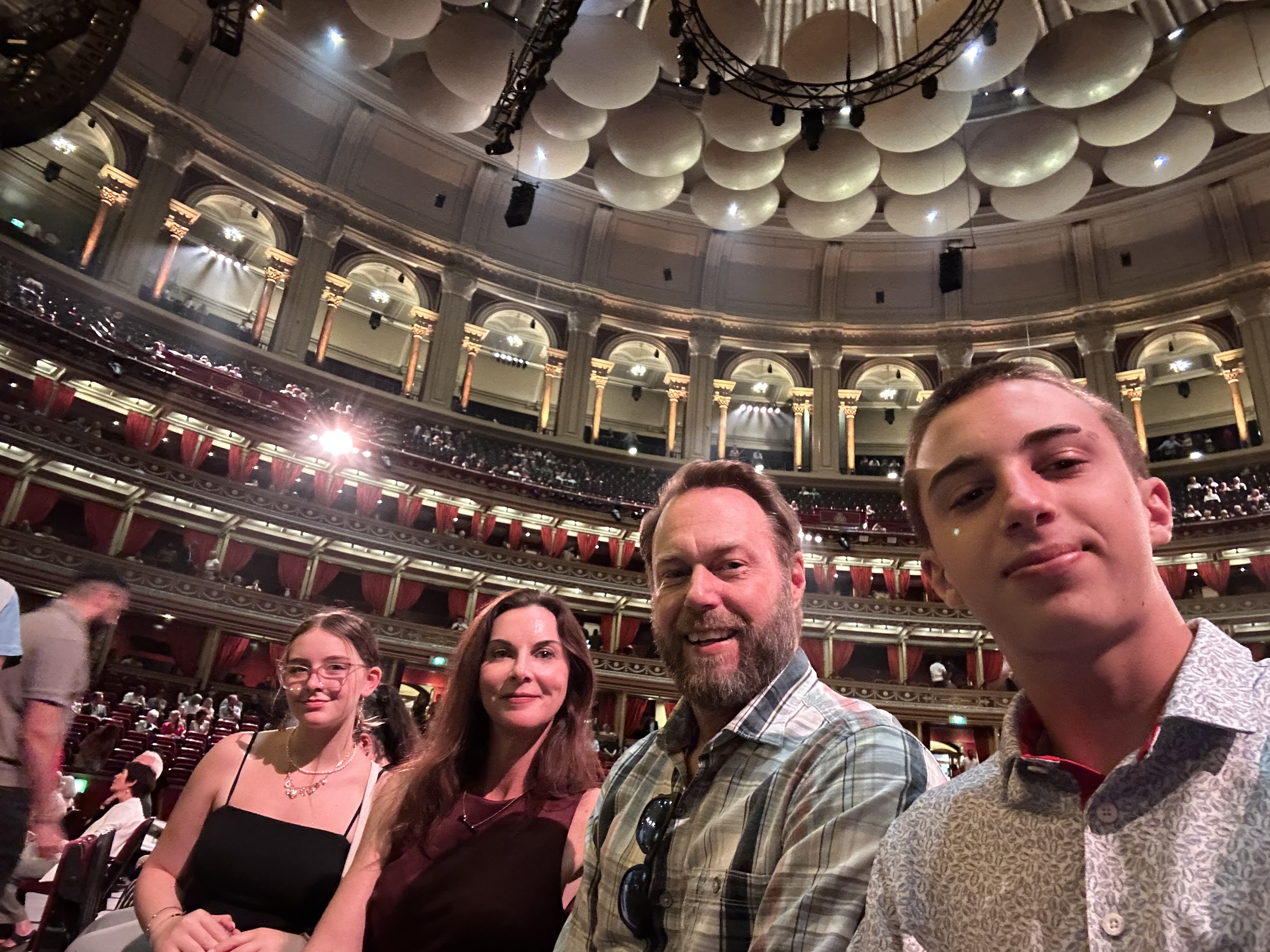
I have listened to Ludovico live at the Royal Albert Hall in London.

I left my body and became the very fabric of music itself.
Space and time collapsed, replaced by the transcendent fluidity of I Giorni.
Breath left my lungs to become the fog of ethereal amber light
that bathed the musicians on that historic stage.

I felt every emotion the human heart can hold—
and then, the heavens loaned me a few more for the length of his compositions.

Una Mattina reconstituted my breath just enough
to give my tears a flowing companion.

I clutched my daughter’s hand on the right,
my husband’s on the left,
and my son looked on as the final song—
a newly arranged Experience—brought the house down.

Oh dear universe, I ask only one favor:
Do not ever let me forget how I felt tonight.
I beg of you.

What Happens When Sales Leaders Stop Talking About AI… and Actually Start Implementing It?

Representing General Assembly at the Institute for Effective Professional Selling’s AI for Sales Excellence Awards

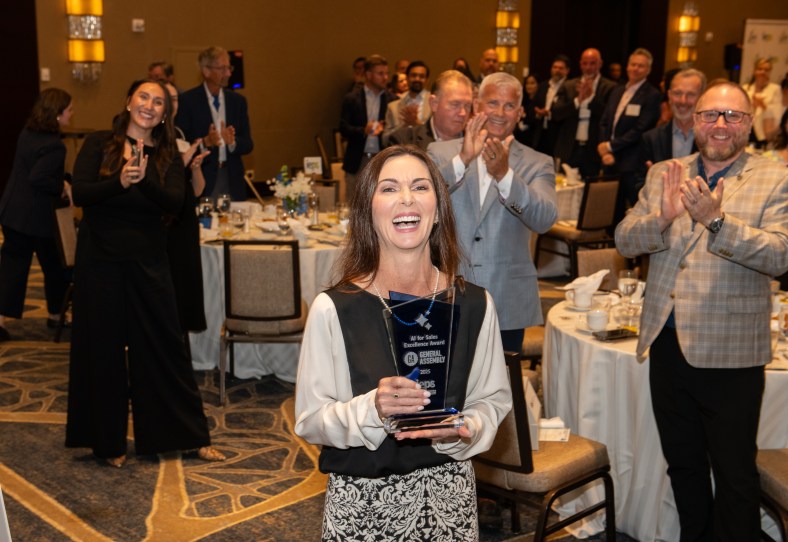
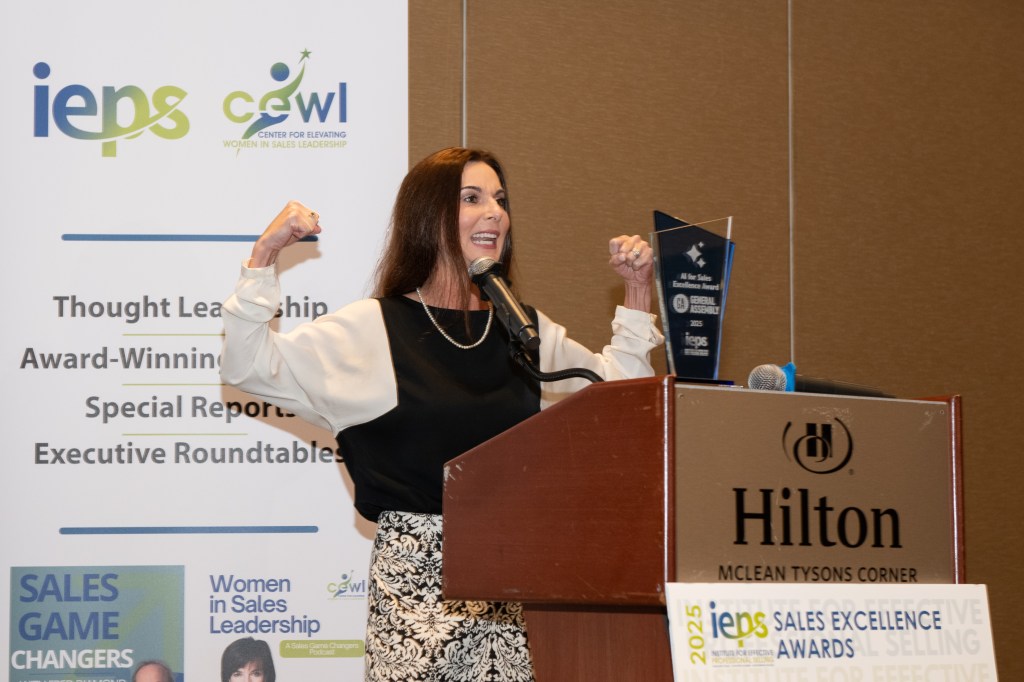
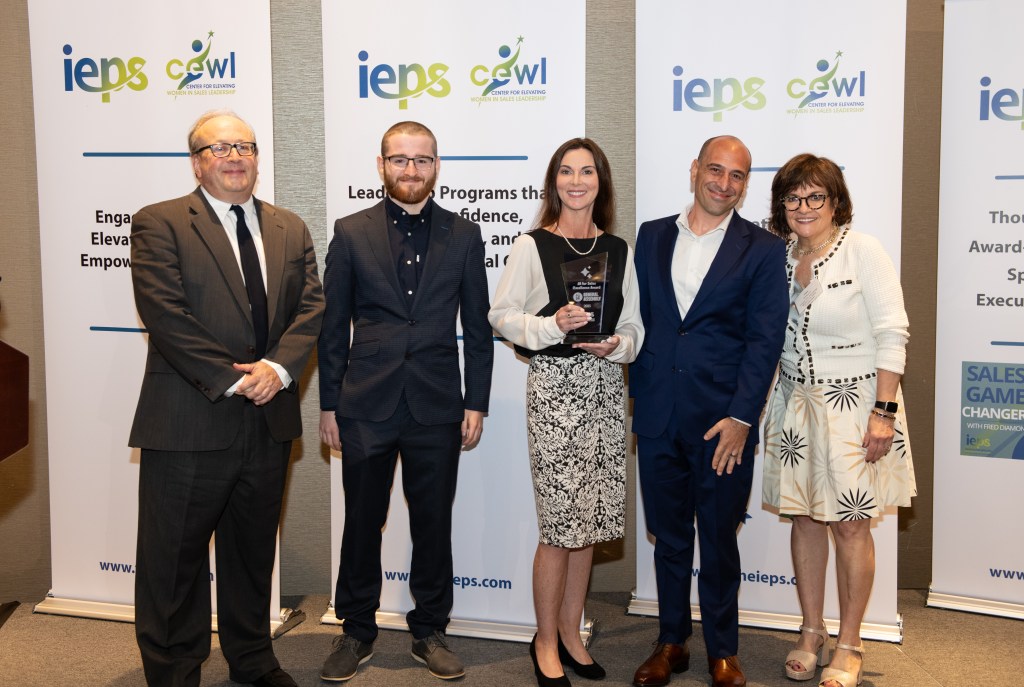
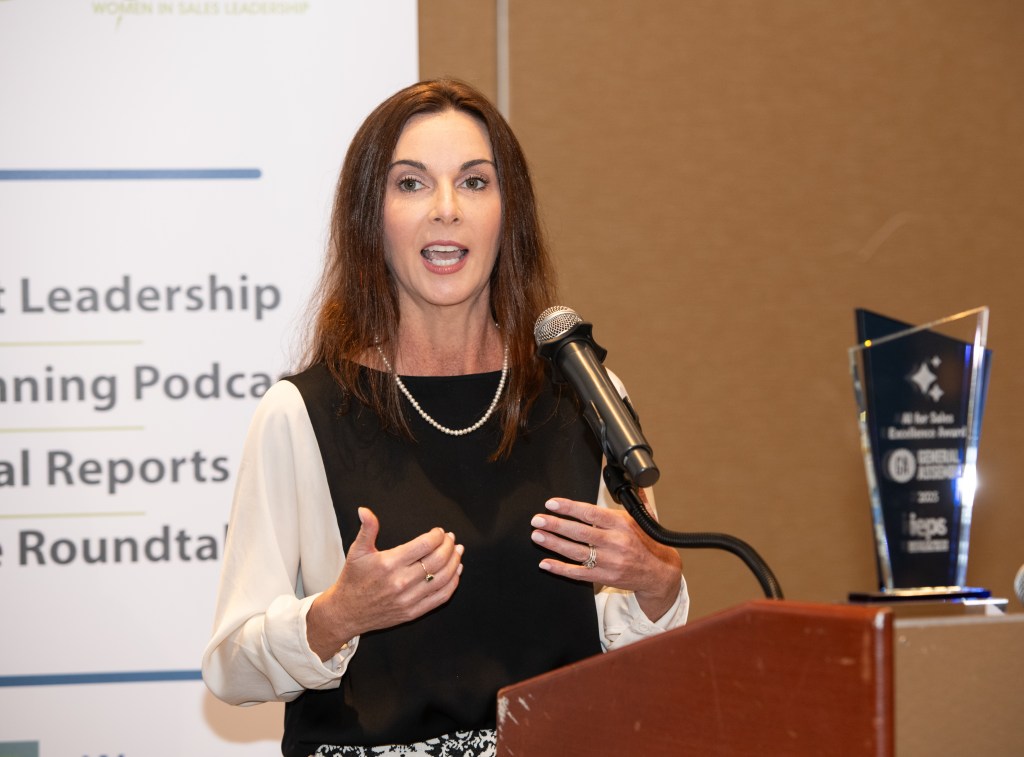
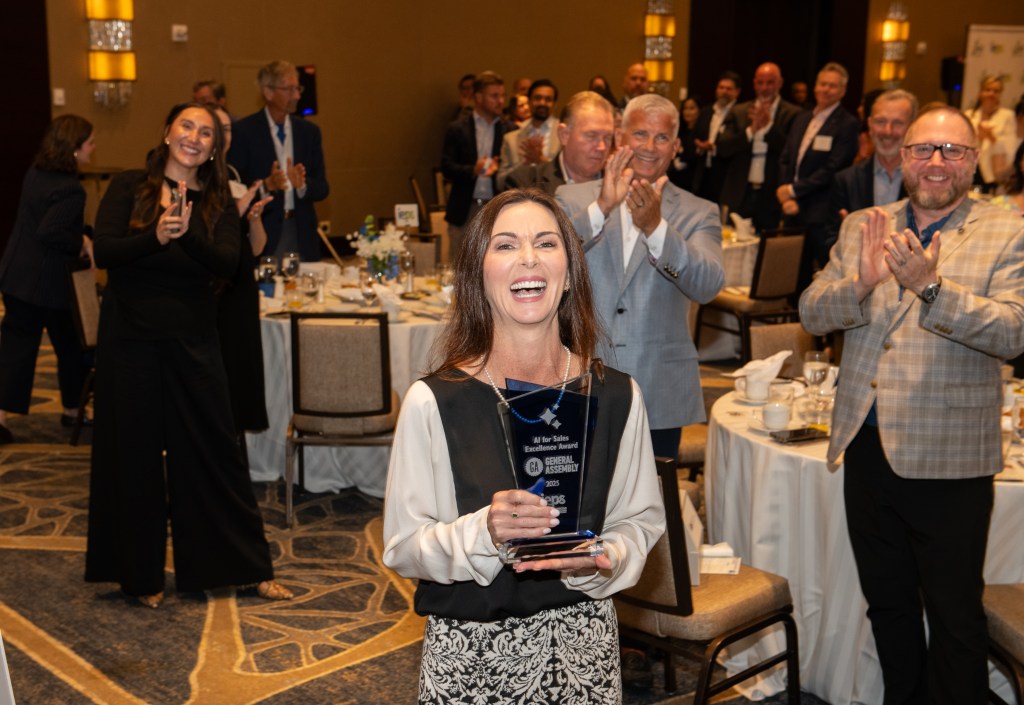
Last week in Washington, D.C., I had the honor of being on the Sales Game Changers Podcast stage and accepting the Institute for Effective Professional Selling’s (formerly IES) first-ever AI for Sales Excellence Award on behalf of General Assembly.

And I have to tell you, this one meant something special.

Not because it was shiny (it was very shiny).
Not because it was an AI award (and you know I love all things AI training).
But because this award recognizes something deeper… something our industry needs more than hype, jargon, or yet another “state of AI in sales” webinar.

It recognizes doing the work.

Origin Story: Before Our AI Academy Was a Program… It Was Our Own Training

Before we built AI Academy for Sales, we went through the training ourselves.

We were our own pilot group: testing prompts, stress-testing workflows, building repeatable use cases, and figuring out how to strip away the noise and get to what really mattered:

👉 More time with customers.
👉 More listening, less administrative drag.
👉 More problem-solving, fewer “Time Suck Yuck” tasks (yes, that’s the official term now).

Sales professionals don’t wake up excited to update CRM fields, manually prep call notes, or dig through old decks for messaging. They want to solve problems, create impact, and build relationships.

So that’s exactly what we designed our program to enable.

Inside the Episode: Making AI Practical, Not Theoretical

On the Sales Game Changers Podcast, Gretchen Jacobi and I joined host Fred Diamond, alongside the incomparable Zeev Wexler, who sponsored the award, to talk about the very real, very un-glamorous day-to-day shifts that make AI stick in sales orgs.

A few of the themes we discussed:

1. The early AI adopter wins the sale.

“If the early bird gets the worm, the early AI adopter gets the sale.”
Because in a world of buyer noise, the reps who show up faster, more prepared, and more relevant… win.

2. Start small—then scale.

As Gretchen wisely said, start with one low-risk task.
Something uncontroversial, like:

  • Prepping discovery calls
  • Summarizing account history
  • Drafting follow-ups
  • Updating CRM
  • Researching accounts and personas

The wins compound shockingly fast.

3. AI isn’t replacing sellers—it’s releasing them.

Freeing them from low-value administrative work so they can focus on high-value human connection.

At the IEPS event, every awardee said some version of the same thing:
Sales is (and always will be) a relationship business.
AI just gives you the time back to be better at it.

GA’s Three-Tier AI Academy: Teaching Sellers to Sell in the AI Era

One of the reasons we were honored with this award is the structure and practicality of our three-tier AI Academy for Sales, which gives sellers:

🔹 Tier 1 — AI-Enabled Tools

Foundations: prompts, workflows, research, summaries, CRM hygiene, call prep.

🔹 Tier 2 — AI-Augmented Automation

Templates, reusable workflows, sequencing, process improvement, sales ops support.

🔹 Tier 3 — AI-Superpowered Strategy

Predictive forecasting, multi-touch analysis, personalization at scale, revenue insights.

It’s tactical. It’s applicable.
And we use it internally.
Every day.
Because transformation only works when it’s lived, not laminated.

The Award Moment: Why It Mattered

Standing on that stage in D.C., listening to the stories of the other honorees, a unifying theme kept coming up:

Sales excellence is about partnership, problem-solving, and humanity.

The quiet superpower of AI in sales isn’t the automation itself.
It’s what teams choose to do with the time they get back.

More time strategizing.
More time connecting.
More time being the trusted advisors buyers actually want.

That’s what makes AI worth implementing, not just talking about.

The Question I’ll Leave You With

We ask this inside our training, and I’ll ask it here too:

What’s one sales task you’d love to automate with AI so you can get back to the part of the job you actually love?

And if you missed the episode, you can:
🎧 Listen or read the transcript here → https://www.salesgamechangerspodcast.com/generalassembly/

Huge thanks again to Fred Diamond, Zeev Wexler, and everyone at the Institute for Effective Professional Selling for recognizing the work we’re doing at General Assembly to help sales teams thrive in the AI era.

Here’s to less Time Suck Yuck and more time doing what humans do best. ✨

Catharsis on the Highway and the Power of Music

Music is one of the most essential parts of the human experience…a universal language that transcends words and borders. You certainly do not have to speak French to fall in love with “La Vie en Rose”. Music has existed for nearly as long as humans have, evolving from simple rhythms into infinitely complex compositions, yet always serving the same purpose: to give voice to what we feel, even when we can’t express it ourselves.

Music is there for us in moments of joy, triumph, heartbreak, nostalgia, hope, rage, and every emotion in between. It can comfort, energize, inspire, or heal (sometimes all at once). That’s why choosing a single favorite song, or even a top five, feels almost impossible. The beauty of music is that it meets us exactly where we are—what speaks to you in one moment might shift entirely with your mood, your season of life, or the memories tied to a particular melody. It’s a constant companion, endlessly adaptable, and deeply personal—a soundtrack to the human soul.

Car singing is its own kind of magic: windows down, volume up, belting out your favorite songs even if you can’t sing AT ALL. Whether it’s a solo moment of catharsis on the highway (De La Soul, “Me Myself and I“ style) or an impromptu car concert with friends and family, there’s something beautifully liberating about turning your vehicle into a stage. These shared soundtracks become memories – road trips scored by your favorite hits, passenger harmonies, or off-key (but full-heart) choruses that somehow make the song even better…and most certainly the drive.

To quote Fiona Apple, “nothing wrong when a song ends in a minor key”—sometimes that’s where your soul idles as well.

Until of course you rebound to your George Gershwin moment. “I got rhythm, I got music. Who could ask for anything more?”

Reflecting On Real Time Feedback

Early in my career, I left a client meeting that I thought I nailed.

A senior executive pulled me aside afterwards and said…


“I appreciate the enthusiasm on your part of today’s presentation around the over delivery of marketing leads, but they didn’t yield sales so it’s not actually success. Next time I want you to work backwards from the revenue goal and understand the drivers across the continuum of the sales cycle – otherwise nobody is impressed about leads. Also, it’s an imperative that we represent ourselves as a united team and solution. Think like the client.”

Ouch? Nope, very needed for a junior worker who hadn’t been in many client meetings before. This was real time feedback, respectfully given, that grew me early on. This is what professional development in action looks like.

If you find yourself in a meeting today where a junior worker needs some coaching, be their growth catalyst. Deliver that feedback!

They just might remember it 15 years later and appreciate it.

☄️ Follow me, Jourdan Hathaway, for human insights on leadership, EdTech, marketing, and business operations. I am not a bot – to prove it, I can identify all boxes that contain a traffic light🚦.

Reflections from the Other Side of the World: A Global Lens on Innovation, Imagination, and Relevance

A Reflection on Global Inspiration

Over the past few weeks, I’ve had the opportunity to travel through Singapore, Indonesia, and Japan—my first time visiting the Asia-Pacific region. While I’ve explored some parts of Europe, Mexico, Canada, and the Caribbean, this journey offered a new kind of exposure: one that reshaped how I think about technology, culture, and our shared global future.

From tasting fresh fruit at a roadside stand in Batam on a taxi driver’s recommendation, to experiencing carefully curated meals in some of the world’s most elevated dining rooms, I was reminded of the simple truth that excellence can be found anywhere. Each moment offered its own kind of richness and helped deepen my appreciation for what different places bring to the global table.

Achieve Ambitious Goals through Partnership

As someone who has spent the last 20 years in EdTech (from digital marketing and app development to higher ed transformation and workforce reskilling) I returned home feeling deeply inspired and just a bit changed. The conversations I had across these countries, many of them with technical leaders in areas like machine learning, robotics, semiconductors, fintech, and AI policy, left me reflecting not only on the future of work, but also on the partnerships and coalitions we need to achieve ambitious goals for people and society.

A more personal takeaway: I found myself asking how I stay relevant and bold in the face of such rapid innovation. Being in rooms filled with brilliant minds challenged me, in the best way, to recommit to curiosity, conversation, and collective problem-solving. It reminded me that progress isn’t linear. It’s a cycle of learning, adapting, and improving…with plenty of pivots along the way.

The roles we’re training people for today don’t exist yet

I’m currently reading The Dip by Seth Godin, which challenges readers to become the best person for a specific job at a specific moment. It talks about the extraordinary benefits of knowing when to quit and when to push just a tiny bit longer to find your breakthrough. That idea feels particularly relevant in a world where the roles we’re training people for today may not even exist tomorrow. The workforce is evolving so quickly that orienting around durable skills, mindsets, and learning agility feels more essential than ever.

On a more practical note—after flying through the airports in Singapore and Tokyo (and seeing images of Dubai’s), I may never look at MCO, ATL, LAX, LGA, JFK, or MDW the same way again. Let’s just say we have some catching up to do.

Why wonder still matters in a world of rapid change

One of the most unforgettable experiences was visiting teamLab, an immersive digital art museum in Tokyo. It felt like stepping inside pure imagination. What struck me most wasn’t just the visual beauty—it was how the experience evoked awe, wonder, and joy in every single person. Grown adults stood wide-eyed, mouths open, transfixed. It reminded me that as we grow older, we don’t often grant ourselves space to be overwhelmed by wonder. Parenting may offer glimpses through our children’s eyes, but this experience gave it back to me directly.

And it left me asking: What would happen if we protected our capacity for wonder the same way we protect our strategic plans?

This journey was a gift—personally, professionally, and philosophically. I return with new questions, fresh energy, and a deeper appreciation for what’s possible when we connect across borders, disciplines, and ideas. And maybe, most importantly, a little more imagination.

Press and Interviews

e27 Asia: Upskilling in the AI era: Why passive learning will not cut it anymore
By Anisa Menur A. Maulani | April 29, 2025 | “Upskilling initiatives should be embedded into the company’s strategic roadmap,” Hathaway says. “They must be directly applicable to business objectives and support employee mobility and retention. Without this alignment, training risks becoming irrelevant.”

Channel News Asia (CNA): Upskilling in the AI era: Why passive learning will not cut it anymore
By Cheryl Goh | March 19, 2025 | Fresh out of school and struggling to get a job? You could be lacking some skills. While technical skills are important, industry experts say many more applicants lack interpersonal proficiency. What are these, and are they innate or nurtured? Cheryl Goh talks to Jourdan Hathaway, Chief Business Officer of General Assembly – a global pioneer in tech training and talent solutions.