AI Training Fatigue Is Real—Here’s How I Broke Through It.

As a kid, I loved show and tell.
As a professional, I’ve come to love show and demonstrate.

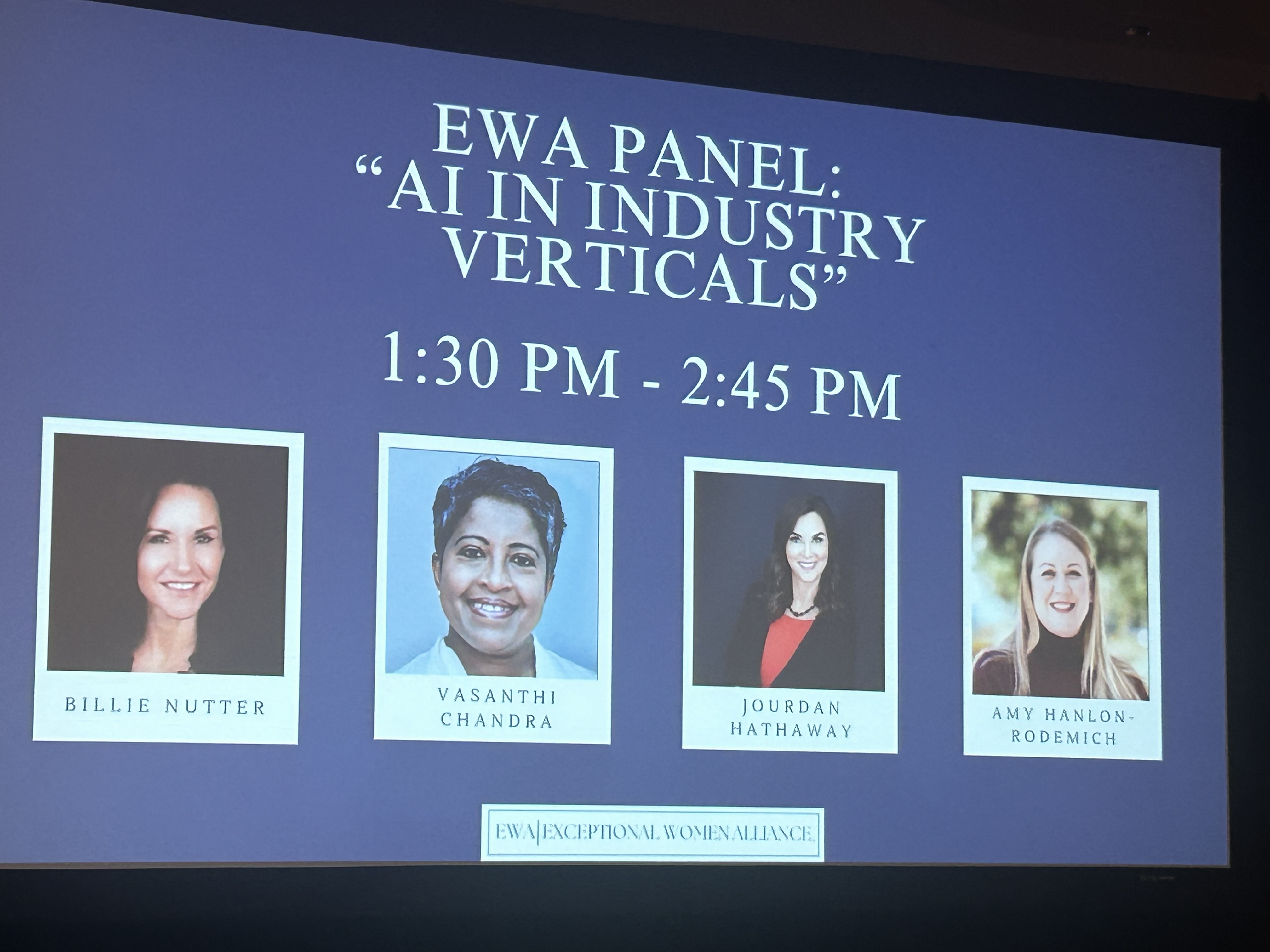
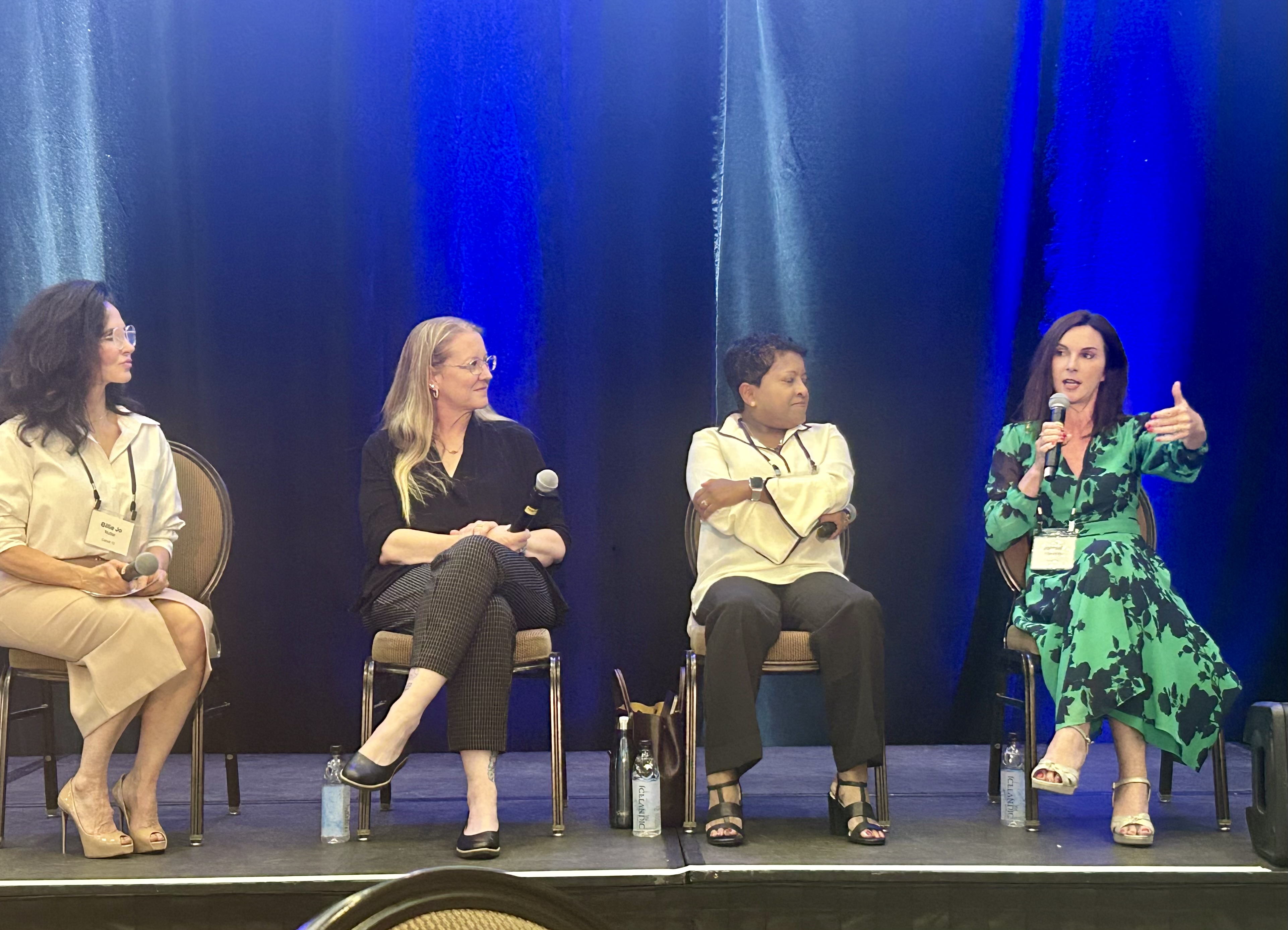
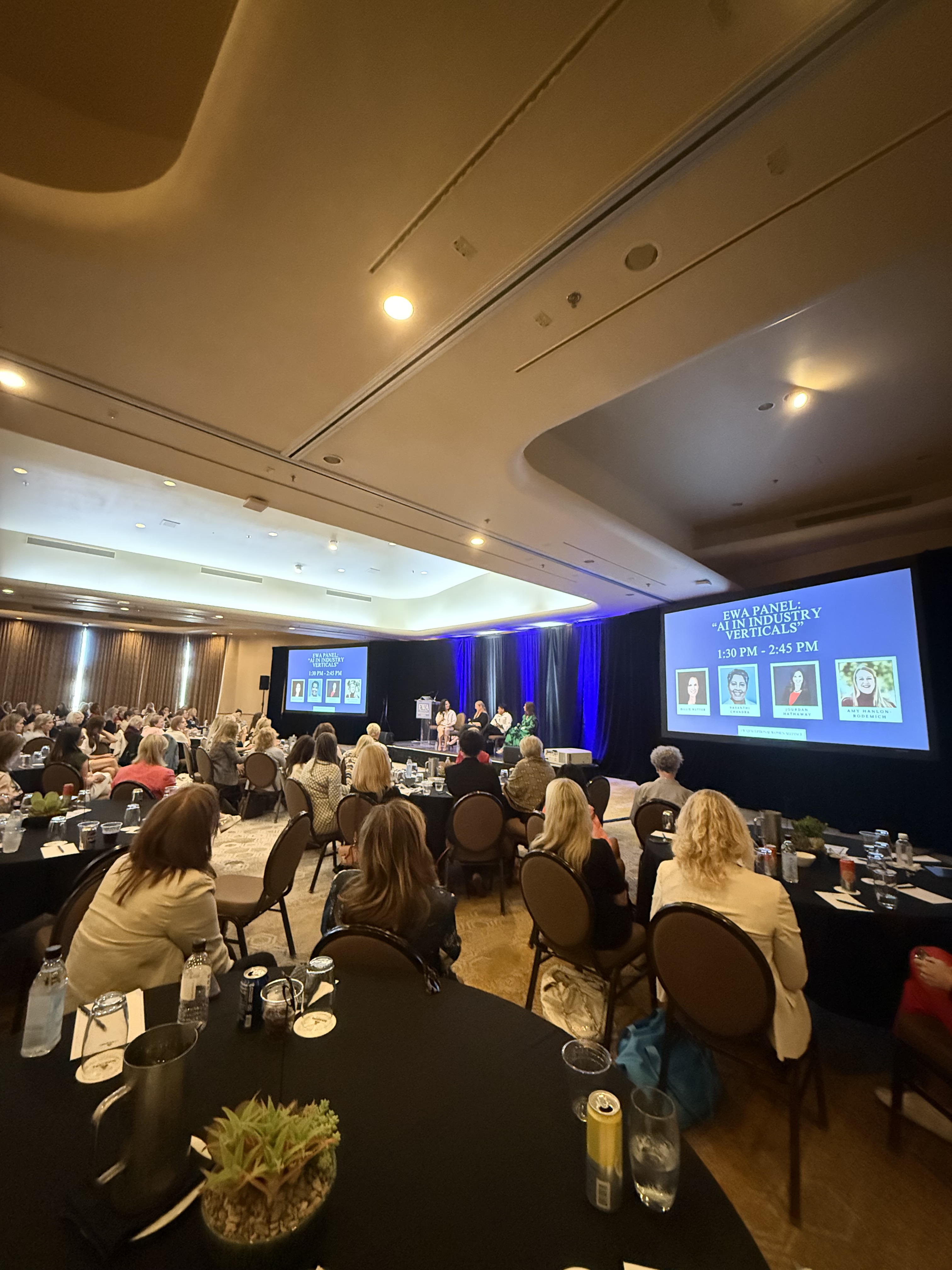
That mindset guided me recently when I spoke on a panel alongside some truly knowledgeable AI experts across industries—Amy “Amy H-R” Hanlon-Rodemich, Billie Jo Nutter, and Vasanthi Chandrasekaram. The audience? A powerhouse mix of industry-diverse scientists, Fortune 500 execs, government leaders, founders, and entrepreneurs – from both inside and outside of tech. People with no shortage of ideas and information hitting them daily.

So how do you make a topic like AI skilling resonate with an audience like that—without drowning them in jargon or fatigue? You demonstrate!

Making AI Skilling Memorable

I used Synthesia (I have zero affiliation) to bring an AI avatar I named Cynthia to life. She opened our panel, welcoming the audience, asking questions, sharing trivia, even cracking jokes. Think awards-show host meets moderator. It wasn’t about showing off the tech, it was about creating a memorable, relatable experience that made AI’s potential click.

And this is the bigger point: AI skilling doesn’t mean you throw out what you already know; it’s about extending those skills with new tools.

  • A marketer who scripts, storyboards, and designs can now spin up multilingual videos at scale.
  • A trainer who builds slide decks can create dynamic interactive learning modules.
  • A product manager who builds demos can deliver personalized walkthroughs across time zones.
  • Heck, a Chief Marketing Officer / Chief Business Officer can skill herself and build an interactive AI video for a speaking engagement.

Business Benefits for Adding AI Generated Videos in your Toolbox

  • Innovation: Enables you to experiment with novel storytelling with dynamic avatars and immersive experience (I had way more fun than building a powerpoint BTW)
  • Scalability: Training, demos, and communications can help teams with lean resources scale.
  • Speed: Content production timelines shrink from months/weeks to days/hours.
  • Consistency: Messaging stays accurate and on-brand every time.
  • Accessibility: Multi-language dubbing enables localization.
  • Engagement: Interactive avatars connect in ways static PDFs and presentations can’t.
  • Efficiency: Lower production costs for lean teams and lean budgets.

While AI generated video platforms are powerful for scale, speed, and accessibility, there are many cases where traditional video production remains the right choice.

High-stakes moments often demand the creativity, nuance, and emotional resonance that comes from working with skilled directors, producers, and film crews. AI-generated video is a fantastic tool in the professional’s toolbox, but it doesn’t replace the craft of full-scale production when the stakes call for it. It’s not about either/or, it’s about knowing when speed and scale matter most, and when human-driven storytelling makes the biggest impact.

For me, it’s another tool in the growing toolbox of an AI-enabled professional. The real power lies in knowing when to apply the right tool to amplify skills you already have.

Key Takeaways

  • Show, don’t just tell: Demonstrations make AI practical, not abstract.
  • AI skilling builds on strengths: storytelling, design, and communication translate into powerful new applications.
  • Tools like Synthesia expand the professional toolbox: enabling speed, scale, and reach.
  • Business benefits are tangible: efficiency, engagement, accessibility, and cost savings.

Smack in the Middle of the AI Skilling Revolution at General Assembly

I also come at this from a unique vantage point. At General Assembly, I’m fortunate to be right in the epicenter of AI workforce skilling—where training, experimentation, and innovation are what we do every day. We’re tool agnostic, but we have the benefit of being exposed to (and testing) many of the innovations emerging in the market. That perspective helps me see both the promise and the limitations of AI tools and why the broader conversation about AI skilling matters so much.

Want to learn more? Empower your teams with in-demand AI skills through hands-on, customizable training, designed to unlock the full potential of AI across your entire organization. From leader to individual contributor, we have you covered.

Implementing a digital worker isn’t just a tech deployment, it’s a people, process, and product orchestration.

We are implementing a digital worker in our contact center named GAbby (yes, clever).

Implementing a digital worker isn’t just a tech deployment, it’s a people, process, and product orchestration. I’m going to build out loud here and share real life reflections from our current implementation (given that General Assembly trains on AI, it only makes sense that we too have it embedded in our own workflows.)

When we implemented “GAbby,” our AI digital worker in our Admissions Contact Center, the pilot was laser-focused on measurable outcomes: throughput, transfer rates, incremental enrollments, and cost savings. We didn’t treat it as a tech experiment—we treated it as a business experiment.

At the surface, implementing an AI-powered agent like GAbby might seem straightforward: feed it some data, map out a call script, and launch. But the reality is far more nuanced. This initiative highlighted several truths about successful digital worker implementation:

1️⃣ Training is as much about guardrails as it is about knowledge.
It’s not enough to train the digital worker on what to say. You must also rigorously define what not to say. GAbby’s early responses hallucinated offerings (like free project management courses) simply because adjacent words appeared together in queries. When AI can access broad public data, constraining its knowledge base to reliable, vetted sources is critical for brand trust and compliance.

2️⃣ Words matter more than ever.
Changing “SMS” to “text message” seems trivial, but this small fix made the agent feel more relatable. The language used by AI must reflect your customer’s voice, not robotic syntax. The user experience is judged on tone as much as accuracy.

3️⃣ Cross-functional collaboration is non-negotiable.
This wasn’t just a “tech project.” Ops leaders framed user scenarios. UX experts evaluated conversation flow. Engineers handled system constraints and testing. Vendors (thx OutRival) contributed platform and expertise. Success only came when these perspectives aligned, especially around what “done” truly looked like.

4️⃣ Personalization requires planning.
Personalizing conversations based on previous interactions or user data makes agents feel smarter, but only if the underlying CRM hooks, lead mapping, and data flows are in place. GAbby’s ability to personalize is promising, but it must be stress-tested across real-world variations and we know iteration is coming.

5️⃣ Launching isn’t the end, it’s the beginning.
Everyone involved treated this launch not as a final product but as a live experiment. There was an openness to iterate based on real interactions. That mindset (launch, listen, learn, and improve) is essential to evolving a digital worker from functional to exceptional.

Digital workers (like GAbby) will increasingly become teammates in service and sales. But without intentional training, thoughtful language design, and tight operational alignment, they risk becoming more alienating than helpful. As this project showed, the AI is only as good as the humans who build, guide, and refine it.

From Skills to Sculpture: How Adobe Connects Creators Across Generations

Every day, I get to witness the impact of Adobe empowering the next generation of creators and marketers through General Assembly‘s partnership on the Creative Skills Academy and our apprenticeship program. But this past week, my family experienced Adobe’s influence in a completely different way: through the Adobe Creative Residency Programme at the Victoria & Albert Museum (V&A).

“Mom, it’s really awesome this exhibit lets you fidget and wear headphones”

“Mom, isn’t it interesting that Luca {Bosani’s} art in the year 2024 explores when a shoe becomes a sculpture and we also saw that small, tall, fancy shoe {huapandi} from the 1800s {a Chinese shoe that was also on display as a sculpture in another part of the V&A}. It’s weird, it’s like every generation and every country has a unique way of experiencing similar things.”

Let me back into both of these quotes.

They came from my 15 year old daughter. My family just got back from a weeklong dream vacation in London and we went to the V&A while there. We knew to go, and to visit the Adobe Creative in Residence programme, because I met the partnership team at Adobe MAX last year.

It was incredible. We got to see the Design and Disability showcase the contributions of Disabled, Deaf, and neurodivergent people. We also explored the works from the 2024 residents Luca Bosani, Jacqui Ramrayka and Rachel Sale and that’s where she made the shoe comment.

In one gallery was a ceramic shoe from 1800s Asia; in another, a modern work by 2024 Adobe Creative Resident Luca Bosani, a London-based multimedia artist exploring the question, “When does a shoe become a sculpture?” Centuries and cultures apart, yet united by a shared instinct to communicate through creativity.

Across time, media, and experience.

Whether in classrooms, museums or at work,  it’s interesting to see how Adobe and GA are helping people express, connect, and imagine across time, media, and experience.

Prompt Skilling Progression and Proficiency

For a business term, I’ll call this something like “prompt skilling progression and proficiency,” but here’s what employee upskilling with AI actually looks like in real life. I’ve seen this play out across teams and orgs of all sizes.

Download PDF of 10-Step Prompt Skilling Progression

Phase 1: Skeptical Curiosity
Fine, I’ll use AI and see what it’s all about. I don’t trust it though.

Phase 2: The First Prompt
Employee opens the AI chat tool of the moment (ideally one with a compliant enterprise account, but this post isn’t about that) and enters something basic like: “Write an email to X person about Y topic.” Wow, cool. That was helpful.

Phase 3: Writing Assistant Era
Employee starts asking the tool for more writing help: “Write an article about X topic.” “Create a blog post about Y.” Dang, that’s awesome.

Phase 4: The Experiment Zone
Now comes the flurry of both serious and fun prompts.
Serious: “Write a memo to leadership about these findings,” with a copy-paste avalanche of fragmented info that turns into a polished output the employee is thrilled to have expedited.
Fun: “Write a funny five-year anniversary note for my colleague Brenda. She’s in Dallas, works in media, loves orchids.” The AI nails it. The employee tweaks it slightly and posts it to Slack or Teams.

Phase 5: Strategic Prompting
The prompts evolve: business plans, project plans, go-to-market strategies, summaries, sales talking points, market scans.
Employee discovers they can upload files, images, and documents. (Hopefully on the enterprise version. Big plug for that.)

This post is about what I see with prompt upskilling, but just to say it: Using public AI tools can pose serious risks if you’re entering sensitive or confidential information. These platforms may store prompts or responses, potentially exposing proprietary data or personal details. That’s why secure, enterprise grade AI tools are essential: they offer data encryption, access controls, and usage governance to ensure your information stays protected.

Phase 6: Prompt Perspective Shift
Then it clicks: you’ve only been prompting “as yourself.” You start giving clearer instructions about what you want back, in what format, and using which inputs.
You learn to prompt as an industry expert outside your role. You ask for sources. You ask for thinking. The AI delivers.

Phase 7: Structured Prompting
Time for a major prompt evolution:
Employee learns to prompt using taxonomies that include role, request, goal, instructions, considerations, tone, style, and output format.
Example: “Act as a strategic marketing advisor with expertise in quarterly planning, audience analysis, and content campaigns across multiple channels.”

Phase 8: Prompt Hoarding
The prompt library begins. Word docs and spreadsheets start piling up. LinkedIn saves stack up. All of it might be useful one day.

Phase 9: Prompt Overload
Weeks pass. Employee is drowning in saved prompt docs across cloud folders and shared drives. Can’t find that one prompt from last week.
Still tries to send them along to help a prompt newbie.

Phase 10: Prompt Infrastructure Seekers
Employee starts hunting for tools that offer a searchable, categorized prompt database to make this curated chaos usable again.
Because the productivity gain of great prompting is now being slowed down… by all the prompts.

Oh, the irony.

What Happens When Sales Leaders Stop Talking About AI… and Actually Start Implementing It?

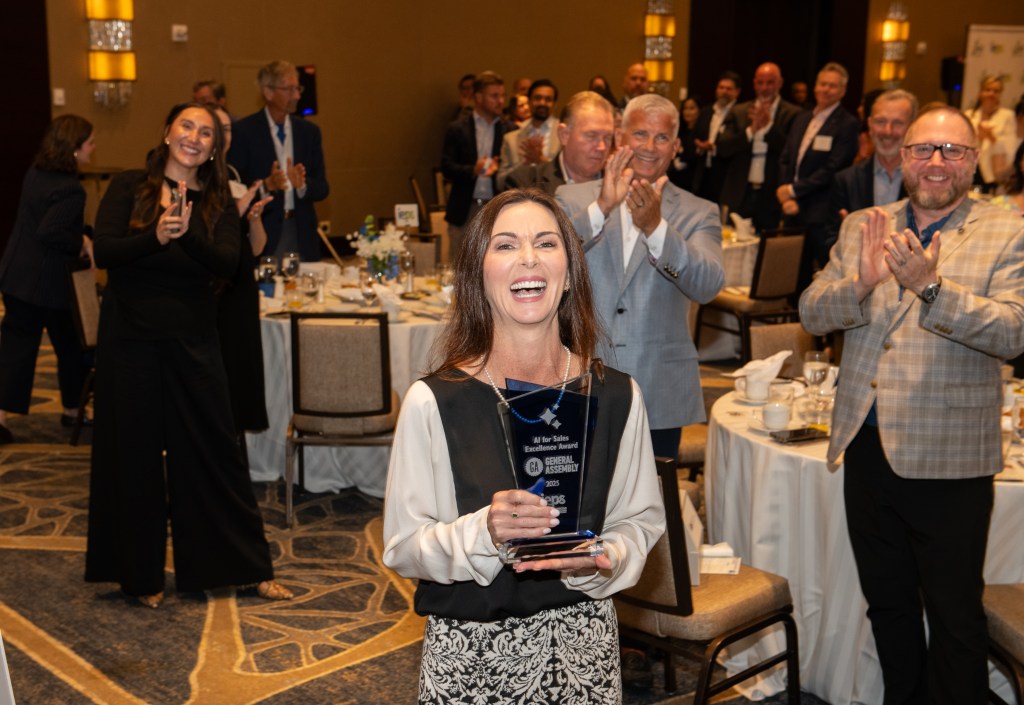
Representing General Assembly at the Institute for Effective Professional Selling’s AI for Sales Excellence Awards

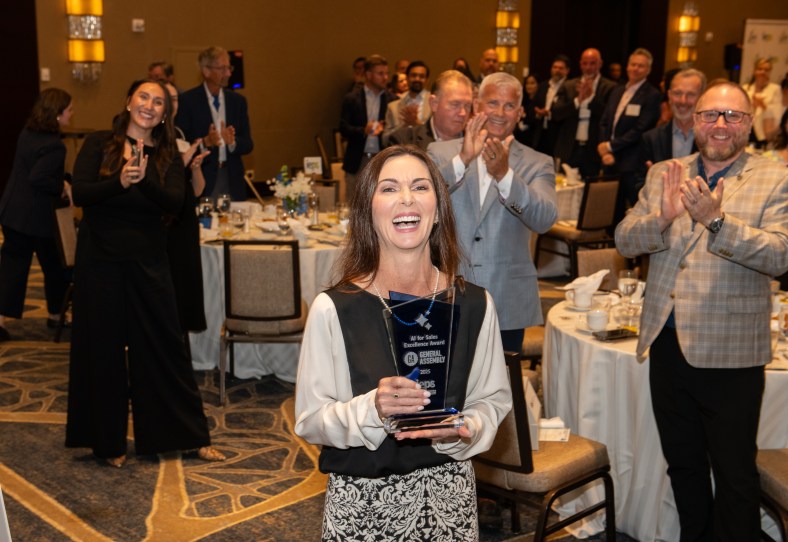
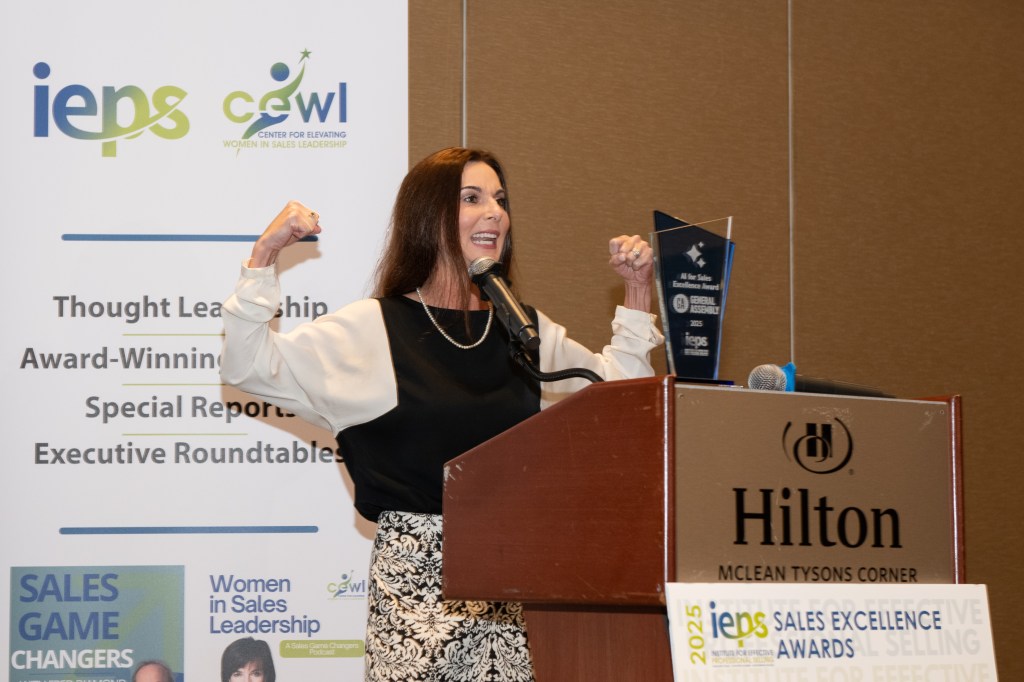
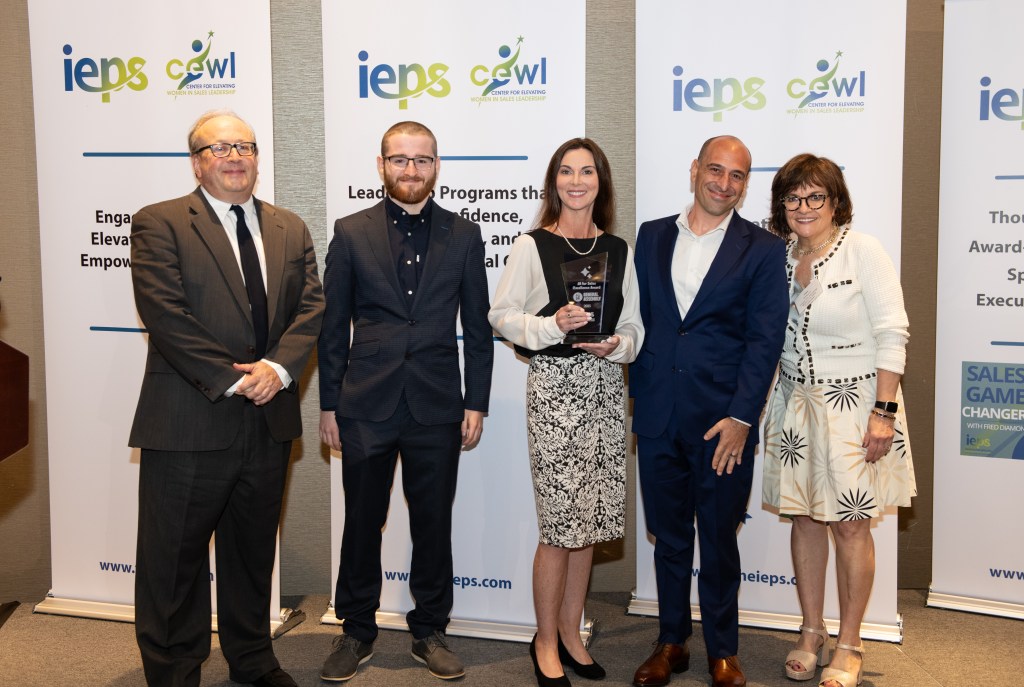
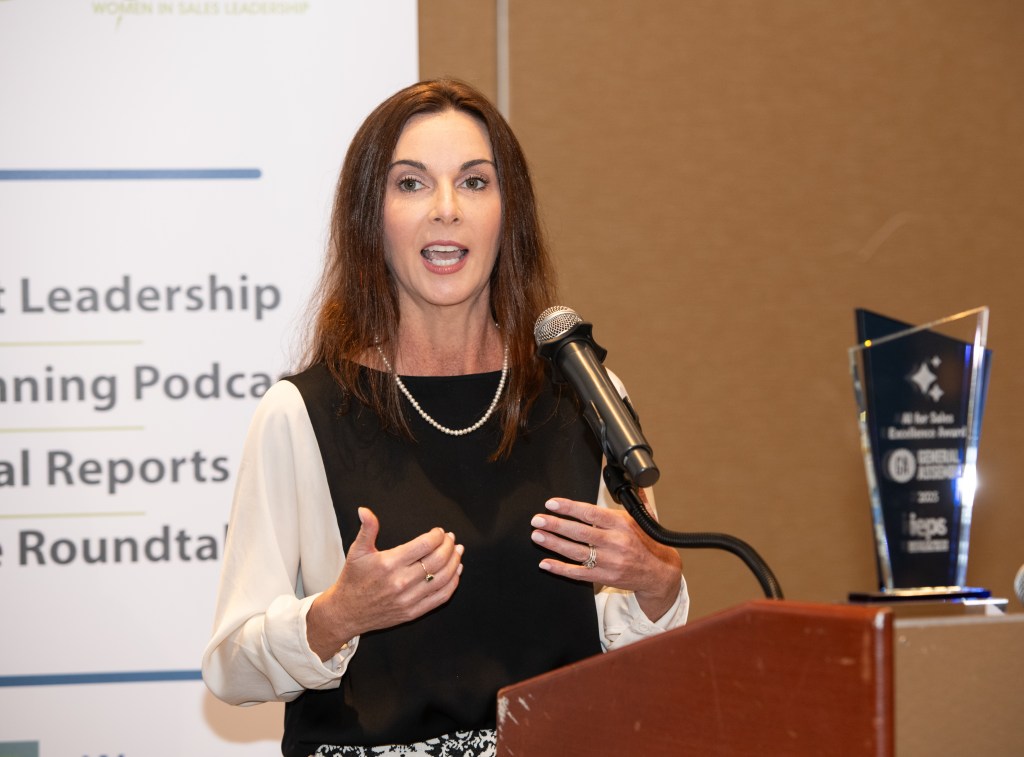
Last week in Washington, D.C., I had the honor of being on the Sales Game Changers Podcast stage and accepting the Institute for Effective Professional Selling’s (formerly IES) first-ever AI for Sales Excellence Award on behalf of General Assembly.

And I have to tell you, this one meant something special.

Not because it was shiny (it was very shiny).
Not because it was an AI award (and you know I love all things AI training).
But because this award recognizes something deeper… something our industry needs more than hype, jargon, or yet another “state of AI in sales” webinar.

It recognizes doing the work.

Origin Story: Before Our AI Academy Was a Program… It Was Our Own Training

Before we built AI Academy for Sales, we went through the training ourselves.

We were our own pilot group: testing prompts, stress-testing workflows, building repeatable use cases, and figuring out how to strip away the noise and get to what really mattered:

👉 More time with customers.
👉 More listening, less administrative drag.
👉 More problem-solving, fewer “Time Suck Yuck” tasks (yes, that’s the official term now).

Sales professionals don’t wake up excited to update CRM fields, manually prep call notes, or dig through old decks for messaging. They want to solve problems, create impact, and build relationships.

So that’s exactly what we designed our program to enable.

Inside the Episode: Making AI Practical, Not Theoretical

On the Sales Game Changers Podcast, Gretchen Jacobi and I joined host Fred Diamond, alongside the incomparable Zeev Wexler, who sponsored the award, to talk about the very real, very un-glamorous day-to-day shifts that make AI stick in sales orgs.

A few of the themes we discussed:

1. The early AI adopter wins the sale.

“If the early bird gets the worm, the early AI adopter gets the sale.”
Because in a world of buyer noise, the reps who show up faster, more prepared, and more relevant… win.

2. Start small—then scale.

As Gretchen wisely said, start with one low-risk task.
Something uncontroversial, like:

  • Prepping discovery calls
  • Summarizing account history
  • Drafting follow-ups
  • Updating CRM
  • Researching accounts and personas

The wins compound shockingly fast.

3. AI isn’t replacing sellers—it’s releasing them.

Freeing them from low-value administrative work so they can focus on high-value human connection.

At the IEPS event, every awardee said some version of the same thing:
Sales is (and always will be) a relationship business.
AI just gives you the time back to be better at it.

GA’s Three-Tier AI Academy: Teaching Sellers to Sell in the AI Era

One of the reasons we were honored with this award is the structure and practicality of our three-tier AI Academy for Sales, which gives sellers:

🔹 Tier 1 — AI-Enabled Tools

Foundations: prompts, workflows, research, summaries, CRM hygiene, call prep.

🔹 Tier 2 — AI-Augmented Automation

Templates, reusable workflows, sequencing, process improvement, sales ops support.

🔹 Tier 3 — AI-Superpowered Strategy

Predictive forecasting, multi-touch analysis, personalization at scale, revenue insights.

It’s tactical. It’s applicable.
And we use it internally.
Every day.
Because transformation only works when it’s lived, not laminated.

The Award Moment: Why It Mattered

Standing on that stage in D.C., listening to the stories of the other honorees, a unifying theme kept coming up:

Sales excellence is about partnership, problem-solving, and humanity.

The quiet superpower of AI in sales isn’t the automation itself.
It’s what teams choose to do with the time they get back.

More time strategizing.
More time connecting.
More time being the trusted advisors buyers actually want.

That’s what makes AI worth implementing, not just talking about.

The Question I’ll Leave You With

We ask this inside our training, and I’ll ask it here too:

What’s one sales task you’d love to automate with AI so you can get back to the part of the job you actually love?

And if you missed the episode, you can:
🎧 Listen or read the transcript here → https://www.salesgamechangerspodcast.com/generalassembly/

Huge thanks again to Fred Diamond, Zeev Wexler, and everyone at the Institute for Effective Professional Selling for recognizing the work we’re doing at General Assembly to help sales teams thrive in the AI era.

Here’s to less Time Suck Yuck and more time doing what humans do best. ✨

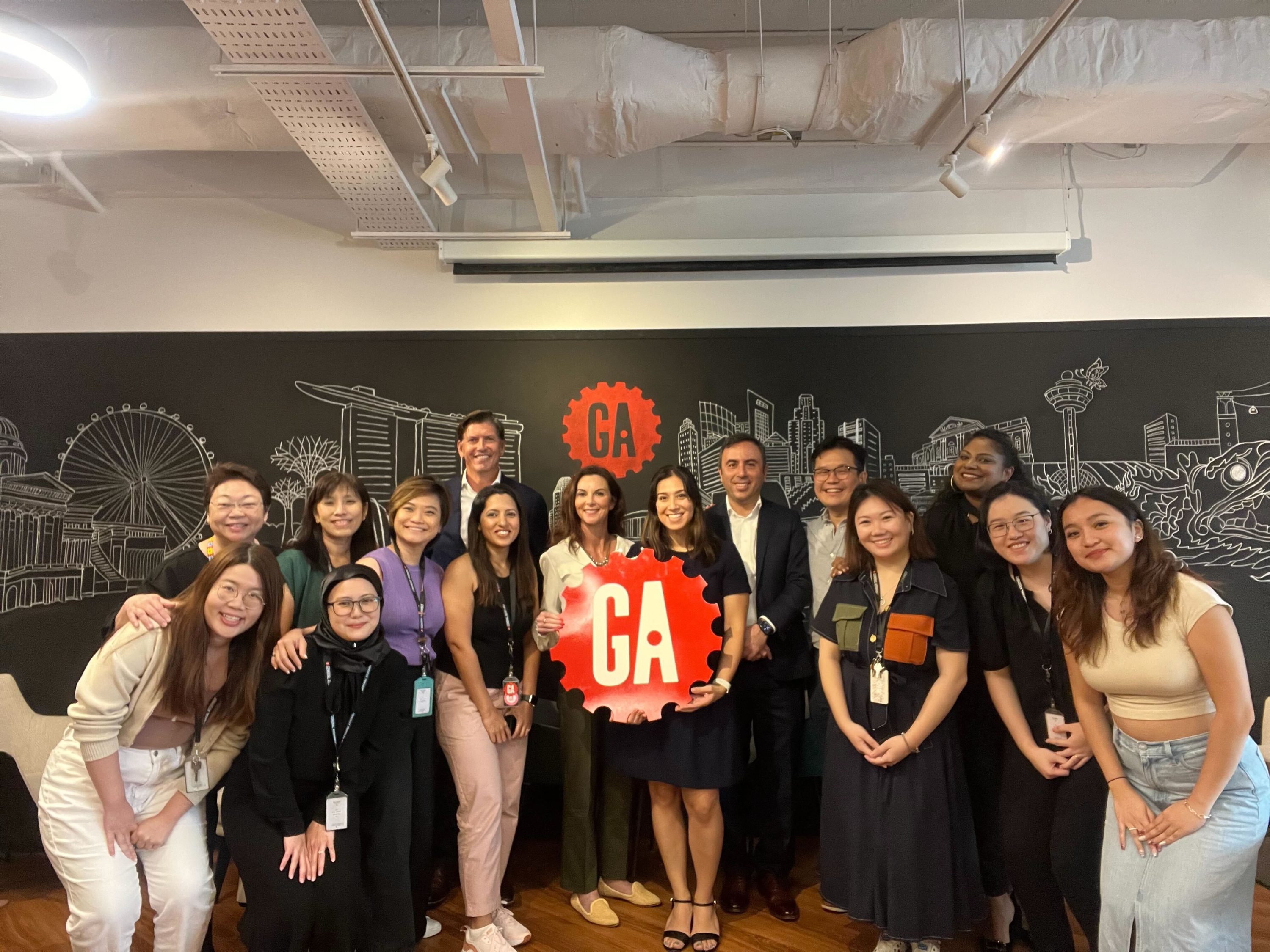
Reflections from the Other Side of the World: A Global Lens on Innovation, Imagination, and Relevance

A Reflection on Global Inspiration

Over the past few weeks, I’ve had the opportunity to travel through Singapore, Indonesia, and Japan—my first time visiting the Asia-Pacific region. While I’ve explored some parts of Europe, Mexico, Canada, and the Caribbean, this journey offered a new kind of exposure: one that reshaped how I think about technology, culture, and our shared global future.

From tasting fresh fruit at a roadside stand in Batam on a taxi driver’s recommendation, to experiencing carefully curated meals in some of the world’s most elevated dining rooms, I was reminded of the simple truth that excellence can be found anywhere. Each moment offered its own kind of richness and helped deepen my appreciation for what different places bring to the global table.

Achieve Ambitious Goals through Partnership

As someone who has spent the last 20 years in EdTech (from digital marketing and app development to higher ed transformation and workforce reskilling) I returned home feeling deeply inspired and just a bit changed. The conversations I had across these countries, many of them with technical leaders in areas like machine learning, robotics, semiconductors, fintech, and AI policy, left me reflecting not only on the future of work, but also on the partnerships and coalitions we need to achieve ambitious goals for people and society.

A more personal takeaway: I found myself asking how I stay relevant and bold in the face of such rapid innovation. Being in rooms filled with brilliant minds challenged me, in the best way, to recommit to curiosity, conversation, and collective problem-solving. It reminded me that progress isn’t linear. It’s a cycle of learning, adapting, and improving…with plenty of pivots along the way.

The roles we’re training people for today don’t exist yet

I’m currently reading The Dip by Seth Godin, which challenges readers to become the best person for a specific job at a specific moment. It talks about the extraordinary benefits of knowing when to quit and when to push just a tiny bit longer to find your breakthrough. That idea feels particularly relevant in a world where the roles we’re training people for today may not even exist tomorrow. The workforce is evolving so quickly that orienting around durable skills, mindsets, and learning agility feels more essential than ever.

On a more practical note—after flying through the airports in Singapore and Tokyo (and seeing images of Dubai’s), I may never look at MCO, ATL, LAX, LGA, JFK, or MDW the same way again. Let’s just say we have some catching up to do.

Why wonder still matters in a world of rapid change

One of the most unforgettable experiences was visiting teamLab, an immersive digital art museum in Tokyo. It felt like stepping inside pure imagination. What struck me most wasn’t just the visual beauty—it was how the experience evoked awe, wonder, and joy in every single person. Grown adults stood wide-eyed, mouths open, transfixed. It reminded me that as we grow older, we don’t often grant ourselves space to be overwhelmed by wonder. Parenting may offer glimpses through our children’s eyes, but this experience gave it back to me directly.

And it left me asking: What would happen if we protected our capacity for wonder the same way we protect our strategic plans?

This journey was a gift—personally, professionally, and philosophically. I return with new questions, fresh energy, and a deeper appreciation for what’s possible when we connect across borders, disciplines, and ideas. And maybe, most importantly, a little more imagination.

Press and Interviews

e27 Asia: Upskilling in the AI era: Why passive learning will not cut it anymore
By Anisa Menur A. Maulani | April 29, 2025 | “Upskilling initiatives should be embedded into the company’s strategic roadmap,” Hathaway says. “They must be directly applicable to business objectives and support employee mobility and retention. Without this alignment, training risks becoming irrelevant.”

Channel News Asia (CNA): Upskilling in the AI era: Why passive learning will not cut it anymore
By Cheryl Goh | March 19, 2025 | Fresh out of school and struggling to get a job? You could be lacking some skills. While technical skills are important, industry experts say many more applicants lack interpersonal proficiency. What are these, and are they innate or nurtured? Cheryl Goh talks to Jourdan Hathaway, Chief Business Officer of General Assembly – a global pioneer in tech training and talent solutions.

Lessons from an Automation Fail

Many years ago, I had an epic automation fail that taught me a big lesson in tech implementations. It’s the kind of lesson you only need to learn once before it changes your understanding of the success drivers during digital transformation. My buddy Corey Miller would refer to this as a Red Learn (fail) and a Green Learn (growth).

I’m an operator, so naturally I look for ways to drive efficiency, optimizations, and scale.

Imagine you had to manually send out application deadline emails every 8 weeks, for 800+ different online programs, across 60+ education institutions day in and day out. This is a perfect use case for email automation (table stakes today, but novel back in the day). Let’s zip past the 💪Herculean effort to gather business requirements, select the vendor, do the implementation and customer config. This isn’t about that.

Let’s just get to the part where we built a great master template that had a bidirectional sync with all the necessary compliance, content, and data to power a single automated program (where operators swoon). This template pulled in 26 dynamic content field to ensure it matched the right program and institution – things like, the actual deadline date, the school name, the logo, the program name, the key value props, tuition cost, apply now link, etc.

So what happened?

The automated program worked as intended technically speaking. But here’s where the ‘uh-oh’s were:

  • Among those 800 different program names? Masters of Business Intelligence was spelled wrong (🤦‍♀️face palm for being spelled Intellgence) in the original CRM set up that it pulled from. That field was never intended to be public facing and so it wasn’t QA’d back in the day. Just correct the typo you say? We did, which then broke 11 different business reports that were integrated with that data field. Other departments depended on those reports – not great.
  • How about that easy date field? 🤦‍♀️Uh-oh, we didn’t accommodate the day/month vs month/day formats across countries. We just manually knew to reformat.
  • How about that tuition field? 🤦‍♀️Uh-oh, we didn’t have a data governance protocol for ensuring all 800 programs were maintained with price adjustments as time went on.
  • How about that Apply Now link? 🤦‍♀️Uh-oh, several pointed to a URL that we didn’t have control over and no mechanism to know if it changed and thus gave recipients a 404.

Here’s the big learn: Your data is the foundation of success; so are the business processes around data governance and maintenance. Do not underestimate this part. If you’ve seen this movie before, it doesn’t matter what tech project you’re working on, you enter it with a healthy respect for your data strategy.

It’s also why you know that implementation will be 20-30% longer that that lovely original timeline if your data strategy is not ready. But, this all solvable. And it’s a skill. So go thank and fist bump the Business Analysts, Data Folks, PMs, Delivery, and Process/Workflow people in your life.

What makes a team high-functioning?

“Ok, here’s the roadblock, but we can totally figure this out. I have a plan on how we can tackle it.” ⏳ 4 hours later…..

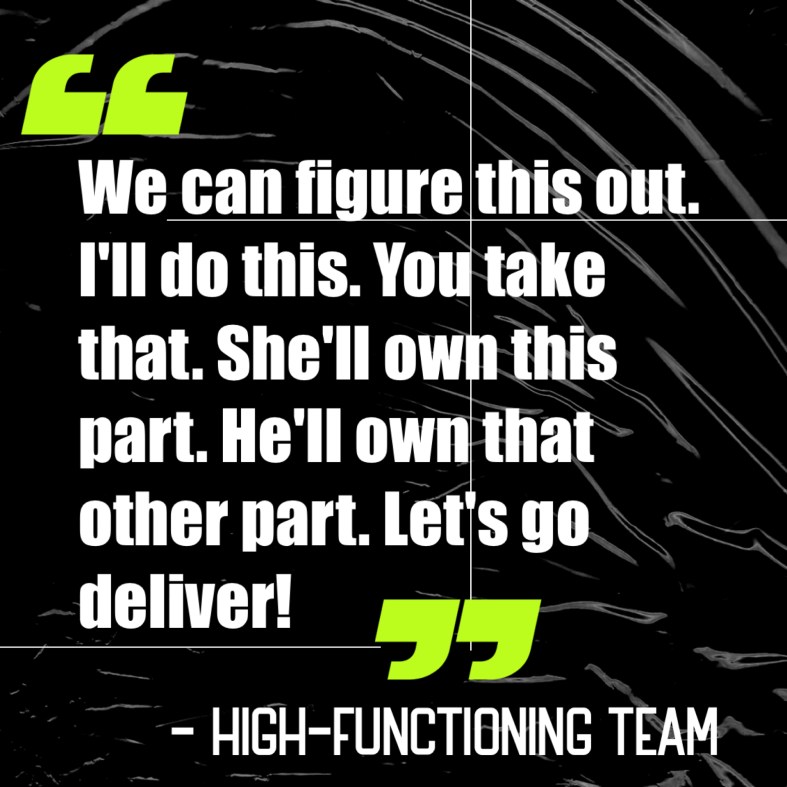
“Ok team, thanks for the rapid problem-solving meeting. We’ve now prosecuted the plan. Triage is underway. To recap, I’ll do this. You take that. She’ll own this part. He’ll own that other part. Now let’s go deliver! We’ve got this. See you back here in 24 hours to confirm our collective resolution and success.”

What to do when you hit that inevitable project roadblock

The above are conversations that transpired on a super thorny, complicated, tech project. Hitting a roadblock on a technical project itself is never a surprise. C’mon, you know the kind – tons of systems, tons of competing priorities, tons of stakeholders, not enough time, unforeseen downstream impacts of something not operating as intended (say what? never). Then that heat that envelopes a team nearing the go-live deadline – and 💥 – big roadblock emerges and someone has to call an audible.

We overcame such a project this week and it had me thinking about what makes a team high-functioning. I saw it in action. I was in the thick of it with them (and I’m morbidly captivated to moments like this because I’m obsessed with the power of human connection and its resulting achievements). Days later, I’m still reflecting on how proud I am of what the team overcame and ultimately accomplished – not just the ‘what’, but our ways of working (and treating each other) while doing the ‘what’.

I’ve routinely noticed 2 FEELINGS that make all the difference:

  1. Trust (I trust my co-worker to do his/her part and they can count on me to do mine)
  2. Winner’s Mindset (I believe we can conquer this and find a successful path forward)

High functioning team members have innate accountability

My next observation after calling the audible was our Head of Product Marketing saying, “I understand the roadblock and I have a triage plan we could rapidly execute to navigate this. It comes with tradeoffs so let’s assemble the team now and prosecute it.” She did this unasked with total ownership. Then our Senior Technical Product Manager did the same thing, but on the technical side.

Back the “what” – here’s what the team did:

uh-oh moment ➡️ project audible called ➡️ roadblock identification ➡️ areas of ownership established ➡️ rapid problem-solving as a group ➡️ plan created ➡️ tradeoffs explored ➡️ expectation setting ➡️ stakeholder alignment on triage-plan ➡️ divide and conquer to execute ➡️ plan activated

This all happened in hours – not days and weeks, HOURS.

Today we celebrated that we ‘did the thing’. Internal comms went out about our go-live and the action plan to finalize all the remaining to-dos. Remember those tradeoffs? People typically won’t be upset about tradeoffs so long as you set clear expectations and get buy-in along the way.

This is where it’s important to have durable skills, not only hard technical skills.

A CMO’s Perspective on How AI is Changing the Marketing Discipline

No tech skill is animating today’s business leaders and workers alike quite like artificial intelligence. As AI redefines the future of work, organizations are faced with the critical task of building, re-skilling, and augmenting their workforce. This is certainly true of the marketing discipline as well.

3 Ways Marketers are Leverage AI

  1. Within our existing marketing tools – This is where new features are being rolled out within our existing embedded industry tech stack that augment productivity (like Adobe Express with an embedded AI image generator and AI assistants. AI is being implemented in our standard MarTech tools – from media buying and email automation tools to project management and content platforms). Take the project management AI assistant; we use it for automating answers, summaries, tasks, field completion, milestone creation, and updates.
  2. Individualized blue sky use – This is where marketers are creating their own role-specific use cases. Marketers are looking at time spent on manual repetitive operational tasks (very unique to their specific to-do list) and figuring out how to leverage AI. A few examples: one marketer on my team cut down by 85% the amount of time spent on identifying spam leads in a big .csv file. They did a prompt on what to look for and it also provided the Python input. I have another marketer who uses it to draft requirements documents as a starting point, and many content creators are obviously leveraging it.
  3. Novel marketing capabilities – This is where AI is unlocking completely new ways to engage audiences, leverage data, and drive innovation. We’re now able to tap into capabilities that previously seemed aspirational but are becoming reality through AI’s rapid evolution. For instance, AI is enabling hyper-personalized marketing at scale, allowing us to dynamically tailor messages, offers, and creative content to individual preferences and behaviors in real-time. Predictive analytics and learning models are also transforming customer insights, enabling us to not only anticipate needs but also actively shape customer journeys in more intuitive, responsive ways. We recently piloted an AI admissions rep (i.e., a simulated representative) who now conducts the initial conversations with students via call, text, and email. Key to this is using the right company-owned data to ensure we give prospects correct information.

AI’s Impact on Marketing Isn’t Just for Increased Productivity; It Also Impacts Cost Efficiency

We’ve seen an 18% decrease in cost per lead through AI-based campaign optimization. By analyzing vast amounts of behavioral and contextual data, AI can now recommend optimal ad placements, creative choices, and delivery timings based on precise customer segment analyses. Continuously optimizing campaigns to improve budget efficiency, while saving time on manual analysis. Important to this:

  • Success is predicated on the quality of your AI model – must have quality data inputs from trusted sources. Ideal customer profile and accurate targeting.
  • Marketing teams need to be upskilled to have basic data analytics skills. They can’t trust AI if they don’t understand the inputs/outputs.

We Have to Rapidly Close the Skills Gap for AI in Marketing

We see a massive skills gap that the marketing industry needs to address if we want to see a sustainable long term pipeline of tech savvy marketing talent.

At General Assembly, We partner with employers to help them upskill their marketing teams for the AI era. Let me give you a concrete example: we work with Adobe to create a pipeline of young, tech savvy creative and marketing talent. Two new General Assembly bootcamps on marketing and content creation are enrolling students from communities underrepresented in tech – with Adobe covering all costs for them.

Critical thinking and conciseness are a cornerstone of providing a useful data analysis

I’ve got Gantt charts and dashboards a’ plenty
I’ve got pivot tables and pie charts galore
CRM exports? I’ve got twenty (gazillion)
But who cares, no big deal, I wannntttt mooorrreeee
(thank you business Ariel, I’ll take it from here). Side note: my daughter and I just watched the new Little Mermaid movie and I often have a hard time decoupling work life and home life

Prefaces Data with a Nice Tidy TL;DL Version

I know there are seemingly infinite data tools; I depend on so many of them. This isn’t a commentary on products or processes. I’m instead reflecting on all those business analysts and data-driven critical thinkers who know how to figure out what the punchline is – tailored to the audience receiving it. I’m fortunate to work with many such people (really good dot connectors). One of the most helpful things I get is when somebody prefaces data with a nice tidy TL;DL version that summarizes the what, why, and what to care about in a few short sentences. Pulling data is one thing; summarizing/visualizing it is another thing; telling the reader what the headline is/why it matters/what to do about it – in simple language – now that is the jackpot.

Example

Here’s the info you were asking about. When you’re ready to dive in, all the supporting data is attached. You’ll find page 3 the most helpful. “TL;DR version – The drivers of the issue appear to be A, B, and C. Don’t worry about D – it looks concerning, but it’s actually immaterial. Issue A is out of our direct control, so let’s focus on B and C which we can influence. If you’d like to impact B, consider focusing the team on thing, thing, thing. If you want to impact driver C, you’ll need a tech or labor solution that does blah.”

Let your curiosity take you to a reasonable conclusion

From here you can have a healthy debate on interpretation from different functional areas, go several clicks deeper into the data to vet/debunk, seek dissenting voices to broaden your perspective, and then – hopefully, do something different in the way you operate that addresses the pain points revealed in the data analysis – the whole point of why we all care so much about data in the first place.

Data story-telling skills aren’t just for STEM grads; it’s for arts and humanities people too

Poets, Pivots & Prose (becoming pros)….. Data storytelling is not just for people with a STEM background. Some really great data storytellers I know came from an arts and humanity background. I assume it’s because they too had a knack for critical thinking, concept articulation, crafting persuasion, and narrative framing. Plus, by its very nature, data storytelling literally requires art (it’s one of those arts & science disciplines).

Poets, pivot tables, and prose can all come 🎯 together professionally.

Making sense of complex and difficult topics is a really powerful skill in the workplace. From investment cases and business optimization memos, to M&A due diligence and operational decision making – all these strategies are shaped by effective data storytelling. So are tons of micro moments within the day-to-day of most functional areas. It’s the skill to craft the narrative by leveraging data, which is then contextualized, and presented to an audience. It utilizes not only data analysis, but also visualization, contextual analysis, and presentation.

There’s many programs available to teach these valuable skills. I’m super biased so I’ll just point you General Assembly naturally. {or talk to me about your poetry, I’m interested in that too}

Meet the CMO Helping Lead General Assembly Into The Future (It’s Me)

View Original Post @ MEET THE CMO HELPING LEAD GENERAL ASSEMBLY INTO THE FUTURE

JOURDAN HATHAWAY — BRIDGING THE GAP BETWEEN LEARNING AND WORK

I’ve served as the Chief Marketing Officer of General Assembly (GA) since December 2023. Working side-by-side with our sales, product, and delivery teams, I lead brand and product marketing, growth and demand generation, performance, journey nurture, martech operations, admissions, alumni relations, and revenue operations for General Assembly’s product portfolio of bootcamps, short-form courses, workshops and classes. GA has both a consumer business (B2C) and an enterprise business (B2B).

Prior to my current role, I accrued valuable experience in a variety of sectors, including marketing, software development, and online program management, where for nearly 12 years I worked on roughly 800 online education programs for ~60+ universities.

Here’s my take on a variety of hot topics…

ON LEARNING

“I’m a lifelong learner who really enjoys not only gaining new skills, but also the process of acquiring said skills.”

I connect this imperative for learning and growth back to a cherished story from my childhood. One day, my third-grade — and favorite — teacher gave me a poetry book, the Random House Treasury of Best-Loved Poetry. On the inside cover, I found a handwritten note. This 3rd grade teacher changed my trajectory in life.

“She said, ‘Jourdan, I’ve seen your journals. You really have something there. Please keep reading and writing.’ And it was really, really special to me. That book remains in my room, and I never stopped writing. I had a passion for storytelling and that’s part of what prepared me for all the success I’ve found in marketing.”

ON TALENT DEVELOPMENT

“Past talent development systems won’t produce a sustainable society.”

I’d echo [Stanford University professor] Mitchell Stevens here, who wrote the forward for General Assembly’s The State of Tech Talent 2024 report: past talent development systems won’t produce the human capacity nor the economic and occupational mobility we’ll need to enable a sustainable society.

To keep pace, educators, business leaders, industries, markets, and governments must work together more closely than in the past. I’m really excited to be at General Assembly because I think we’re uniquely positioned to foster those intersections between learning and work.

ON WHAT’S NEW AT GA

“There’s plenty of people who don’t have 12 weeks to spare on a full-time bootcamp.”

What’s going on at General Assembly that has me excited? One example: our new part-time bootcamps spanning 32 weeks, each with live lessons and tons of flexibility. It’s easy to see why — this new part-time approach unlocks access to tech education for more people than ever before.

There’s plenty of people who don’t have 12 weeks to spare on a full-time bootcamp yet still need to advance their skills to stay in the workforce. I’m thrilled that this new part-time option can empower working adults looking to change their career trajectory to enter the tech workforce.

ON ARTIFICIAL INTELLIGENCE

With AI, there’s never been a more exciting time to be part of skills gap closure.”

No tech skill is animating today’s business leaders and workers alike quite like artificial intelligence. 

We’ve always been about producing people with real skills that organizations need, and with AI, there’s never been a more exciting time to be part of that skills gap closure.

ON THE FUTURE OF WORK

“I am the future of work — you are the future of work.

“I am the future of work — you are the future of work — and part of that means needing to own upskilling. Whether that’s in partnership with your employer or on an individual basis, it’s really important to continually learn and grow so you can be marketable for any number of roles out there.”

Courageous Leadership: Taking Risks 4 Massive Wins w/ Jourdan Hathaway

Pretty much everything about me as an executive is covered in this show

Ep127: Courageous Leadership: Take Risks 4 Massive Wins w/ Jourdan Hathaway | LinkedIn. Watch my episode of The Executive Appeal Podcast with Alex D. Tremble (CEO of GPS Leadership Solutions & KeynoteSpeaker). He’s awesome BTW and instrumental in my career. Discover how taking calculated risks can lead to significant victories for your family, team, and organization, and learn how to navigate setbacks with a growth mindset.

Here’s what we cover:

  • Alex D. Tremble gives me the most hype intro ever – I’ll be putting his VO over music and use it as my own walk out music each morning to get in the zone.
  • We discuss what I think it takes to be a good leader – not platitudes, the real stuff.
  • He asks me about my deal with de-dabbling – it’s my jam.
  • We get into the decision points of taking on a new role at a new company and having the courage to get out of your comfort zone – all about knowing where you’re trying to go and if your next decision gets you closer to that or not.
  • We delve into the liberation of knowing your career risk tolerance – yep, it’s a big bold move and it’s possible it might not work out – but figure out the risk of the worst-case scenario and see if you can live with that. If you can…. GOOOOO
  • Then a brief chat on what happens when you bet on yourself and why you need to.
  • Alex then gives me a zinger of a question that lots of executives like me struggle with – if you came from poverty and a difficult childhood and become self-made through grit and resilience (aka, the path I took made me strong as hell), how do you then deal with the new life you’ve built for your kids? Also, how do be super ambitious and be a good parent? Woof – I don’t know. I’m winging it every day on that front 😊
  • Next, one of my favorite topics of all time – Project FLAT. I’ve written extensively on that, and you can find it on my profile. It’s my real-life professional development plan that took me from a VP of Marketing to an SVP of Operations (and now I’m a CMO). I’m obsessed with owning your own professional development and share what that looks for me.
  • I wrap with final thoughts on being bold, courageous and supporting others who are trying to do the damn thing.

Thanks for having me on the show GPS Leadership Solutions! Thanks also to the Exceptional Women Alliance that I’m proud to be a part of.