AI Training Fatigue Is Real—Here’s How I Broke Through It.

As a kid, I loved show and tell.
As a professional, I’ve come to love show and demonstrate.

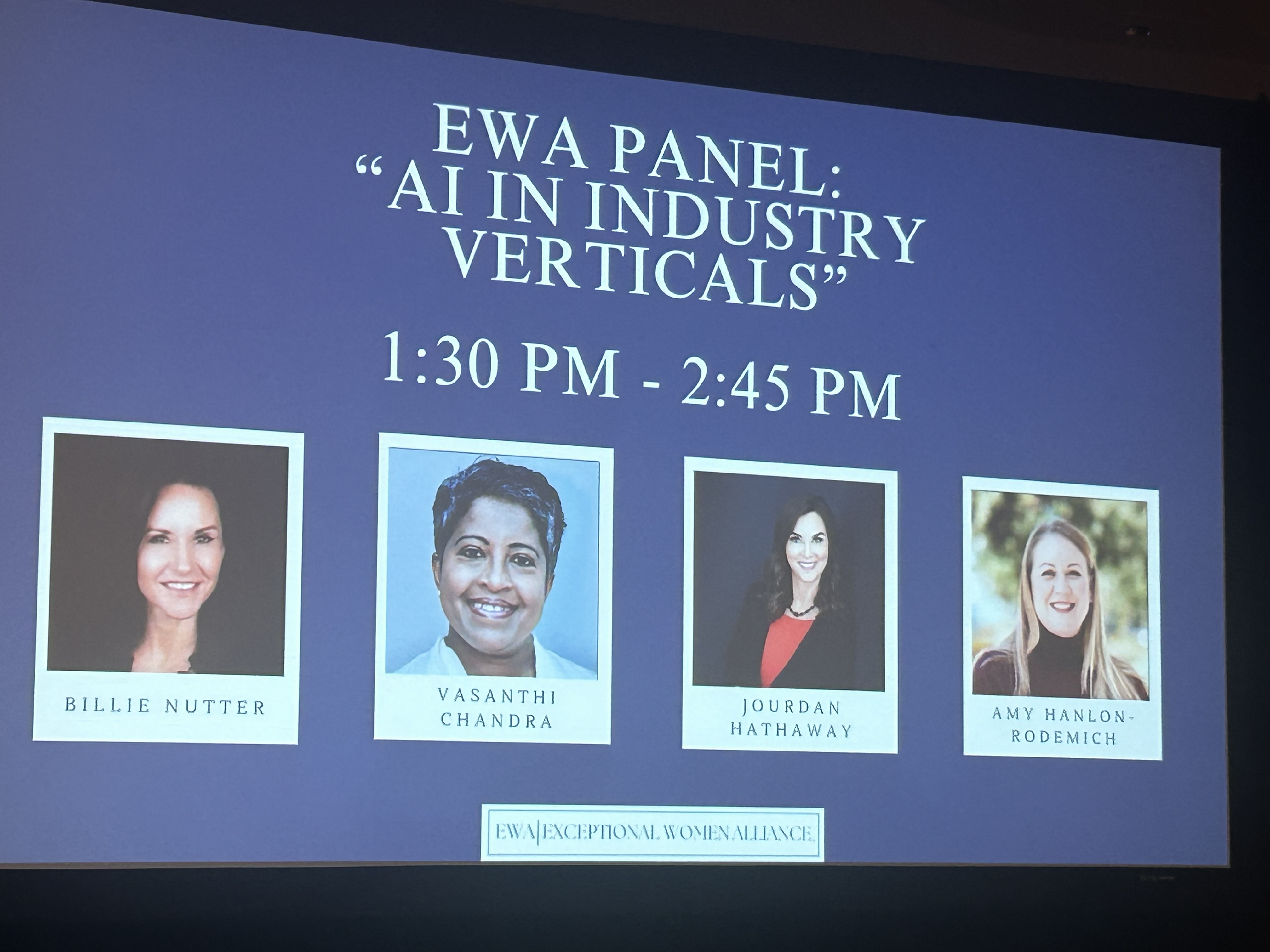
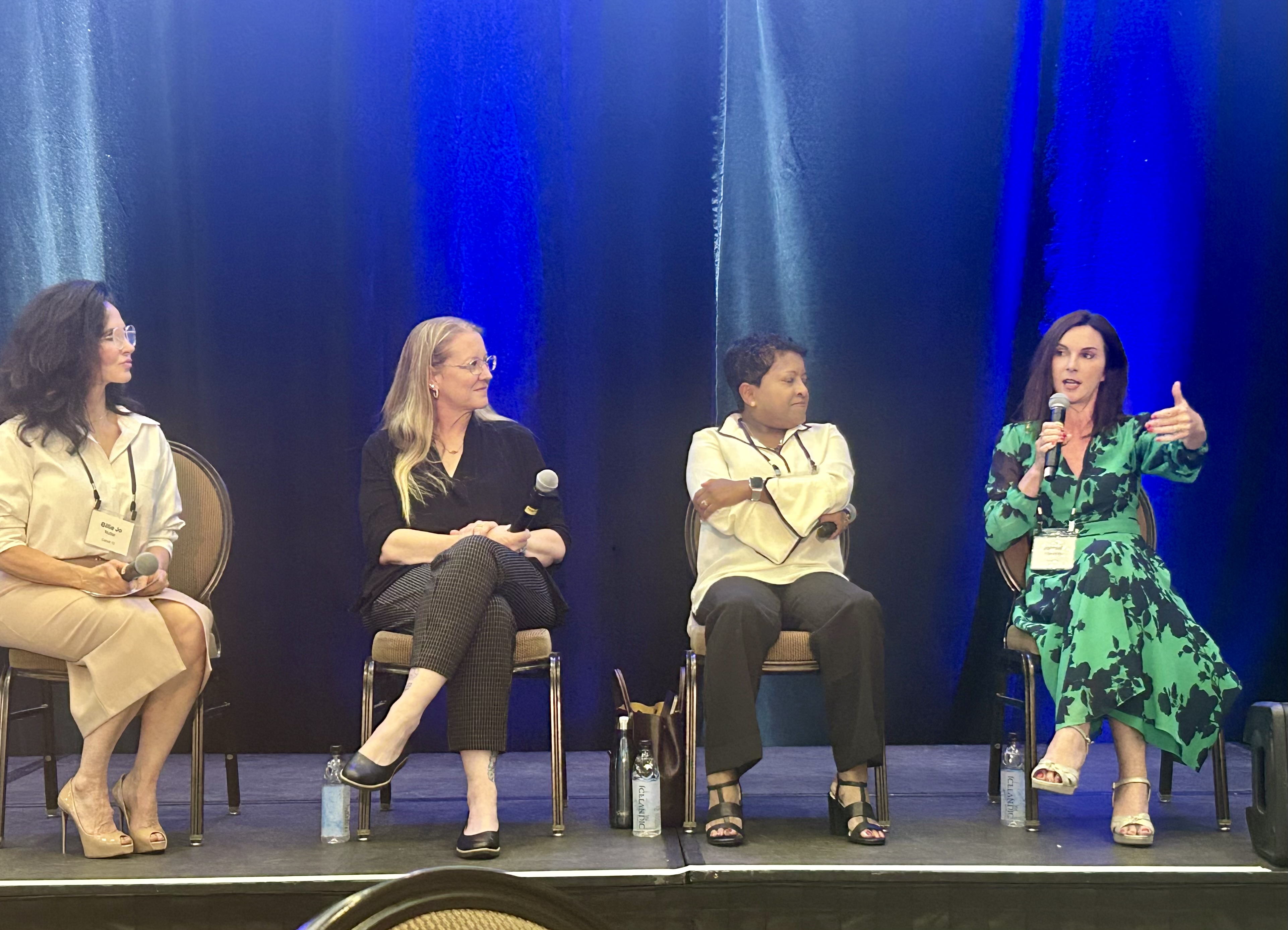
That mindset guided me recently when I spoke on a panel alongside some truly knowledgeable AI experts across industries—Amy “Amy H-R” Hanlon-Rodemich, Billie Jo Nutter, and Vasanthi Chandrasekaram. The audience? A powerhouse mix of industry-diverse scientists, Fortune 500 execs, government leaders, founders, and entrepreneurs – from both inside and outside of tech. People with no shortage of ideas and information hitting them daily.

So how do you make a topic like AI skilling resonate with an audience like that—without drowning them in jargon or fatigue? You demonstrate!

Making AI Skilling Memorable

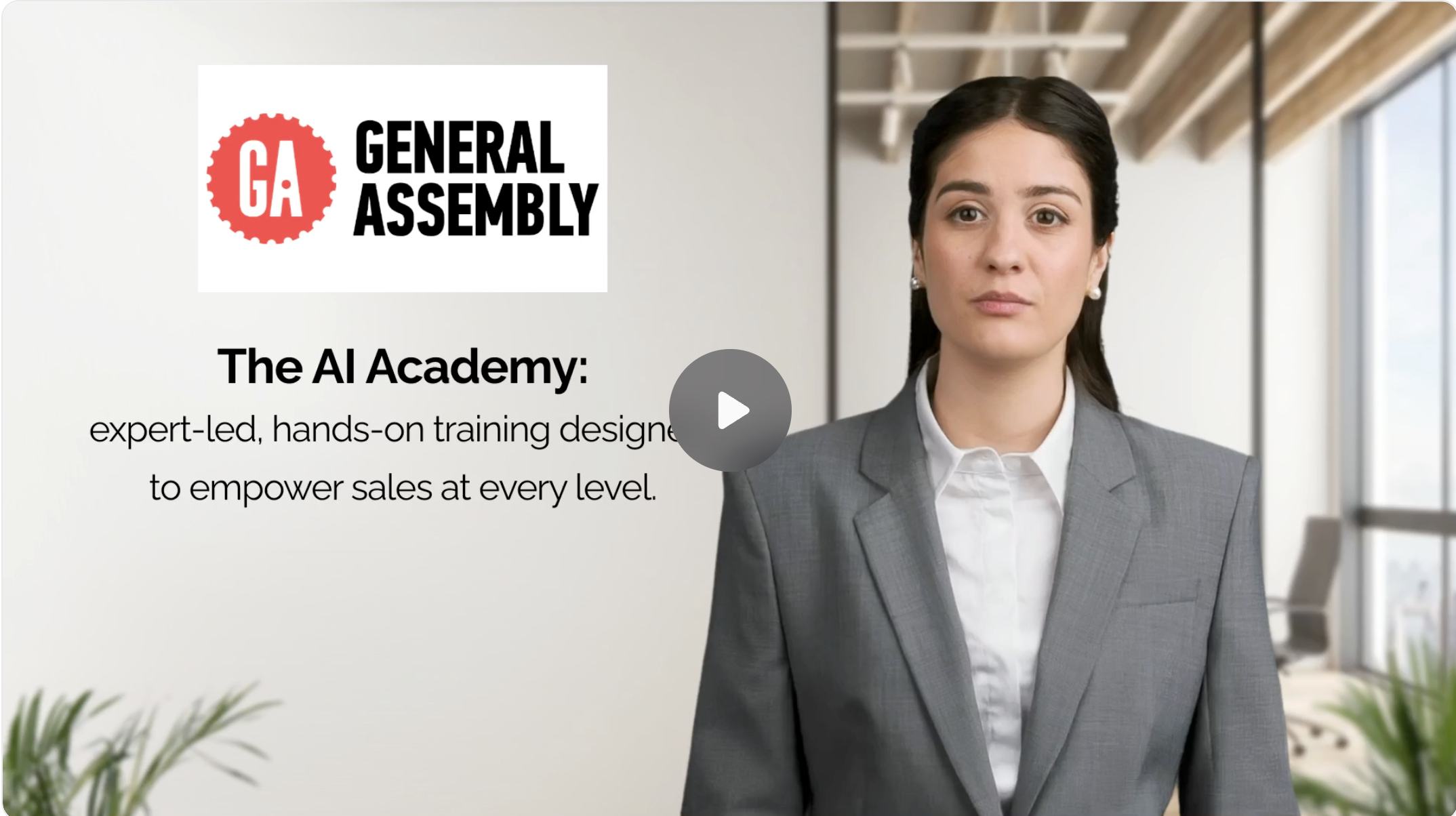
I used Synthesia (I have zero affiliation) to bring an AI avatar I named Cynthia to life. She opened our panel, welcoming the audience, asking questions, sharing trivia, even cracking jokes. Think awards-show host meets moderator. It wasn’t about showing off the tech, it was about creating a memorable, relatable experience that made AI’s potential click.

And this is the bigger point: AI skilling doesn’t mean you throw out what you already know; it’s about extending those skills with new tools.

  • A marketer who scripts, storyboards, and designs can now spin up multilingual videos at scale.
  • A trainer who builds slide decks can create dynamic interactive learning modules.
  • A product manager who builds demos can deliver personalized walkthroughs across time zones.
  • Heck, a Chief Marketing Officer / Chief Business Officer can skill herself and build an interactive AI video for a speaking engagement.

Business Benefits for Adding AI Generated Videos in your Toolbox

  • Innovation: Enables you to experiment with novel storytelling with dynamic avatars and immersive experience (I had way more fun than building a powerpoint BTW)
  • Scalability: Training, demos, and communications can help teams with lean resources scale.
  • Speed: Content production timelines shrink from months/weeks to days/hours.
  • Consistency: Messaging stays accurate and on-brand every time.
  • Accessibility: Multi-language dubbing enables localization.
  • Engagement: Interactive avatars connect in ways static PDFs and presentations can’t.
  • Efficiency: Lower production costs for lean teams and lean budgets.

While AI generated video platforms are powerful for scale, speed, and accessibility, there are many cases where traditional video production remains the right choice.

High-stakes moments often demand the creativity, nuance, and emotional resonance that comes from working with skilled directors, producers, and film crews. AI-generated video is a fantastic tool in the professional’s toolbox, but it doesn’t replace the craft of full-scale production when the stakes call for it. It’s not about either/or, it’s about knowing when speed and scale matter most, and when human-driven storytelling makes the biggest impact.

For me, it’s another tool in the growing toolbox of an AI-enabled professional. The real power lies in knowing when to apply the right tool to amplify skills you already have.

Key Takeaways

  • Show, don’t just tell: Demonstrations make AI practical, not abstract.
  • AI skilling builds on strengths: storytelling, design, and communication translate into powerful new applications.
  • Tools like Synthesia expand the professional toolbox: enabling speed, scale, and reach.
  • Business benefits are tangible: efficiency, engagement, accessibility, and cost savings.

Smack in the Middle of the AI Skilling Revolution at General Assembly

I also come at this from a unique vantage point. At General Assembly, I’m fortunate to be right in the epicenter of AI workforce skilling—where training, experimentation, and innovation are what we do every day. We’re tool agnostic, but we have the benefit of being exposed to (and testing) many of the innovations emerging in the market. That perspective helps me see both the promise and the limitations of AI tools and why the broader conversation about AI skilling matters so much.

Want to learn more? Empower your teams with in-demand AI skills through hands-on, customizable training, designed to unlock the full potential of AI across your entire organization. From leader to individual contributor, we have you covered.

Implementing a digital worker isn’t just a tech deployment, it’s a people, process, and product orchestration.

We are implementing a digital worker in our contact center named GAbby (yes, clever).

Implementing a digital worker isn’t just a tech deployment, it’s a people, process, and product orchestration. I’m going to build out loud here and share real life reflections from our current implementation (given that General Assembly trains on AI, it only makes sense that we too have it embedded in our own workflows.)

When we implemented “GAbby,” our AI digital worker in our Admissions Contact Center, the pilot was laser-focused on measurable outcomes: throughput, transfer rates, incremental enrollments, and cost savings. We didn’t treat it as a tech experiment—we treated it as a business experiment.

At the surface, implementing an AI-powered agent like GAbby might seem straightforward: feed it some data, map out a call script, and launch. But the reality is far more nuanced. This initiative highlighted several truths about successful digital worker implementation:

1️⃣ Training is as much about guardrails as it is about knowledge.
It’s not enough to train the digital worker on what to say. You must also rigorously define what not to say. GAbby’s early responses hallucinated offerings (like free project management courses) simply because adjacent words appeared together in queries. When AI can access broad public data, constraining its knowledge base to reliable, vetted sources is critical for brand trust and compliance.

2️⃣ Words matter more than ever.
Changing “SMS” to “text message” seems trivial, but this small fix made the agent feel more relatable. The language used by AI must reflect your customer’s voice, not robotic syntax. The user experience is judged on tone as much as accuracy.

3️⃣ Cross-functional collaboration is non-negotiable.
This wasn’t just a “tech project.” Ops leaders framed user scenarios. UX experts evaluated conversation flow. Engineers handled system constraints and testing. Vendors (thx OutRival) contributed platform and expertise. Success only came when these perspectives aligned, especially around what “done” truly looked like.

4️⃣ Personalization requires planning.
Personalizing conversations based on previous interactions or user data makes agents feel smarter, but only if the underlying CRM hooks, lead mapping, and data flows are in place. GAbby’s ability to personalize is promising, but it must be stress-tested across real-world variations and we know iteration is coming.

5️⃣ Launching isn’t the end, it’s the beginning.
Everyone involved treated this launch not as a final product but as a live experiment. There was an openness to iterate based on real interactions. That mindset (launch, listen, learn, and improve) is essential to evolving a digital worker from functional to exceptional.

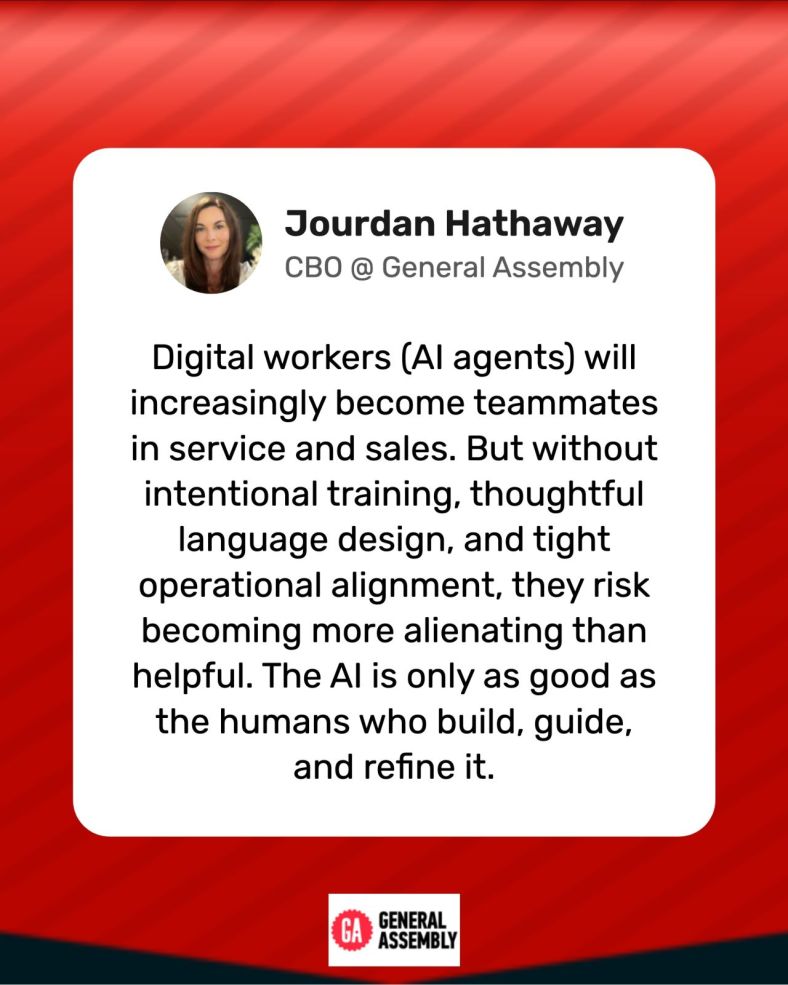
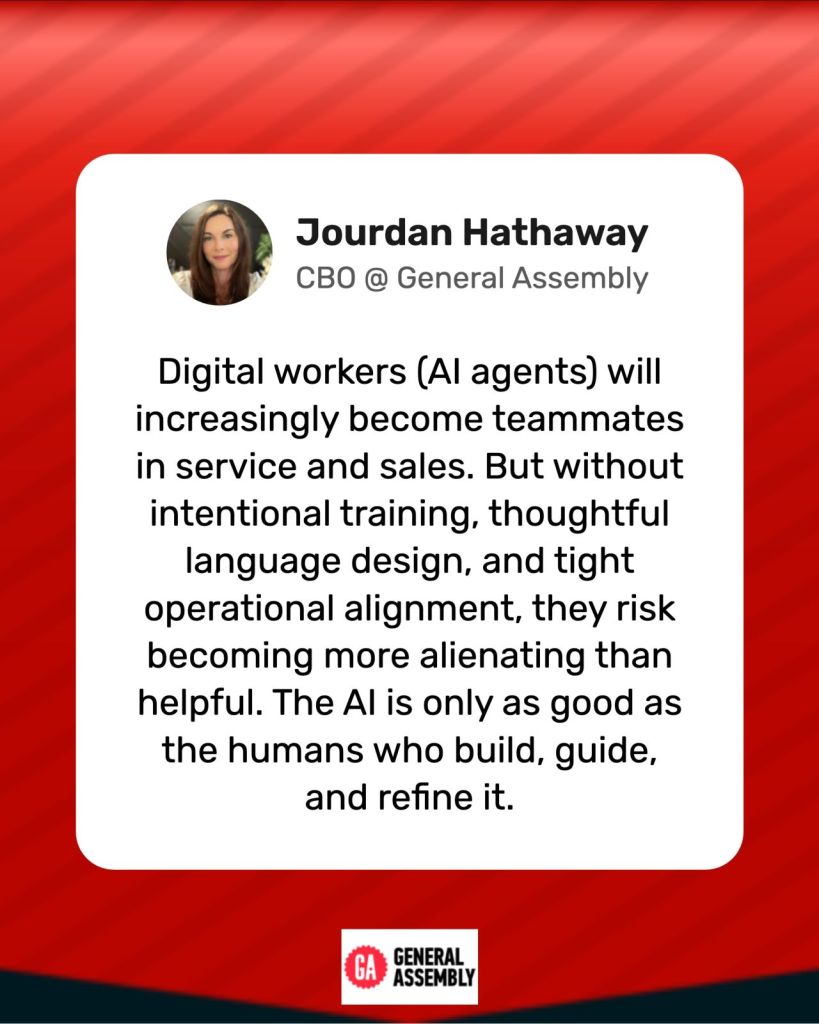
Digital workers (like GAbby) will increasingly become teammates in service and sales. But without intentional training, thoughtful language design, and tight operational alignment, they risk becoming more alienating than helpful. As this project showed, the AI is only as good as the humans who build, guide, and refine it.

From Skills to Sculpture: How Adobe Connects Creators Across Generations

Every day, I get to witness the impact of Adobe empowering the next generation of creators and marketers through General Assembly‘s partnership on the Creative Skills Academy and our apprenticeship program. But this past week, my family experienced Adobe’s influence in a completely different way: through the Adobe Creative Residency Programme at the Victoria & Albert Museum (V&A).

“Mom, it’s really awesome this exhibit lets you fidget and wear headphones”

“Mom, isn’t it interesting that Luca {Bosani’s} art in the year 2024 explores when a shoe becomes a sculpture and we also saw that small, tall, fancy shoe {huapandi} from the 1800s {a Chinese shoe that was also on display as a sculpture in another part of the V&A}. It’s weird, it’s like every generation and every country has a unique way of experiencing similar things.”

Let me back into both of these quotes.

They came from my 15 year old daughter. My family just got back from a weeklong dream vacation in London and we went to the V&A while there. We knew to go, and to visit the Adobe Creative in Residence programme, because I met the partnership team at Adobe MAX last year.

It was incredible. We got to see the Design and Disability showcase the contributions of Disabled, Deaf, and neurodivergent people. We also explored the works from the 2024 residents Luca Bosani, Jacqui Ramrayka and Rachel Sale and that’s where she made the shoe comment.

In one gallery was a ceramic shoe from 1800s Asia; in another, a modern work by 2024 Adobe Creative Resident Luca Bosani, a London-based multimedia artist exploring the question, “When does a shoe become a sculpture?” Centuries and cultures apart, yet united by a shared instinct to communicate through creativity.

Across time, media, and experience.

Whether in classrooms, museums or at work,  it’s interesting to see how Adobe and GA are helping people express, connect, and imagine across time, media, and experience.

Prompt Skilling Progression and Proficiency

For a business term, I’ll call this something like “prompt skilling progression and proficiency,” but here’s what employee upskilling with AI actually looks like in real life. I’ve seen this play out across teams and orgs of all sizes.

Download PDF of 10-Step Prompt Skilling Progression

Phase 1: Skeptical Curiosity
Fine, I’ll use AI and see what it’s all about. I don’t trust it though.

Phase 2: The First Prompt
Employee opens the AI chat tool of the moment (ideally one with a compliant enterprise account, but this post isn’t about that) and enters something basic like: “Write an email to X person about Y topic.” Wow, cool. That was helpful.

Phase 3: Writing Assistant Era
Employee starts asking the tool for more writing help: “Write an article about X topic.” “Create a blog post about Y.” Dang, that’s awesome.

Phase 4: The Experiment Zone
Now comes the flurry of both serious and fun prompts.
Serious: “Write a memo to leadership about these findings,” with a copy-paste avalanche of fragmented info that turns into a polished output the employee is thrilled to have expedited.
Fun: “Write a funny five-year anniversary note for my colleague Brenda. She’s in Dallas, works in media, loves orchids.” The AI nails it. The employee tweaks it slightly and posts it to Slack or Teams.

Phase 5: Strategic Prompting
The prompts evolve: business plans, project plans, go-to-market strategies, summaries, sales talking points, market scans.
Employee discovers they can upload files, images, and documents. (Hopefully on the enterprise version. Big plug for that.)

This post is about what I see with prompt upskilling, but just to say it: Using public AI tools can pose serious risks if you’re entering sensitive or confidential information. These platforms may store prompts or responses, potentially exposing proprietary data or personal details. That’s why secure, enterprise grade AI tools are essential: they offer data encryption, access controls, and usage governance to ensure your information stays protected.

Phase 6: Prompt Perspective Shift
Then it clicks: you’ve only been prompting “as yourself.” You start giving clearer instructions about what you want back, in what format, and using which inputs.
You learn to prompt as an industry expert outside your role. You ask for sources. You ask for thinking. The AI delivers.

Phase 7: Structured Prompting
Time for a major prompt evolution:
Employee learns to prompt using taxonomies that include role, request, goal, instructions, considerations, tone, style, and output format.
Example: “Act as a strategic marketing advisor with expertise in quarterly planning, audience analysis, and content campaigns across multiple channels.”

Phase 8: Prompt Hoarding
The prompt library begins. Word docs and spreadsheets start piling up. LinkedIn saves stack up. All of it might be useful one day.

Phase 9: Prompt Overload
Weeks pass. Employee is drowning in saved prompt docs across cloud folders and shared drives. Can’t find that one prompt from last week.
Still tries to send them along to help a prompt newbie.

Phase 10: Prompt Infrastructure Seekers
Employee starts hunting for tools that offer a searchable, categorized prompt database to make this curated chaos usable again.
Because the productivity gain of great prompting is now being slowed down… by all the prompts.

Oh, the irony.

Reflections from the Other Side of the World: A Global Lens on Innovation, Imagination, and Relevance

A Reflection on Global Inspiration

Over the past few weeks, I’ve had the opportunity to travel through Singapore, Indonesia, and Japan—my first time visiting the Asia-Pacific region. While I’ve explored some parts of Europe, Mexico, Canada, and the Caribbean, this journey offered a new kind of exposure: one that reshaped how I think about technology, culture, and our shared global future.

From tasting fresh fruit at a roadside stand in Batam on a taxi driver’s recommendation, to experiencing carefully curated meals in some of the world’s most elevated dining rooms, I was reminded of the simple truth that excellence can be found anywhere. Each moment offered its own kind of richness and helped deepen my appreciation for what different places bring to the global table.

Achieve Ambitious Goals through Partnership

As someone who has spent the last 20 years in EdTech (from digital marketing and app development to higher ed transformation and workforce reskilling) I returned home feeling deeply inspired and just a bit changed. The conversations I had across these countries, many of them with technical leaders in areas like machine learning, robotics, semiconductors, fintech, and AI policy, left me reflecting not only on the future of work, but also on the partnerships and coalitions we need to achieve ambitious goals for people and society.

A more personal takeaway: I found myself asking how I stay relevant and bold in the face of such rapid innovation. Being in rooms filled with brilliant minds challenged me, in the best way, to recommit to curiosity, conversation, and collective problem-solving. It reminded me that progress isn’t linear. It’s a cycle of learning, adapting, and improving…with plenty of pivots along the way.

The roles we’re training people for today don’t exist yet

I’m currently reading The Dip by Seth Godin, which challenges readers to become the best person for a specific job at a specific moment. It talks about the extraordinary benefits of knowing when to quit and when to push just a tiny bit longer to find your breakthrough. That idea feels particularly relevant in a world where the roles we’re training people for today may not even exist tomorrow. The workforce is evolving so quickly that orienting around durable skills, mindsets, and learning agility feels more essential than ever.

On a more practical note—after flying through the airports in Singapore and Tokyo (and seeing images of Dubai’s), I may never look at MCO, ATL, LAX, LGA, JFK, or MDW the same way again. Let’s just say we have some catching up to do.

Why wonder still matters in a world of rapid change

One of the most unforgettable experiences was visiting teamLab, an immersive digital art museum in Tokyo. It felt like stepping inside pure imagination. What struck me most wasn’t just the visual beauty—it was how the experience evoked awe, wonder, and joy in every single person. Grown adults stood wide-eyed, mouths open, transfixed. It reminded me that as we grow older, we don’t often grant ourselves space to be overwhelmed by wonder. Parenting may offer glimpses through our children’s eyes, but this experience gave it back to me directly.

And it left me asking: What would happen if we protected our capacity for wonder the same way we protect our strategic plans?

This journey was a gift—personally, professionally, and philosophically. I return with new questions, fresh energy, and a deeper appreciation for what’s possible when we connect across borders, disciplines, and ideas. And maybe, most importantly, a little more imagination.

Press and Interviews

e27 Asia: Upskilling in the AI era: Why passive learning will not cut it anymore
By Anisa Menur A. Maulani | April 29, 2025 | “Upskilling initiatives should be embedded into the company’s strategic roadmap,” Hathaway says. “They must be directly applicable to business objectives and support employee mobility and retention. Without this alignment, training risks becoming irrelevant.”

Channel News Asia (CNA): Upskilling in the AI era: Why passive learning will not cut it anymore
By Cheryl Goh | March 19, 2025 | Fresh out of school and struggling to get a job? You could be lacking some skills. While technical skills are important, industry experts say many more applicants lack interpersonal proficiency. What are these, and are they innate or nurtured? Cheryl Goh talks to Jourdan Hathaway, Chief Business Officer of General Assembly – a global pioneer in tech training and talent solutions.

Lessons from an Automation Fail

Many years ago, I had an epic automation fail that taught me a big lesson in tech implementations. It’s the kind of lesson you only need to learn once before it changes your understanding of the success drivers during digital transformation. My buddy Corey Miller would refer to this as a Red Learn (fail) and a Green Learn (growth).

I’m an operator, so naturally I look for ways to drive efficiency, optimizations, and scale.

Imagine you had to manually send out application deadline emails every 8 weeks, for 800+ different online programs, across 60+ education institutions day in and day out. This is a perfect use case for email automation (table stakes today, but novel back in the day). Let’s zip past the 💪Herculean effort to gather business requirements, select the vendor, do the implementation and customer config. This isn’t about that.

Let’s just get to the part where we built a great master template that had a bidirectional sync with all the necessary compliance, content, and data to power a single automated program (where operators swoon). This template pulled in 26 dynamic content field to ensure it matched the right program and institution – things like, the actual deadline date, the school name, the logo, the program name, the key value props, tuition cost, apply now link, etc.

So what happened?

The automated program worked as intended technically speaking. But here’s where the ‘uh-oh’s were:

  • Among those 800 different program names? Masters of Business Intelligence was spelled wrong (🤦‍♀️face palm for being spelled Intellgence) in the original CRM set up that it pulled from. That field was never intended to be public facing and so it wasn’t QA’d back in the day. Just correct the typo you say? We did, which then broke 11 different business reports that were integrated with that data field. Other departments depended on those reports – not great.
  • How about that easy date field? 🤦‍♀️Uh-oh, we didn’t accommodate the day/month vs month/day formats across countries. We just manually knew to reformat.
  • How about that tuition field? 🤦‍♀️Uh-oh, we didn’t have a data governance protocol for ensuring all 800 programs were maintained with price adjustments as time went on.
  • How about that Apply Now link? 🤦‍♀️Uh-oh, several pointed to a URL that we didn’t have control over and no mechanism to know if it changed and thus gave recipients a 404.

Here’s the big learn: Your data is the foundation of success; so are the business processes around data governance and maintenance. Do not underestimate this part. If you’ve seen this movie before, it doesn’t matter what tech project you’re working on, you enter it with a healthy respect for your data strategy.

It’s also why you know that implementation will be 20-30% longer that that lovely original timeline if your data strategy is not ready. But, this all solvable. And it’s a skill. So go thank and fist bump the Business Analysts, Data Folks, PMs, Delivery, and Process/Workflow people in your life.

A CMO’s Perspective on How AI is Changing the Marketing Discipline

No tech skill is animating today’s business leaders and workers alike quite like artificial intelligence. As AI redefines the future of work, organizations are faced with the critical task of building, re-skilling, and augmenting their workforce. This is certainly true of the marketing discipline as well.

3 Ways Marketers are Leverage AI

  1. Within our existing marketing tools – This is where new features are being rolled out within our existing embedded industry tech stack that augment productivity (like Adobe Express with an embedded AI image generator and AI assistants. AI is being implemented in our standard MarTech tools – from media buying and email automation tools to project management and content platforms). Take the project management AI assistant; we use it for automating answers, summaries, tasks, field completion, milestone creation, and updates.
  2. Individualized blue sky use – This is where marketers are creating their own role-specific use cases. Marketers are looking at time spent on manual repetitive operational tasks (very unique to their specific to-do list) and figuring out how to leverage AI. A few examples: one marketer on my team cut down by 85% the amount of time spent on identifying spam leads in a big .csv file. They did a prompt on what to look for and it also provided the Python input. I have another marketer who uses it to draft requirements documents as a starting point, and many content creators are obviously leveraging it.
  3. Novel marketing capabilities – This is where AI is unlocking completely new ways to engage audiences, leverage data, and drive innovation. We’re now able to tap into capabilities that previously seemed aspirational but are becoming reality through AI’s rapid evolution. For instance, AI is enabling hyper-personalized marketing at scale, allowing us to dynamically tailor messages, offers, and creative content to individual preferences and behaviors in real-time. Predictive analytics and learning models are also transforming customer insights, enabling us to not only anticipate needs but also actively shape customer journeys in more intuitive, responsive ways. We recently piloted an AI admissions rep (i.e., a simulated representative) who now conducts the initial conversations with students via call, text, and email. Key to this is using the right company-owned data to ensure we give prospects correct information.

AI’s Impact on Marketing Isn’t Just for Increased Productivity; It Also Impacts Cost Efficiency

We’ve seen an 18% decrease in cost per lead through AI-based campaign optimization. By analyzing vast amounts of behavioral and contextual data, AI can now recommend optimal ad placements, creative choices, and delivery timings based on precise customer segment analyses. Continuously optimizing campaigns to improve budget efficiency, while saving time on manual analysis. Important to this:

  • Success is predicated on the quality of your AI model – must have quality data inputs from trusted sources. Ideal customer profile and accurate targeting.
  • Marketing teams need to be upskilled to have basic data analytics skills. They can’t trust AI if they don’t understand the inputs/outputs.

We Have to Rapidly Close the Skills Gap for AI in Marketing

We see a massive skills gap that the marketing industry needs to address if we want to see a sustainable long term pipeline of tech savvy marketing talent.

At General Assembly, We partner with employers to help them upskill their marketing teams for the AI era. Let me give you a concrete example: we work with Adobe to create a pipeline of young, tech savvy creative and marketing talent. Two new General Assembly bootcamps on marketing and content creation are enrolling students from communities underrepresented in tech – with Adobe covering all costs for them.

Critical thinking and conciseness are a cornerstone of providing a useful data analysis

I’ve got Gantt charts and dashboards a’ plenty
I’ve got pivot tables and pie charts galore
CRM exports? I’ve got twenty (gazillion)
But who cares, no big deal, I wannntttt mooorrreeee
(thank you business Ariel, I’ll take it from here). Side note: my daughter and I just watched the new Little Mermaid movie and I often have a hard time decoupling work life and home life

Prefaces Data with a Nice Tidy TL;DL Version

I know there are seemingly infinite data tools; I depend on so many of them. This isn’t a commentary on products or processes. I’m instead reflecting on all those business analysts and data-driven critical thinkers who know how to figure out what the punchline is – tailored to the audience receiving it. I’m fortunate to work with many such people (really good dot connectors). One of the most helpful things I get is when somebody prefaces data with a nice tidy TL;DL version that summarizes the what, why, and what to care about in a few short sentences. Pulling data is one thing; summarizing/visualizing it is another thing; telling the reader what the headline is/why it matters/what to do about it – in simple language – now that is the jackpot.

Example

Here’s the info you were asking about. When you’re ready to dive in, all the supporting data is attached. You’ll find page 3 the most helpful. “TL;DR version – The drivers of the issue appear to be A, B, and C. Don’t worry about D – it looks concerning, but it’s actually immaterial. Issue A is out of our direct control, so let’s focus on B and C which we can influence. If you’d like to impact B, consider focusing the team on thing, thing, thing. If you want to impact driver C, you’ll need a tech or labor solution that does blah.”

Let your curiosity take you to a reasonable conclusion

From here you can have a healthy debate on interpretation from different functional areas, go several clicks deeper into the data to vet/debunk, seek dissenting voices to broaden your perspective, and then – hopefully, do something different in the way you operate that addresses the pain points revealed in the data analysis – the whole point of why we all care so much about data in the first place.

Data story-telling skills aren’t just for STEM grads; it’s for arts and humanities people too

Poets, Pivots & Prose (becoming pros)….. Data storytelling is not just for people with a STEM background. Some really great data storytellers I know came from an arts and humanity background. I assume it’s because they too had a knack for critical thinking, concept articulation, crafting persuasion, and narrative framing. Plus, by its very nature, data storytelling literally requires art (it’s one of those arts & science disciplines).

Poets, pivot tables, and prose can all come 🎯 together professionally.

Making sense of complex and difficult topics is a really powerful skill in the workplace. From investment cases and business optimization memos, to M&A due diligence and operational decision making – all these strategies are shaped by effective data storytelling. So are tons of micro moments within the day-to-day of most functional areas. It’s the skill to craft the narrative by leveraging data, which is then contextualized, and presented to an audience. It utilizes not only data analysis, but also visualization, contextual analysis, and presentation.

There’s many programs available to teach these valuable skills. I’m super biased so I’ll just point you General Assembly naturally. {or talk to me about your poetry, I’m interested in that too}

84 Common Questions Prospective Students Ask Before Applying to a Degree Program

During the research and decision-making phase of the enrollment journey, there are 84 recurring questions that are asked – here they are, organized into 10 categories

Over the years, our enrollment team has had millions of appointments and consultative interactives with prospective students (caveat: largely talking adult learners and online programs here). During the research and decision-making phase of program selection, there are common questions that routinely come up. Before students submit their applications, here’s some of the info they are gathering. For convenience, they are organized into 10 main categories. This is not every question ever asked – just the most common ones. While some of these may seem very basic, perhaps you love a tidy organized list of customer insights as I do. From there, it can fuel marketing, student engagement, internal training, and tech-enabled content delivery at scale.

What to do with this list?

  • Know Thy Product – make sure everyone supporting students can easily answer questions like this. When I first started, we had physical binders with this stuff. I think I even owned Whiteout when I wanted to update tuition. How barbaric! 81 questions x 800+ program offerings are ~65K Q&As to maintain. Thank goodness for content databases, cross-functional wikis, data governance teams/systems, and digital training courses. (PS – bonus points to any hoarders out there who post a picture of a binder they still have).
  • Utilize in Marketing – you don’t want a 7-year-old post on Reddit to be the only place a prospective student can find out if work experience is required for the degree they are interested in. Take stock of your marketing and lead nurturing assets to make sure you have the most up-to-date information. Depending on your lead-to-contact and contact-to-appointment rates, we can assume there’s a significant portion of your prospective student pipeline who you won’t end up directly engaging with so make sure there are plenty of ways for self-service info gathering.
  • Student Engagement and Tech-Enabled Content Delivery at Scale – by now, we’re all connecting with students through chatbots, live chats, messenger, emails, texts, and yes – definitely still the phone. For accuracy and consistency, it’s helpful when people and systems can all access the same info. This is where a marketing automation team will focus on the importance of highly functioning bi-directional syncs of content databases to email/SMS/chat tools or why diry data is a success poison. Punchline – there are a ton of ways to scale content delivery.
  • AI  I was scared to post this article without using the letters AI. Can I just leave a blank paragraph on this topic for now?

Enough already, just give me the tidy organized list! Got it, here it is:

Admissions

1.    Do you provide credits for work experience? 

2.    Do you provide visa sponsorship?

3.    Is there a GMAT/GRE entrance exam?

4.    Is work experience required?

5.    What are the admissions requirements?

6.    What are the start dates throughout the year?

7.    What type of transfer credits do you accept? 

8.    I’m a seasoned professional, do you offer a way to leverage my experience like Advanced Standing?

Application Process

9.    Do I need all pieces of my application before applying?

10. Do you have an application fee waiver?

11. How do I apply for the program? (Application step-by-step walkthrough)

12. What is the application review process?

13. How long does the application process usually take?

14. How quickly will my file be reviewed?

15. Is there an application extension?

16. Is there provisional acceptance?

17. What’s the application deadline? 

18. Who should I ask for letters of recommendation?

19. How many letters of recommendation are needed?

20. What is a statement of purpose?

21. What is the difference between an official and unofficial transcript?

Coursework and Faculty

22. Am I able to take any courses on campus even though I am applying as an online student?

23. Are classes synchronous or asynchronous? 

24. Are there live virtual sessions with my professors?

25. Are there proctored exams?

26. Can I take just one or two of the classes without pursuing a full degree or certificate?

27. How is the online program different than the campus version? 

28. How many classes are taken at a time?

29. How many total credit hours are needed?

30. Is there a particular order in which I must take classes?

31. What are the courses of the program? 

32. What are the ways I am able to interact with faculty members?

33. What days are assignments normally due?

34. What technology and apps will I need? 

35. Who teaches the courses? 

Experience

36. Can you take breaks throughout the program?

37. How do you work with the military during deployments overseas?

38. How many students am I in class with?

39. Is the program mostly full-time faculty or adjuncts?

40. Is this a cohort?

41. May I speak with a current student?

42. What does a typical week as an online student look like?

43. What type of faculty and student interaction is there in an online program? 

44. What type of networking opportunities are there? 

45. What is the online learning experience like?

Tuition and Fees

46. Am I able to defer payment if being reimbursed through my employer?

47. Are there scholarships for this program?

48. Are there any other fees associated with my program other than tuition?

49. Can I receive a discount on my tuition if I pay for the entire year?

50. Is there a monthly payment plan for tuition?

51. How do I apply for a student loan?

52. If my program will be employer-sponsored, what is the payment process? 

53. What are my funding options? 

54. What is the cost per credit? 

55. What is the difference between FAFSA and Sallie Mae loans?

56. What is the total anticipated tuition? 

57. What tuition benefits are offered to active military and veterans?

Graduation

58. I’m an online student, can I walk in graduation?

59. What specifically will be on my diploma?

Program and School Info

60. Are you a yellow ribbon school?

61. Can I do a blended/hybrid program (campus & online)?

62. Do I have to pick a concentration?

63. What is the physical address of the main campus?

64. How long has the University been offering this degree or certificate online?

65. Is there a full-time option or part-time only?

66. How fast can I complete the program? (Least amount of time)

67. Is the online degree the same curriculum as the on-campus degree?

68. How long do I have to complete the program? (Longest amount of time)

69. Is there a residency component?

70. Is this program accredited?

71. Which degrees and certificates can be taken online?

72. Are clinical waivers available?

Career Outlook

73. What is the career outlook for graduates of this program?

74. Does this degree prepare me to become licensed in ….?

75. What type of job can I pursue with this degree?

76. I’m going back to school so I can advance at my current job, will this program teach me how to…?

Student Resources

77. Is there a {virtual} open house?

78. Do you provide any training on the learning management tool / LMS?

79. Do you offer job placement?

80. What resources does the school provide for students with disabilities?

81. Will I have technical support?

Time Management

82. Can working professionals with families really do this?

83. How much time will I have to devote to the program on a weekly basis?

84. Any tips on how to manage my time?

————

This list of questions is simply sharing what’s on the minds of prospective students pre-application from the millions of real-world interactions we’ve had. Education does not guarantee outcomes including but not limited to employment or future earnings potential. Admissions standards and decisions, faculty and course instruction, tuition and fee rates, financial assistance, credit transferability, academic criteria for licensure, and the curriculum are the responsibility of the Institution.

If you are interested in more insights about online learners, check out Wiley University Services 2023 Voice of the Online Learner.

Higher Education in Transition: Some of the Challenges of Scaling Career-Connected Learning

Pre-Read Caveats

Higher education is very politically polarized right now and is in the news daily – from the ROI of a degree and the loan debt crisis to job readiness and equity/accessibility. Enrollments have been trending down for more than a decade and there are loads of systemic challenges being discussed. The below content doesn’t discuss any of that. Below is a summary of the content that was gathered when a few higher ed folks got together for a casual and informal discussion specifically on career-connected education and some of the obstacles universities (and B2B partners) cite when thinking about shorter, job-relevant programming for today’s workforce needs. It’s not exhaustive by any means, just some of the themes that higher ed professionals face in this topical domain. Yes, it’s totally biased to a few points – it was a focused conversation. It’s worth sharing because it’s important to bring people together who are working to solve similar problems – so here goes…..

Universities and Career-Connected Education

It’s certainly not suitable for everyone, nor is it the only path, but the traditional path of a college degree remains a vital and important option for career mobility – at least for the foreseeable future. Degrees provide a foundation of knowledge and cognitive abilities, forming a comprehensive perspective that equips learners to navigate diverse challenges in their professional journey. Degrees remain an essential component of career progression and personal development. That said, many in the higher ed industry are also deeply aware of (and focused on) the widening skills gap in our labor markets and are looking for ways to close the chasm for tighter career-connected learning. It’s a complex and multi-faceted issue, but there’s an exciting proliferation of interest and actions happening in the market today.  

Competing in the Upskilling Marketplace

In the face of rising competition in the upskilling marketplace, some universities struggle to maintain their relevance (actually more than “some”, it’s “many”). The higher education sector finds itself vying against various entities – from certification bodies, industry associations, or professional associations to learning providers like Google and LinkedIn Learning. In some cases, work experience or industry credentials are seen as more valuable to an employer to demonstrate a particular set of competencies and skills. For learners looking for the total package, universities must carve out their unique value propositions, they have hundreds of years of expertise with bachelor’s, master’s, and terminal degree programs. Today, there are additional expectations to:

  • Further embed specialized credentials from industry-specific organizations
  • Accelerate frameworks (and scalable AI solutions) that allow the curriculum to be more aligned with skills-based programming (at the industry level and even down to the specific employer level) – this isn’t just about hard skills; soft skills mapping is critical too
  • Give adequate and fair credit for military or prior work experience such that it appropriately maps to specific job requirements

Universities and Career-Connected Education

This is a sweeping generalization from decades of working in higher-ed, obviously, not all institutions face the same challenges, but there are common themes that show up on this topic. When discussing career-connected education with universities, they generally express enthusiasm for job-relevant programming. However, obstacles tend to be operational and practical. Universities grapple with aligning curriculum to career pathways and developing alternative pathways for students for whom a traditional four-year degree is not an option. These challenges are really exacerbated for universities when it comes to alternate pathways – meaning non-degree learning products (to be clear, there are a lot of institutions and companies doing fantastic work in this space). Moreover, industries don’t always clearly define the micro-skills needed for specific jobs, making it challenging for educators to create relevant skill-based programs. There is no standardized system for recognizing acquired job skills. Degrees and diplomas still hold sway due to their standardization, whereas certs/badges for specific micro-skills are less recognized, although this is rapidly changing.

AI will no doubt solve these things, but it’s not been adopted and scaled yet in a way that institutions and employers have equally forged to mutual understanding and satisfaction (yes at some point, this will be embarrassingly outdated). Today, curriculum-to-job-skills translation mapping (and vice versa) still requires some type of oversight and taxonomizing from a human SME who can translate and bridge gaps – and figure out where to prioritize opportunities. It can be a slow-moving slog with the amount of stakeholders involved.

Economic Challenges for Universities

Universities play a pivotal role in providing upskilling opportunities. However, they are often stymied by the economics of running these programs and connecting them to learners and employers. Competitive learning products can be expensive to develop and sustain if not carefully executed. At the end of the day, they must have reasonable unit economics. Rightfully so, the market demands a low price point for short-form learning products. The business model must make sense after you consider development and maintenance expenses along with the cost of student acquisition (e.g., marketing costs). Universities on their own are often unable to cost-effectively compete in a direct-to-consumer market; this is where employer partnerships and strategic B2B relationships become so important. Of course, there are indeed institutions that do have sustainable organic learner traffic at scale, great D2C e-commerce experiences for non-degree upskilling products, and mutually productive skills-focused employer arrangements – but many more that do not, and they and their partners are grappling with ways to win in this space.

Upskilling and Degree Requirements

Upskilling and credentialing continue to be pressing topics in today’s labor market. There are many complex obstacles to solve for both employers and educational institutions. For the upskilling paradigm to succeed, hiring requirements need an overhaul. Many employers still rely heavily on traditional bachelor’s degree requirements, even when the candidate may hold significant military experience, work experience, or alternate job skills credentials. The sirens are going off though as we’re already starting to see employers and states dropping the bachelor’s degree as a job requirement. Perhaps it’s not an either-or resolution – the world is evolving where there are different paths to prove competency and job readiness.

The Need for Lifelong Learning

The rapidly evolving professional landscape necessitates continuous learning, even after obtaining a job. Lifelong learning products are indispensable in catering to these emerging needs. Such educational resources, which may include online courses, workshops, certificates, apprenticeships, or badges to name a few, allow individuals to enhance their skillsets and remain competitive in a changing job market. They offer the flexibility to accommodate personal and professional commitments while pursuing further education.

Technology advancements, particularly in areas like AI, are not just disrupting jobs but also creating new ones. These emerging roles often require niche skills and a deep understanding of the technology, which can be gained through targeted learning programs. However, in other cases, qualifying for these new jobs might demand a full degree to ensure a comprehensive understanding of the field. Again, not an either-or; careers should be underpinned through optionality. Proving candidates have the knowledge, skills, and abilities for a given position will be key.

Degrees and Upskilling: Embracing Optionality

In the face of this evolution in job requirements, a three-pronged approach that values degrees, continuous upskilling, and non-degree alternate pathways can all serve a purpose. Degrees lay the groundwork for a large segment of the population, providing broad knowledge and critical thinking skills (granted, we still need degrees to provide actual employment). Simultaneously, lifelong learning products offer a means to stay updated with industry changes, acquire new skills, and prepare for the jobs of the future. Just as vital are non-degree alternate pathways for job readiness. Together, these different pathways can equip learners with the capabilities and optionality needed to thrive in a dynamic professional environment.

Conclusion

In conclusion, while there is growing recognition of the importance of upskilling and the provision of alternative education pathways, several obstacles remain, including ingrained hiring practices, the economics of delivering shorter-term, lower-cost programs, competition, and the lack of standardized micro-skill credentials. To address these challenges, a multi-pronged approach involving educational institutions, employers, and policymakers is necessary. This approach could involve a review of hiring requirements, an overhaul of educational program structures and pricing models, and the development of standardized systems for recognizing micro-skills.

WCET Webcast: Strategic Portfolio Development Maximizing Course Offerings While Lowering Costs

WCET Webcast Recap from Thursday, April 20, 2017

Strategic Portfolio Development (SPD) is a forward-thinking program planning approach that helps institutions position themselves to more efficiently operate in today’s market while preparing for tomorrow’s. It identifies the most strategic and scalable market-centric digital program anchors, concentrations and certificates to create a series of “suites” that build off of each other, interconnecting current and future content and program areas.

Benefits of the Strategic Portfolio Development Approach

The modular nature of this approach provides schools the ability to attract a larger section of the market to their digital offerings, maximize their use of resources, quickly increase their number of market interesting programs offered and ultimately grow a more robust and long-lasting digital presence.

Screen Shot 2017-06-27 at 9.48.56 AM

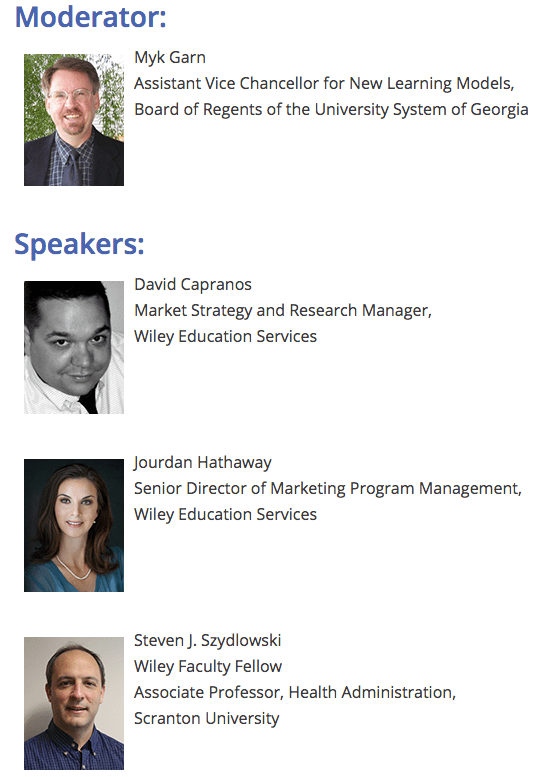
Panel Speakers

How SPD Works:

SPD involves analyzing trends in the market and understanding where the educational gaps and opportunities exist, not just to identify students, but also to help students prepare for jobs. By doing this, institutions can build efficient, flexible, and relevant online curriculums.

Connect with Wiley Education Services to learn more.

SPD helps institutions:

  • Maximize the courses they offer.
  • Quickly address changes in the market, without having to redesign an entire program.
  • Bridge outcomes with workforce expectations.
  • Identify employment needs/gaps to offer programs that will provide students with strong employment opportunities after graduation.
  • Make program planning and development more efficient.
  • Increase enrollments as students often prefer programs that allow them to focus on a specific, market relevant, specialization.

Strategic Portfolio Development – A Marketer’s Point of View

The approach of Strategic Portfolio Development influences marketing in two main ways:

  1. First, is the University’s value story in the market place
  2. Second, is the economic benefit to the marketing budget

Let’s start with unpacking how a University builds its value story. We have things like history, mission and credentials – these are long established macro-level brand ingredients. The value story is further made by factors that are rapidly evolving – program differentiation, outcomes, and the online environment itself.

The Intersection of Institutional Competency and Today’s Student Journey.

So where does Strategic Portfolio Development come in to this? In effect, it helps the school become a center of excellence in a set of scalable disciplines, which in turn, helps build competitive differentiation. While SPD has great internal benefits for the school, it’s also a student-centric approach. I like to say that it’s the intersection of institutional competency and today’s student journey. When an institution can market a depth of experience that gives students meaningful choices, the value story further grows in the marketplace.

At Wiley, our strategic marketing direction starts with a solid understanding of the product portfolio and the markets it can serve. We’re immersing ourselves in the university brand and looking to understand the in-depth details of the programs. A competitive analysis is paired with this information to provide perspective on the landscape. It gives us a feel for where to position the program, department, or university at large, that allows for market differentiation. As much as I’ve used the word market differentiation, it’s most meaningful if that is arrived at from the student’s perspective. Gone are the days of using course catalog descriptions to sufficiently describe the program. Gone are the days of the online modality being unique. Students want to know the outcomes and the ROI. If there’s a set of related choices that can better speak to the nuanced need of a chosen career path, it helps build confidence.

Impacts the Efficiency and Scale of Budget

Let’s move on to the way Strategic Portfolio Development impacts the efficiency and scale of budget.

At The Onset of Research, Not Every Student Knows Exactly Which Degree to Pursue

Sometimes there’s an assumption that every graduate student knows exactly which program they want to pursue. The reality is, many of the initial searches higher up in the funnel are very broad. Students start looking for program comparisons. This often leads to uncovering a specialization, or even a different program, that the student didn’t know existed. I’ll give you an example. I was recently looking at search index that compared the terms ‘accounting masters’, ‘accounting MBA’ and ‘business masters’. On average, there’s 76% more searches for the broad term ‘business masters’ than searches for an ‘accounting masters’. And, ‘accounting master’s has 147% more searches than typing in ‘accounting MBA’. {for all you data scientists, I know you can slice the data in infinite ways and there’s conversion impacts at every level – this stat is to help get a broad point across}.

Now let’s imagine that the school could compete with any of these phrases. That’s exactly what happens with SPD if there’s a program suite that can be co-marketed today. Even if it’s messy internally because the programs come out of different colleges, there is real strength in marketing relevant choices together. Instead of building many one-off marketing assets that support a single program, you can consolidate. The speed to market is quicker because you can add a tangential option to an existing set of assets and marketing campaigns rather than start from scratch. From a paid media perspective, digital marketing efforts can be initially targeted to a larger audience which can result in a lower cost-per-inquiry.

See a Real Example of SPD in Action

Check out the WCET Webinar to see how this plays out in Scranton’s real world portfolio example. In the marketing section, we talk about how to market at the individual program level while bringing down costs in aggregate by marketing the suite at large. Market demand then dictates how inquiries shake out by program.

At Wiley, we underpin this strategy with sophisticated media technology that allows performance targeting and conversion modeling – but that’s a webinar for a different day.