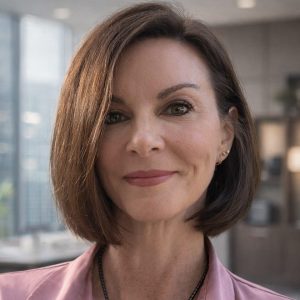
Today I’m the Chief Business and Marketing Officer at General Assembly, leading marketing, sales enablement, client delivery, admissions, student experience, career services, alumni relations, and partnerships around the world. On paper, it looks like a straight-line story of advancement: agency marketer to executive to C-suite.
It is anything but a straight line.
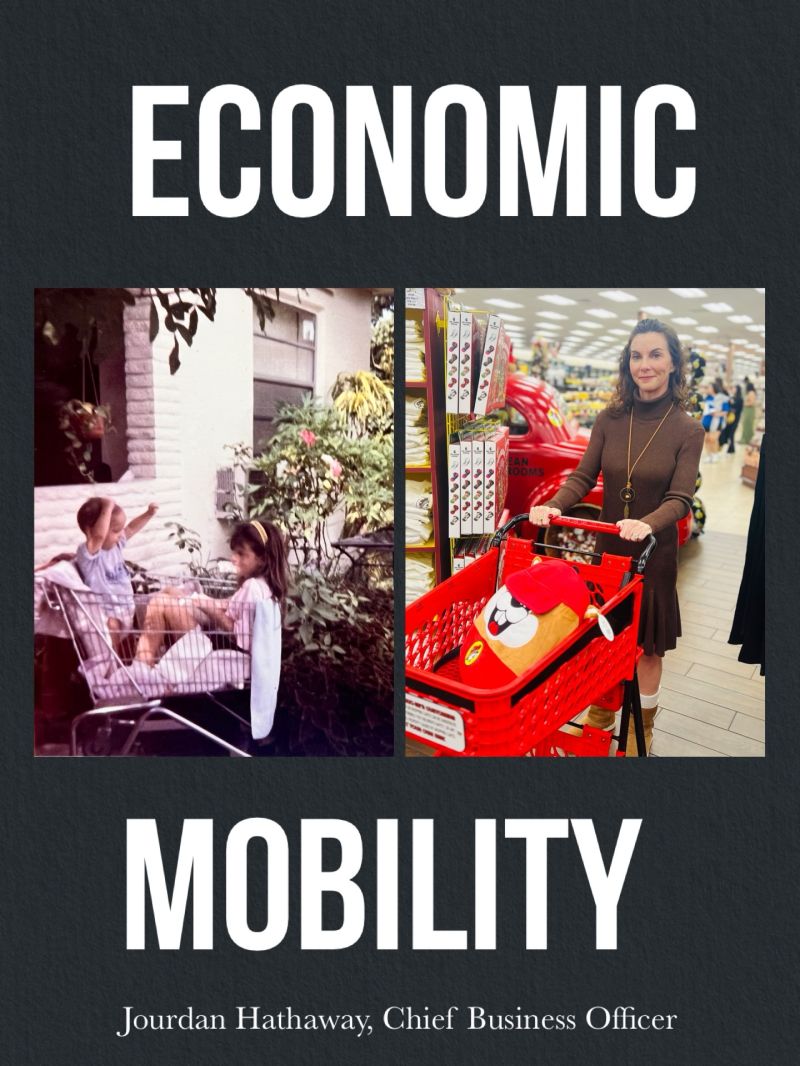
My story really starts in a place that didn’t have words like “economic mobility” in its vocabulary. I grew up in south Florida without reliable electricity or air-conditioning, in and out of unstable homes.
As a little girl, I would nap in a shopping cart outside my grandmother’s power and waterless house because it was too hot inside. I didn’t have the language for “poverty,” but I felt it in my bones.
What I did have, even then, was a very clear sense that this couldn’t be the whole story.
Bewitched, a turn dial TV, and a blueprint for a different life
After school, I’d often go to what I thought of as a “safe” house—one of the few places where things felt calm. They had one black-and-white channel on an old TV, and every single afternoon the same show came on: Bewitched.

On the surface it was a quirky sitcom about a witch, Samantha Stephens, and her husband, an ad man. But to me, it was a portal.
I saw a nuclear family: a mom and dad who loved each other, a house with grass and a car in the driveway, Christmas presents under a tree, Thanksgiving dinner at a table. Stability. Warmth. Safety.
And in my young, impressionable mind, I made a very simple equation:
- Ad man = flourishing home
- Flourishing home = the opposite of what I was living
So I decided: I’m going to become an ad man.
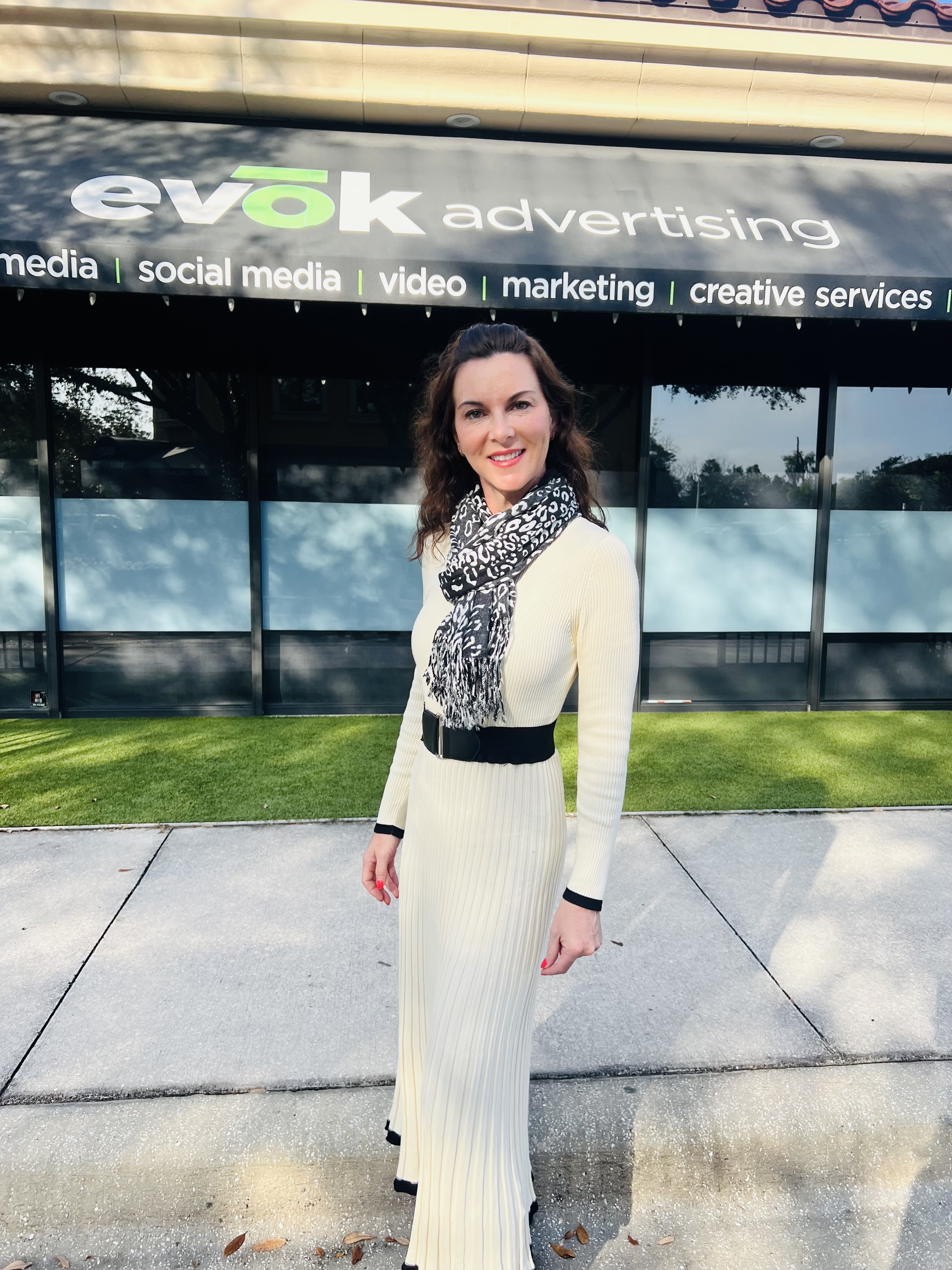
I never deviated from that decision. While the adults around me were concerned with surviving the week, I was quietly plotting my escape route into advertising, figuring that if I could do what that character did, maybe I could build the kind of life I saw on that flickering TV screen.
Many years later, I did exactly that. I spent my first decade in my career on the agency side, an “ad woman” living out the dream that began in front of a turn dial television set.
Writing my way into college, door by door
Of course, there’s a big gap between “I want to be in advertising” and “I have a college degree and a career.” For kids who grow up in poverty, college often feels like an abstract concept—this mythical place that “other people” go.
I knew education was my path out, but I had no idea how I would pay for it.
One day I saw a fundraising episode of Bewitched on TV (the characters raise money for a cause) and a thought clicked: Could I do that… for college?
So I did what I’ve always done when I don’t know where to start: I wrote.
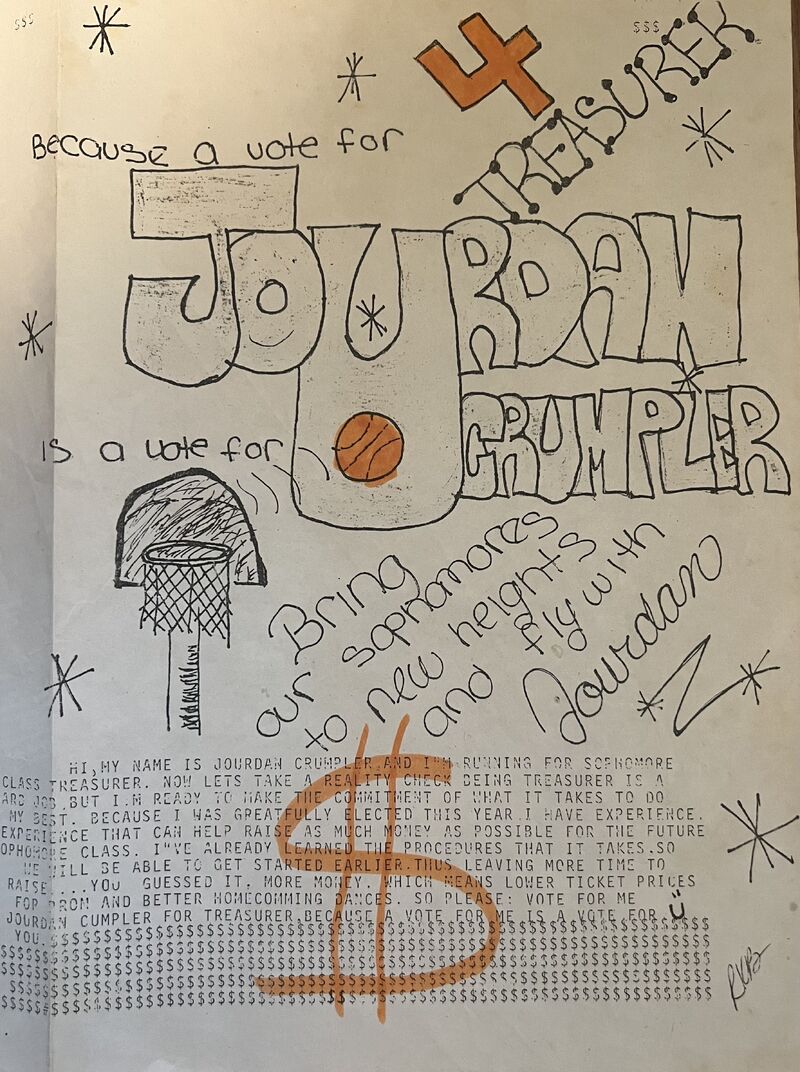
I took notebook paper and wrote my story: why I wanted to go to college, what I was trying to escape, what I hoped to build. I gathered all my report cards and high school achievements, like this “Because a vote for Jourdan is a vote for U”. (1995 Class Treasurer campaign). I carefully saved all this in a scrapbook and I started going door to door and scholarship to scholarship.
The local furniture store owner. The eye doctor. The dentist. Small business owners who had every reason to say no to a kid asking for help. The Miami Scottish Rite and so many other organizations also had scholarship programs and I’d apply to everything I could.
I would share my story, show them my grades, and ask: “Would you consider sponsoring me to go to college?”
Some did say no. But many said yes. Sometimes there were so few who applied to these obscure programs, that all it took was the effort itself.
People wrote checks (sometimes for hundreds, sometimes for a thousand dollars) and I kept meticulous notes about who gave what. Once I was enrolled, I’d send handwritten letters and photocopies of my report cards back to them:
“You took a chance on me. I want you to know I’m making good on that promise. And if you’re willing… I’d be grateful for your continued support.”
That experience taught me two things that still define my leadership today:
- People will say yes more often than you think—if you’re brave enough to ask.
- Your story, honestly told, can move resources in your direction.
The teacher, the clarinet, and the book I still unpack first
My story is not just about my own grit; it’s also about the people who saw me before I fully saw myself.
In third grade, a teacher realized I couldn’t afford to join the school band. She quietly went to a pawn shop, bought a used clarinet, and handed it to me so I wouldn’t be left out. That one act gave me a safe place after school and introduced me to music, a source of comfort and joy I still rely on today.
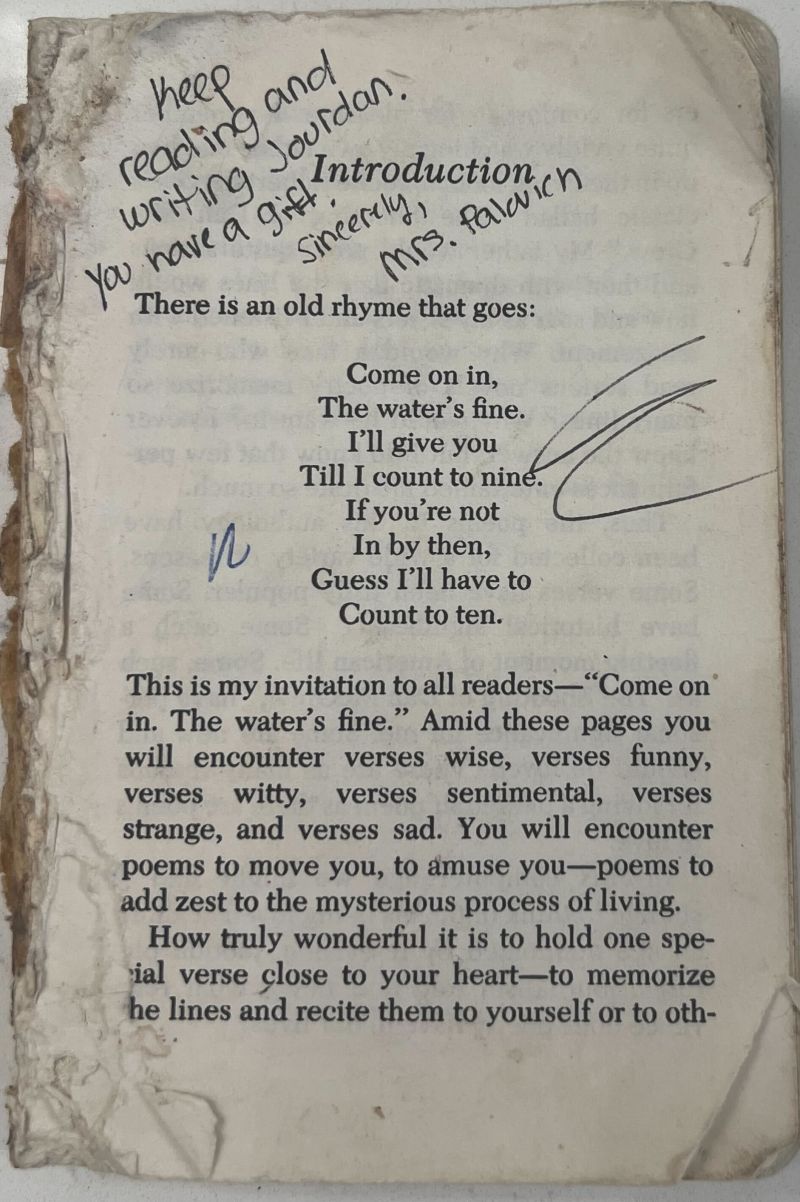
The same teacher saw my early writing and gave me a book that has followed me to every home I’ve ever lived in: The Random House Book of Best-Loved Poetry. The cover has long since been chewed off by a dog, but on the first page there’s an inscription I can recite by heart:
“Keep reading and writing Jourdan. You have a gift. Sincerely, Mrs. Palovich.”
It was a small moment for her. It was a tectonic shift for me.
To this day, that book is the first thing I unpack in any new house. It’s my physical reminder that someone once looked past the chaos and saw potential and told me about it.
That’s where my commitment to economic mobility really took root. At the time, I didn’t know the term. I just knew what it meant to feel trapped, and what it felt like when someone handed me a tool, an instrument, or a word that made escape feel possible.
From functional excellence to enterprise leadership: Project FLAT
Fast forward: I’ve became the thing little-girl-Jourdan dreamed of: I’m was marketing, leading teams, building brands, driving performance. Eventually, I landed what I thought was my end-game role: Vice President of Marketing.
I was proud of that title. I genuinely loved the work.
And then one day I was, for all intents and purposes, “voluntold” into a new role: SVP, Chief Operating Officer of a $200M division inside a publicly traded company.
On the surface, it was a dream opportunity. Under the surface, I was panicking.
I didn’t wake up one day magically fluent in:
- CapEx, OpEx
- EBITDA
- P&Ls, balance sheets, cash flow
- How to show up on an earnings call prep meeting and translate operational reality into financial language
And I didn’t have the luxury of stepping away for a year or two to get a finance degree. I had about twelve weeks before my first executive leadership meeting where the team assembled to prep for earnings call. I was just one of many in that room and each person was expected to provide the right contextual information.
In that moment, I had a choice:
- Decide I wasn’t good enough and quietly step back, or
- Figure it out…..fast.
I chose to figure it out.

I created my own professional development plan and gave it a name: Project FLAT – Financial Literacy Advancement Training.
“FLAT” because I needed to flatten the learning curve and level the playing field so I could deserve my seat at that table.
I mapped out my gaps in detail:
- What don’t I understand yet?
- What decisions am I being asked to make that I can’t fully translate into financial terms?
- Who around me has the decoder ring to this world?
I listened to earnings calls. I studied P&Ls. I enrolled in finance courses. And critically, I sat down with operators and finance leaders and said, very plainly:
“Here’s how I’m interpreting this data and this decision. Is this right? If not, correct me.”
Sometimes I was absolutely wrong.
But every time, someone helped me course-correct. I took copious notes. I’d go back, rewrite my interpretation, and come back again in a lower-stakes setting to say, “Okay, let me try this again.” Over time, I stopped just understanding the numbers and started inhabiting them: connecting the dots between strategy, operations, and financial outcomes.
I journaled the entire journey, never intending to share it. But that writing eventually became a template for others: a playbook for how to move from functional excellence to enterprise leadership when you don’t feel “ready.”
Project FLAT taught me that:
- Leading a function is one thing.
- Leading a business requires you to speak its language, live in its problem space, and be honest about what you don’t yet know.
Once I made that internal shift, everything changed. It’s a big part of how I moved from VP of Marketing to COO to Chief Business Officer.
DRIVEN: my operating model for leadership
Over the years, I’ve come to understand that leadership isn’t just about strategy, operations, or metrics. Those are table stakes. The real differentiator is how you show up as a human being.
For me, that’s captured in an acronym: DRIVEN.
- D – Determined: I will find a way. From shopping carts to boardrooms, determination has been the throughline.
- R – Resilient: The path has never been linear. Doors close. Plans fall apart. I keep going.
- I – Impactful: If I’m in a role, a room, or a relationship, I’m there to move something meaningful forward—for the business and for people.
- V – Vulnerable: I say “I don’t know” when I don’t. I ask for directions from those who’ve been where I want to go.
- E – Empathetic: I’ve lived what it means to start from “less.” That shapes how I hire, how I coach, and how I design opportunity.
- N – Nimble: I’m willing to reinvent myself, to pivot, to learn in public when the world or the business demands it.
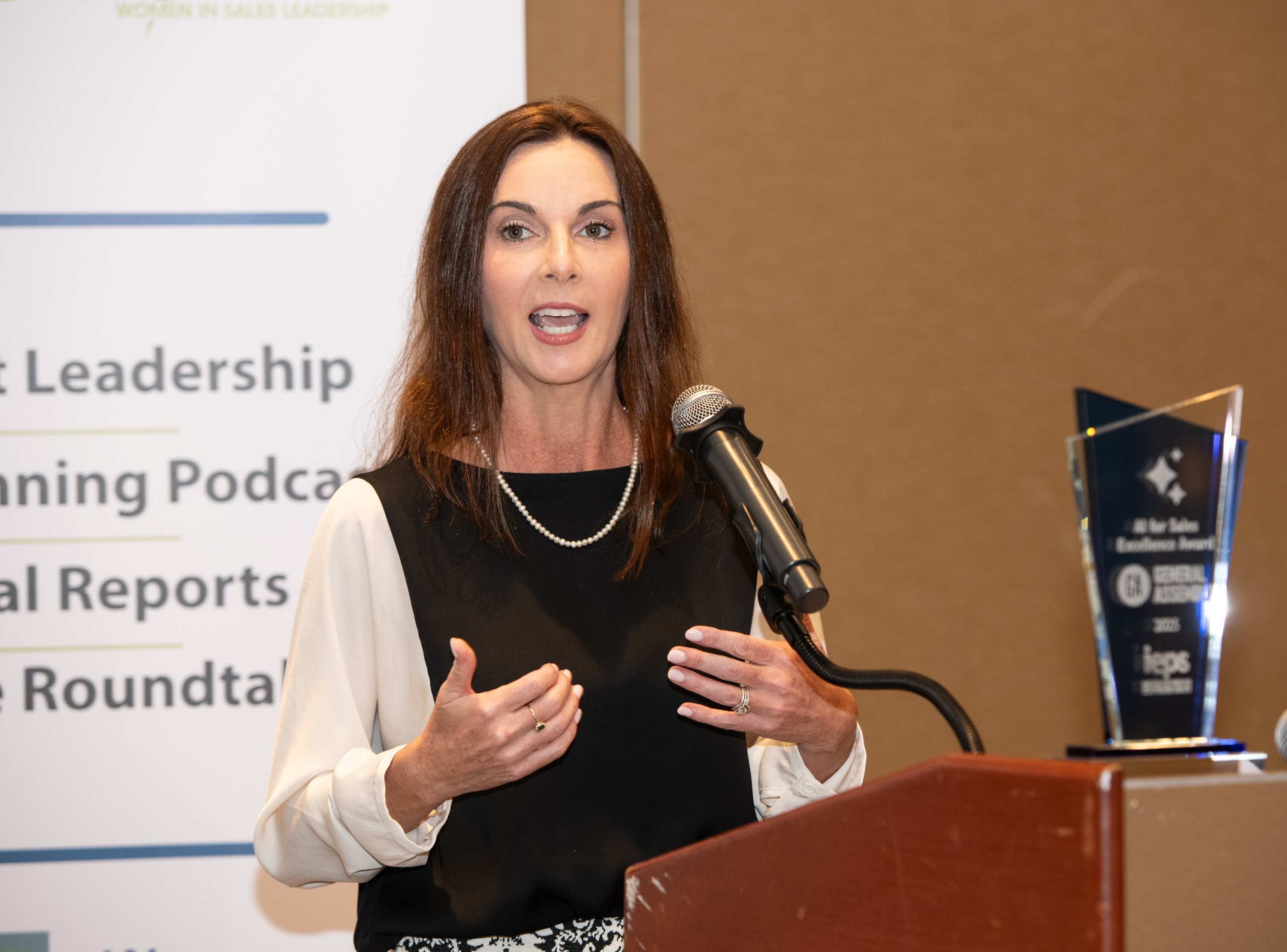
The “V” and the “E” have been the hardest-won and most transformative for me. Vulnerability and empathy aren’t soft skills; they’re force multipliers. They’re how trust gets built. They’re how cultures of continuous learning actually take root.
I can’t “arrive” somewhere I don’t know how to get to. So I routinely seek out people who have the map, whether it’s a CFO walking me through a new financial construct, a seasoned operator helping me see around corners, or a speaker helping me refine a keynote.
And every time I find my way to that new place, I turn around and offer the directions to others.
That’s what leadership is to me: not a title, but a practice of turning your hard-won maps into pathways for other people.
The personal fuel: music, comedy, and a mantra
When ever I share my story or speak about leadership, I seem to be asked, “so, what do you do for fun?” Is it all relentless drive or do you ever sit back and have fun? There are two places where I am completely present, where my phone might as well not exist:
- Listening to live music
- Watching stand-up comedy
In both, I’m fully absorbed, laughing, feeling, processing. Music has been a throughline since that pawn-shop clarinet. Comedy reminds me not to take myself (or my titles) too seriously. Both keep me human.
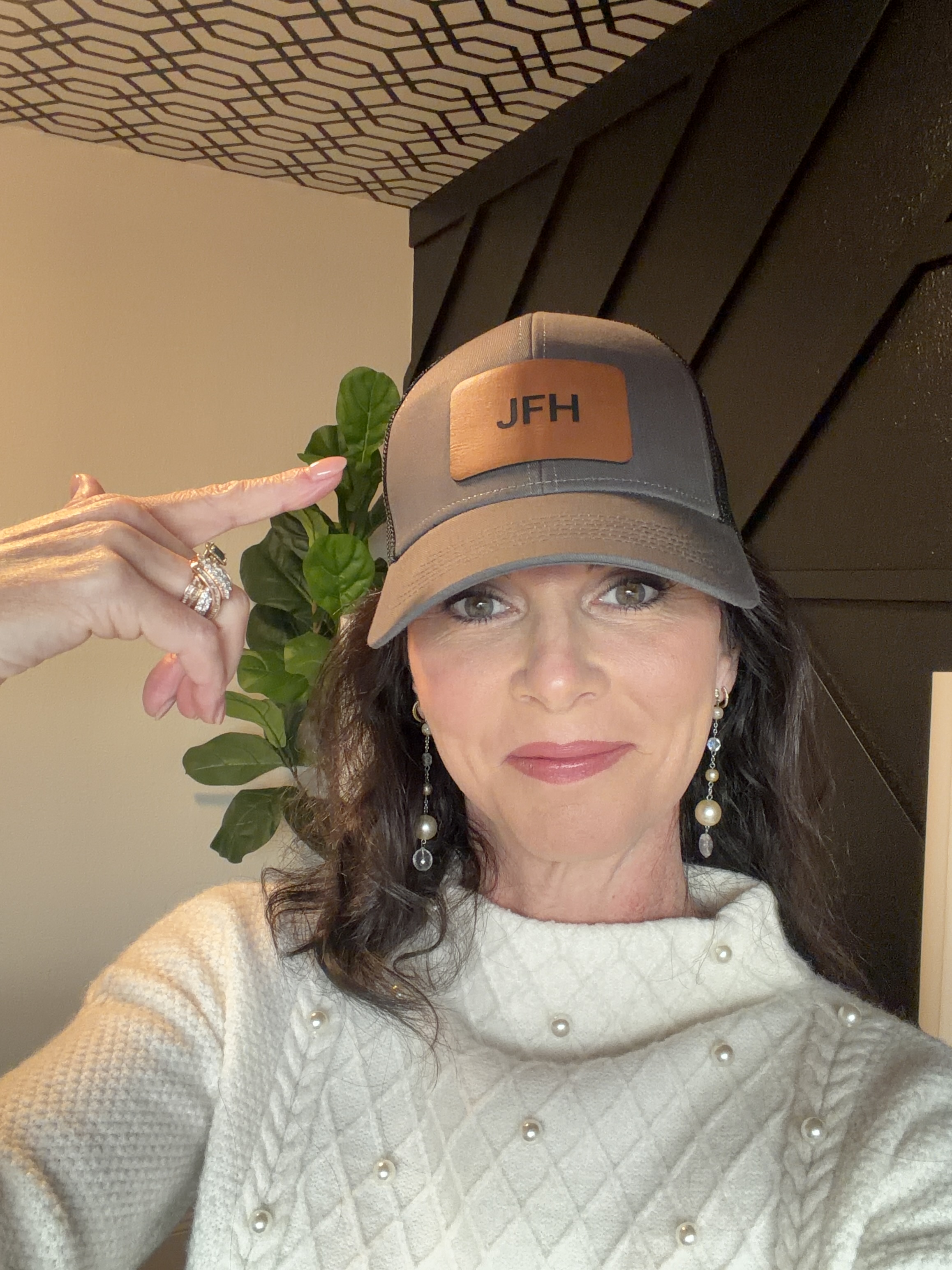
And then there’s the mantra I’ve said to myself almost every day for the past fifteen years, especially right before something big:
“I am Jourdan F’ing Hathaway, and I’ve got this.” – crude? Maybe, but I’m nothing if not authentically me.
I say it backstage before I walk out in front of 3,000 people. I say it before tough conversations. I say it when I’m trying something that scares me.
It’s not about ego. It’s about reminding myself that I deserve to be in the room, that I’ve done the work, and that even if it doesn’t go perfectly, there will be a lesson on the other side that makes me better.
From survival to purpose
If I had to distill my journey into a single throughline, it would be this:
I started in survival. I chose purpose.
I didn’t know what “economic mobility” meant as a child, but I knew I wanted out of my circumstance and I was willing to do whatever it took, ethically and creatively, to get there. Over time, that evolved into something bigger than just my own escape.
Today, my work is about democratizing access to skills, careers, and opportunities that can change someone’s trajectory the way mine was changed. I lead with the memory of every person who ever said “yes” when I knocked on their door, literal or metaphorical.
And if there’s one message I carry with me into every room, it’s this:
Your beginnings do not determine where you can go. Your story (especially the hard, messy, complicated parts) is not your liability. It is your greatest advantage.
Leadership isn’t a destination. It’s a practice rooted in purpose, curiosity, courage, and the willingness to grow out loud, in public, before you feel “ready.”
I am Jourdan F’ing Hathaway and I am DRIVEN—Determined, Resilient, Impactful, Vulnerable, Empathetic, and Nimble.
And my hope is that, in your own way, you’ll choose to be, too.
 Jourdan Marie Hathaway