
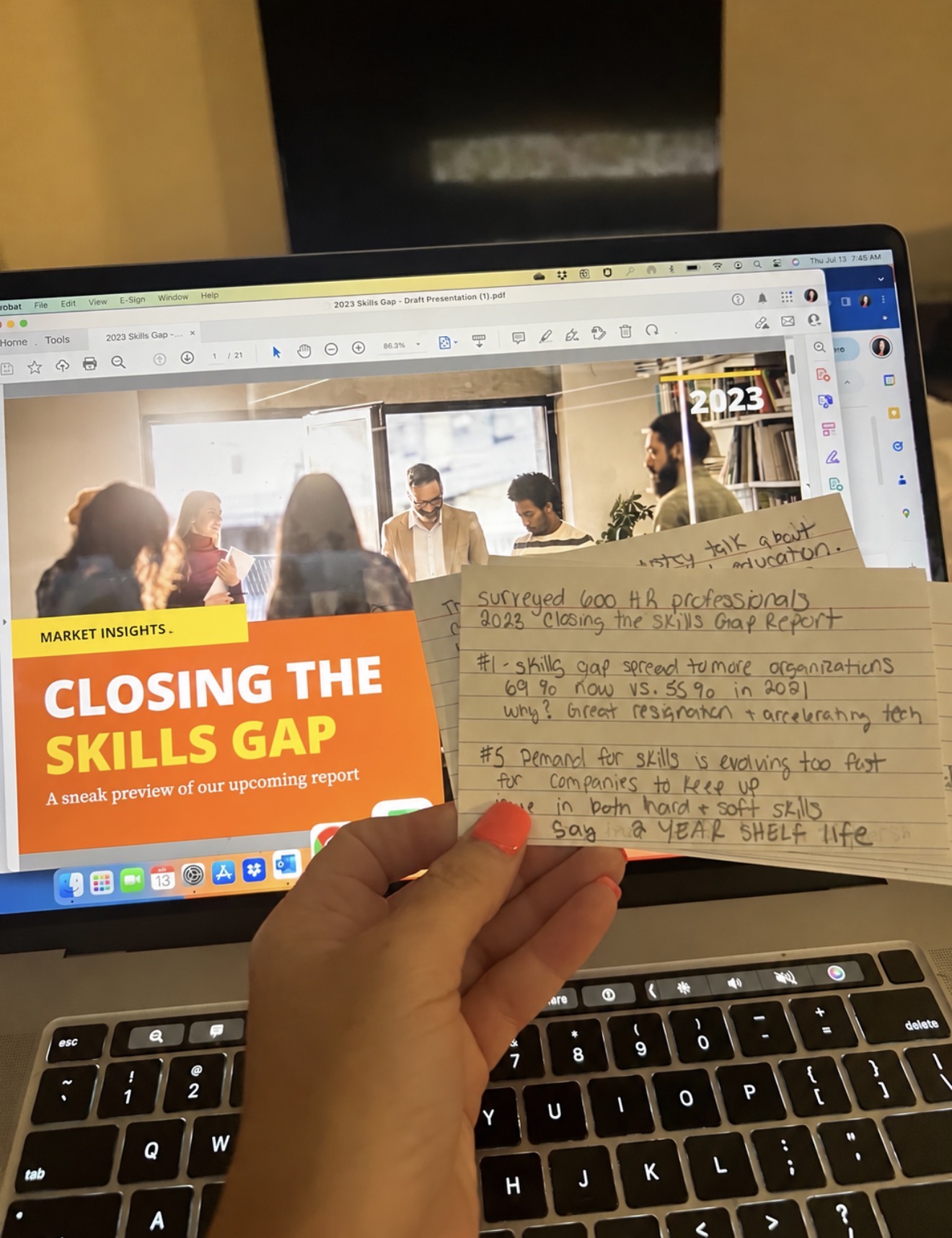
I used to practice presentations with index cards. Writing notes by hand helps me. It forced me to think through the story. When you build a slide yourself, you’re forced to answer a question before you ever touch design: “why does this fact matter, and what does it prove?” Every slide is a small case you have to construct. It’s a narrative you’re working through and refining. You don’t even know this when you first start out. It’s why your manager made you redo it so many dang times.
As your audience broadens, you then learn how much you have to tailor. An investment case to the C-suite is nothing like a training deck for the team that has to go execute it.
The deck isn’t the main deliverable; the thinking that produces the deck is.
I love AI-enabled assistance today. OMG, the way AI visualizes a 1–2 slide concept that my brain would rather write a 10-page essay about… brava. But I come pre-loaded with a zillion rides on the experience train, and if I never make it past slide 3? Meh, I don’t care. Let’s just chat through it.
I’m thinking about what it means for junior workers though who might only know the AI version. They won’t have to do _V16_Final_Final 😁 The business storytellers who’ve built a thousand decks still have to teach the next generation how to build the case to get the decision made. I only know this through the sixteen rewrites, my manager asking “so what?” until it hurts, the slide that looked great and added absolutely zero value and then rehearsing.
Busy work? Maybe. But that’s how the story arc gets wired into instinct. I don’t know exactly how to transfer this skill (or if I’m just delulu to think it has to matter to so much in the years ahead). That’s still on us to figure out.

